Зміст
Opening scene
Morning comes quietly in the mountains.
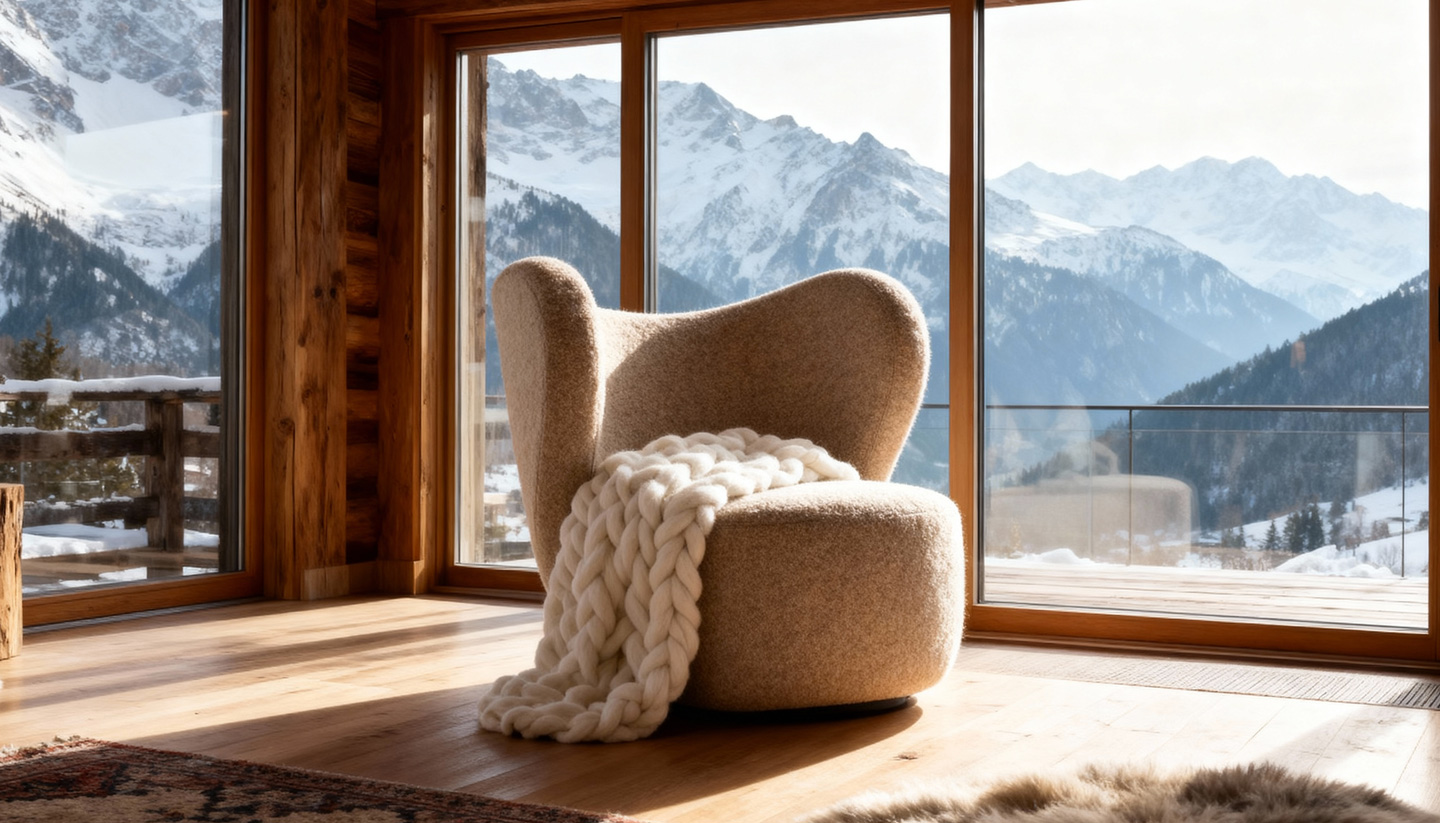
The light doesn’t break in – it settles on the floor, touching the wood, slowly filling the room like warm air from an open bottle. The chair is by the window, and at this moment it seems like it has always been there—before anyone decided to put up walls.
On mornings like these, they don’t think about style.
They think about silence, about a cup of tea, about how good it is when the body finds its place without effort. The furniture does not attract attention – they maintain the condition.
It is precisely these moments that make up a modern interior.
Not from trends.
Not from catalogs.
And from solutions that allow you to live more slowly where the world is in a hurry.
Modern interior is a system of solutions
Short answer: Furniture should work together, not compete with each other.
MODERN INTERIOR =
SPACE × SCENARIOS × PROPORTIONS
When the choice of furniture is chaotic, the interior quickly becomes boring.
When it is systematic, it calms.
You need to start not with furniture, but with life.
Short answer: First, how you live, then what surrounds you.
Ask yourself simple questions:
where I spend most of my time;
where I want to stop;
where I move;
Where do I communicate?
Furniture should adapt to these responses.
Anchor of space: the chair as a point of rest
In a modern interior there is always one place of silence.
Often it is a chair.
«Soft chair “It’s not an addition to the sofa, but a separate recovery area.”
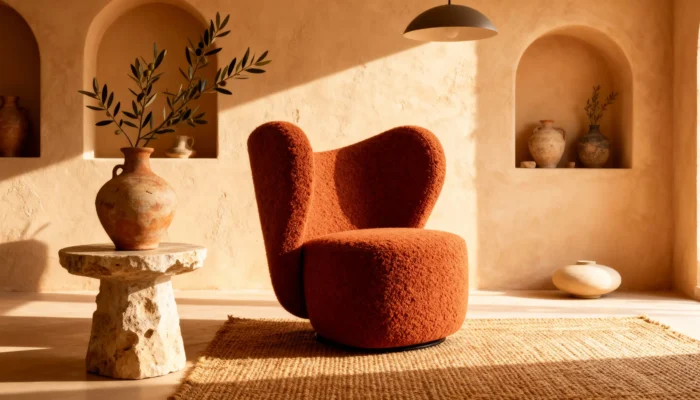
The chair by the window, as in the picture, is an example of how one object can set the mood for an entire space.
Chairs, sofas, armchairs — different roles, same logic
Short answer: each item has its own function in the system.
sofa – social center;
chairs – the rhythm of daily activities;
Armchairs – individual comfort.
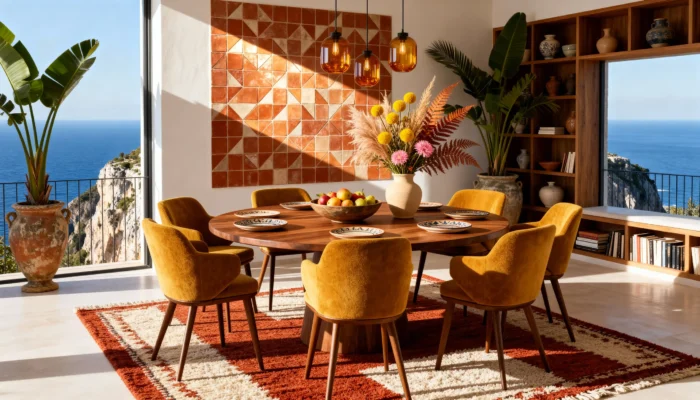
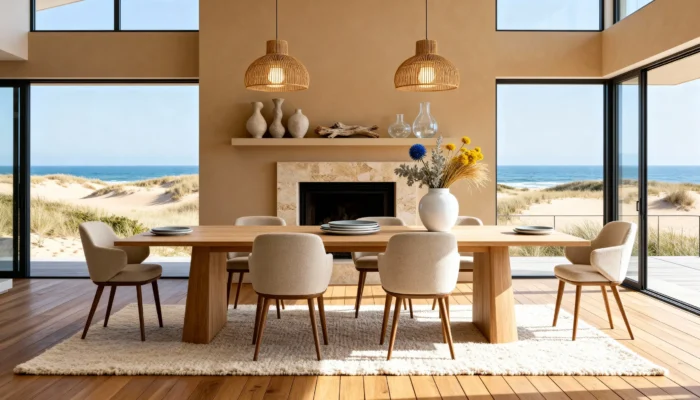
“Chairs and dining chairs “shape not only the layout, but also the character of the space.”
Proportions are more important than decor
RULE:
less furniture is better, but more precise
Too big a chair in a small room is pressure.
Too many small items in a spacious living room are an emptiness.
Modern interior is read through scale.
Why ready-made solutions often fail
Short answer: they do not consider space as a whole.
Typical errors:
buy furniture separately;
to focus only on appearance;
ignore life scenarios;
ignore the light.
Custom furniture as an answer to complex spaces
“Furniture to order “allows you to adjust the interior to real life, not to standard sizes.”
When the space is non-standard, ready-made solutions stop working – not because they are bad, but because they were not created for this life and not for this place.
Complex spaces happen more often than you might think.
Kitchen-living room without clear boundaries.
Living room with panoramic windows.
Niches, columns, bevels, different ceiling heights.
A room where it is important not just to “put furniture in”, but to preserve air, light and movement.
Ready-made furniture works on the logic of averages. They look good in showrooms, on renderings, and in catalogs—where the space is perfect, symmetrical, and predictable. But real homes are rarely like that. They have their own character, limitations, and scenarios that cannot be squeezed into a standard.
It is at this point that custom-made furniture ceases to be an “alternative” and becomes the only rational solution.
Custom furniture doesn’t start with choosing a model. It starts with analyzing:
how a person moves in space;
where it stops;
where he spends most of his time;
how the space changes throughout the day.
In complex spaces, it is not the form itself that is important, but its interaction with architecture. The sofa can be shorter or deeper so as not to block the light. The armchair can be turned towards the window, not the wall. The storage system can be dissolved in the plane, not protruding.
NON-STANDARD SPACE ≠ PROBLEM

NON-STANDARD SPACE = TASK
Custom-made furniture allows you to work with the following tasks precisely:
change proportions without losing style;
adapt depth, height, angle;
integrate furniture into the architecture, rather than superimposing it on top of it;
create solutions that look natural, not “fitted.”
“Custom-made furniture allows you to adjust the interior to real life, not to standard sizes.”
And this is their main value.
They don’t try to make the space right —
they allow space to remain oneself, while becoming convenient, logical, and peaceful for life.
In complex spaces, furniture ceases to be objects.
They become balance sheet instruments between architecture, man and daily rhythm.
Infographic: How to Choose Furniture Without Chaos
STEP 1 — Understand the space
STEP 2 — Identify scenarios
STEP 3 — Choose anchor items
STEP 4 — Choose the proportions
STEP 5 — Add accents
Table: chaos vs system
| Approach | Result |
|---|---|
| Random purchases | Fatigue |
| Trend orientation | Rapid obsolescence |
| System choice | Rest |
| Furniture for life | Long-lasting comfort |
FAQ
Where to start choosing furniture?
From the analysis of space and life scenarios.
Is it necessary to order everything?
No, but key items must be accurate.
What is more important – style or comfort?
Comfort shapes style.
Is it possible to combine different zones?
Yes, if there is a common logic.
Is a modern interior a minimum of furniture?
This is the minimum of excess.
Conclusion
A modern interior is not about the amount of furniture.
This is about accuracy of decisions.
When every object knows its place, a home ceases to be just a space.
It becomes an environment that is easy to live in — today, tomorrow, and years from now.