Зміст
Soft pouf in the bedroom: how to choose the shape, materials and comfort “for the future”
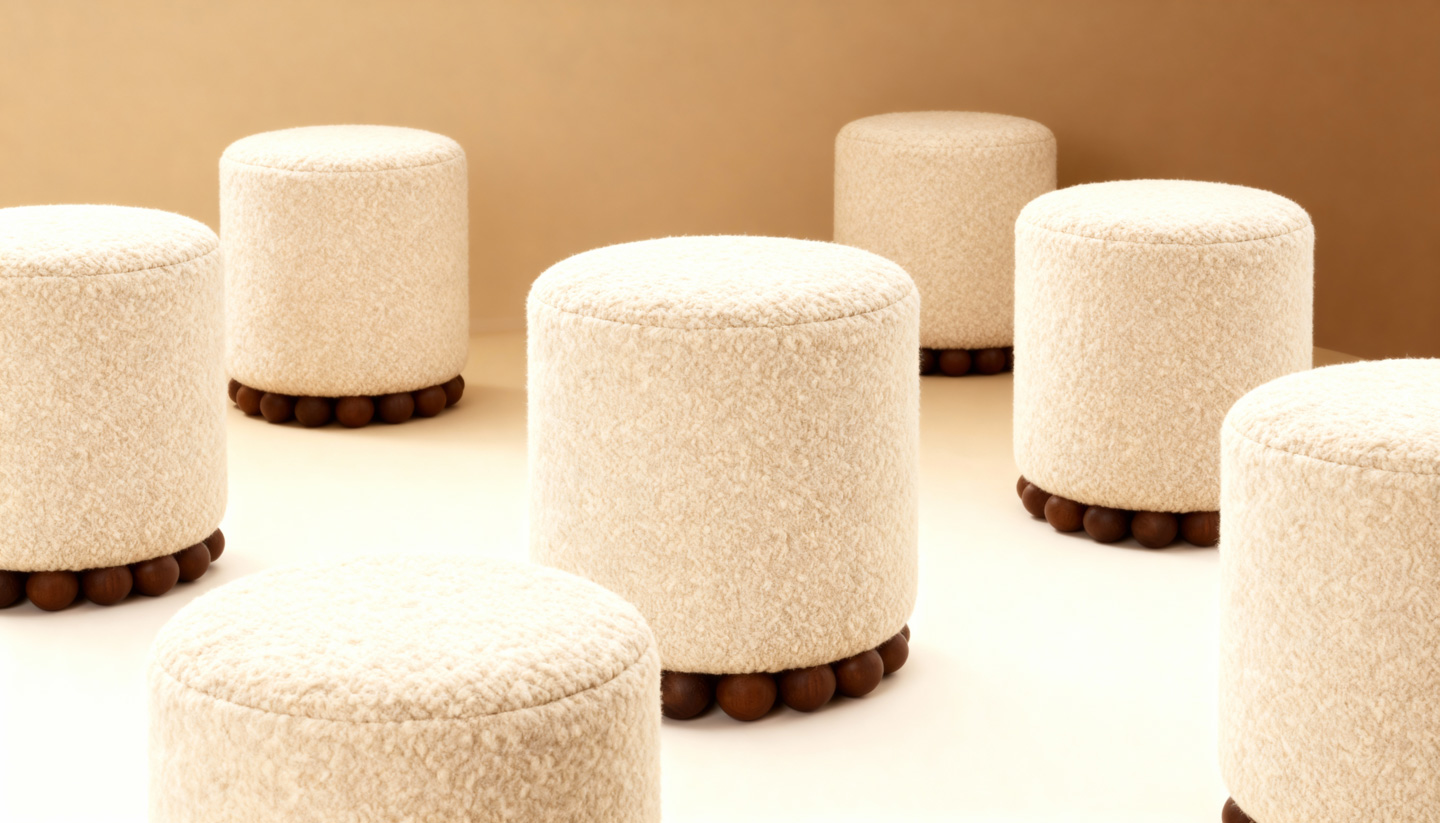
A soft pouf in the bedroom is the same “small object” that imperceptibly raises the standard of living. They sit on it to tie the laces. A blanket, a book or a bathrobe are placed on it. It is pushed to the dressing table when you need to quickly put yourself in order. And the pouf in the bedroom is a strong design accent: it either gathers the composition together or destroys it if it is selected at random.
Below is a practical guide without water: how to choose the shape, height, filling and fabric so that the puff works every day and looks like an element of the interior of the future: clean, technological, personal.
What pouf is needed in the bedroom: what exactly do you buy it for?
The answer is: Choose a pouf not “according to the picture”, but for the script – then it becomes a useful tool, not a decor.
The most common scenarios are:
-
Quick landing at the bedside (shoe / shoes): Important Stability, height, non-slip legs or stable base.
-
Wardrobe area: Important Compactness, wear-resistant fabric, easy cleaning.
-
Dressing table: Important Proper height and softness so that the back does not “tired”.
-
Legs: Important Filler elasticity and surface area.
-
Extra bed for guests: Important Load, frame rigidity, seam quality.
Mini-example: if you often gather in the morning “at speed”, a pouf with a soft but elastic landing will save time and nerves – you do not fail, get up easily, things do not slip.
Which shape is better: round, square or rectangular?
The answer is: Form is about the trajectories of movement in the room and visual rhythm.
-
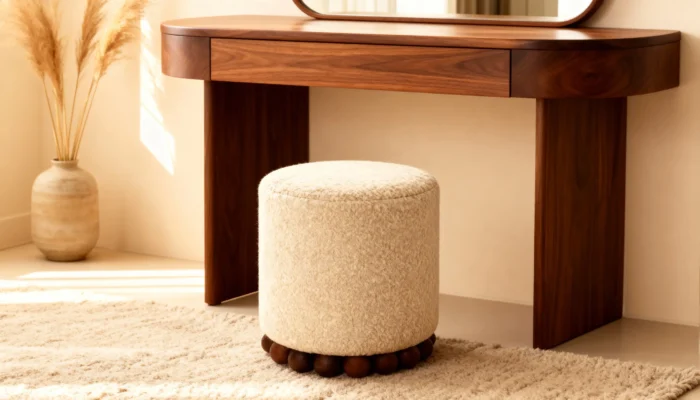
Round pouf – “Softens” the bedroom, removes sharp corners, works well in small spaces and near aisles (less chances of catching).
-
Square – The most stable visually, easily in the corner / to the cabinet, good for strict interiors.
-
Rectangular (bench-pouf) – Ideal at the foot of the bed: sit, fold a blanket, temporarily put the bag.
If the bedroom has a large number of rectangular volumes (bed, bedside tables, closet), Round soft pouf Adds “breathing” and makes the composition more expensive in appearance.
What height of the pouf in the bedroom is correct?
The answer is: Landmark – the height of the bed or the area where you sit most often.
Practical rules:
-
By the bed: pouf is comfortable when its height Approximately at the level of the bed seat Or a little lower – so it’s easy to get up.
-
At the dressing table: It is better to adjust the pouf to the height of the table and land – so that the shoulders do not rise and the back does not “break”.
-
As a footrest: Below – OK, but important area and elasticity.
Mini-example: in the bedrooms, where the bed is high (mattress + topper), too low a pouf looks “accidental” and works inconveniently – the knees above the thighs, the fit is short, get up harder.
Filling: What’s on the inside for years?
The answer is: The filling determines whether the pouf will “keep its shape” and how it is felt every day.
The main options:
-
HR-foam (highly elastic): Elastic, well restores shape, suitable for daily planting.
-
Memory-foam: Very comfortable, “hugs”, but for a pouf-work landing is sometimes too soft (depending on the density).
-
Combined layers (elastic base + soft top): The best balance is Premium Landing.
-
Loose fillers (granules): There may be OK for relaxation, but often lose in stability and durability.
Quote Kaizen: “Comfort is not softness for the sake of softness. It’s precise elasticity that keeps your rhythm: sit down – get together – get up – go on.”
Upholstery materials: what to choose to make the pouf look expensive and not be afraid of life?
The answer is: In the bedroom, take fabrics that are pleasant to the touch, but have a margin of safety and are easy to clean.
The most practical areas:
-
Velor/microvel: Warm, “deep” color, pleasant tactile. Good for a premium feel.
-
mat/structural fabrics: They look modern, hold their shape visually, often very durable.
-
Shenil: Soft and textured, works well in modern interiors.
-
Eco-leather/general leather: Effective and practical, but it is important to choose the texture so that the bedroom does not become “office”.
Mini-example: if there is an animal at home, the choice is shifted towards fabrics with dense weaving and simple care – then the pouf will not turn into a “trace magnet”.
Table: Quick selection of material for your script
| Scenario in the bedroom | Recommended upholstery | Filling | Why does it work |
|---|---|---|---|
| Getting your bedside shoes everyday | Structural Fabric/Microvel | HR foam or combined | Stable landing, durability |
| Poof near the wardrobe | Wear-resistant fabric, easy cleaning | Elastic foam | Withstands frequent use |
| at the dressing table | Velor / chenille | Combined landing | Comfort longer, Premium look |
| Foot stand | Soft fabric | Elastic + soft top | Relaxing without “failing” |
| Extra bed for guests | Durable fabric / leather | Dense foam | Holds shape and load |
Color and visual effect: how to “stitch” a pouf with a bedroom?
The answer is: The pouf should either pick up 1-2 colors of the room, or be a guided accent.
Working schemes:
-
Tone-in-tone (Puff in the shade of textiles / curtains / rug) – calm, premium, “expensively silent”.
-
Accent (Puff as one strong color) – adds energy and character.
-
Material contrast (The pouf texture is different from the bed) – the interior becomes more voluminous.
Mini-example: in bedrooms with light walls and a warm tree, a pouf of a deep graphite or milk-caramel tone creates the feeling of a “designer point”.
Kaizen-approach: why is a pouf to order often better than a “ready from the shelf”?
The answer is: Because in the bedroom are important centimeters, landing and script – not just a picture.
What gives Kaizen’s approach:
-
Size customization under your room (especially critically in small bedrooms).
-
Landing selection (elasticity/soft) to your style of use.
-
Choice of fabric and texture under real care and pace of life.
-
Preliminary 3D visualizations: You see a pouf “sitting” into the interior before production.
-
Optional prints option (When you want bold personalization without chaos).
For the interior to work as a system, it is important to think not “poof separately”, but “poof as a module in your life”.
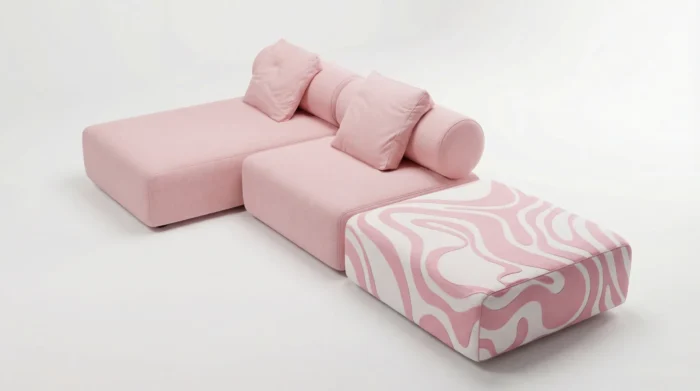
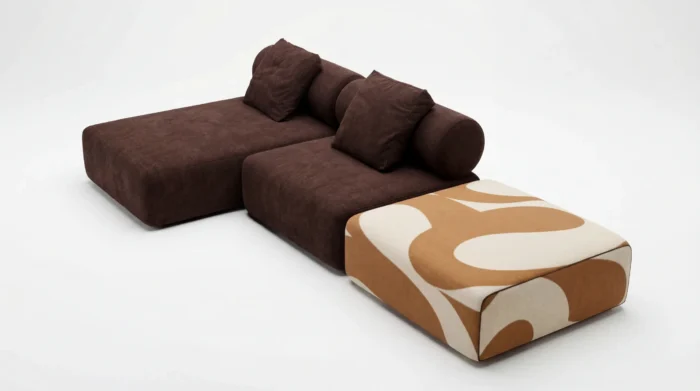
Sometimes the bedroom needs not only a pouf, but also a more flexible “comfort architecture” – especially if you like to transform the space into different scenarios: from relaxation to working with a laptop. That’s why you should see how to adapt to adaptability in upholstered furniture: buy sofa modular sofas – There are many ideas about modularity that combines well with a pouf in the bedroom.
And if your bedroom sometimes turns into a quiet “home office” (it happens), the pouf can become a short rest point between tasks, but the main ergonomics are held by the chair. In this case, it is useful to compare the settings of landing and back support: Office Chair Office Chair Buy – How to choose a chair so that performance does not eat comfort.
Care: How to keep the look “as new” without fanaticism?
The answer is: Regularity is more important than aggressive chemistry.
-
The vacuum cleaner / brush once a week – the fabric looks “fresh” longer.
-
Remove stains immediately, without excessive wetting.
-
For velor – a soft brush in the direction of the pile.
-
Do not put the pouf close to the active heat source.
Mini-example: if the pouf is near the wardrobe, it is often “in jeans from the street” – in this scenario, a fabric with simple cleaning really saves time and nerves.
FAQ: Briefly about frequently asked questions
1) Do you need a frame in a soft pouf?
Yes, if you are planning a daily landing. The framework adds stability, durability and feeling of “premium thing”.
2) Which is better for the bedroom: round or rectangular pouf?
Round – for softness and easy movement in space. Rectangular – if you want a solution “at the foot of the bed” and more functions.
3) Which fabric is the most practical?
Structural wear-resistant fabrics or high-quality micro velor: good balance of appearance, tactility and care.
4) Can a pouf replace a chair near the dressing table?
Maybe if the height and landing are chosen correctly. For long beauty sessions, combined elasticity (not too soft) is better.
5) Does it make sense to make a pouf to order?
Yes, if the bedroom is small, you need an exact height / size, or you want the perfect combination with materials and textiles.