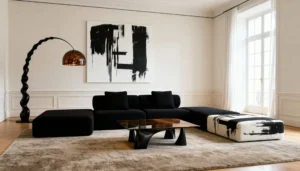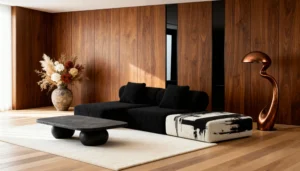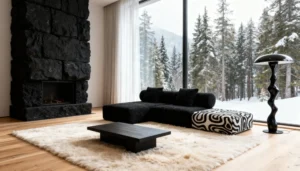
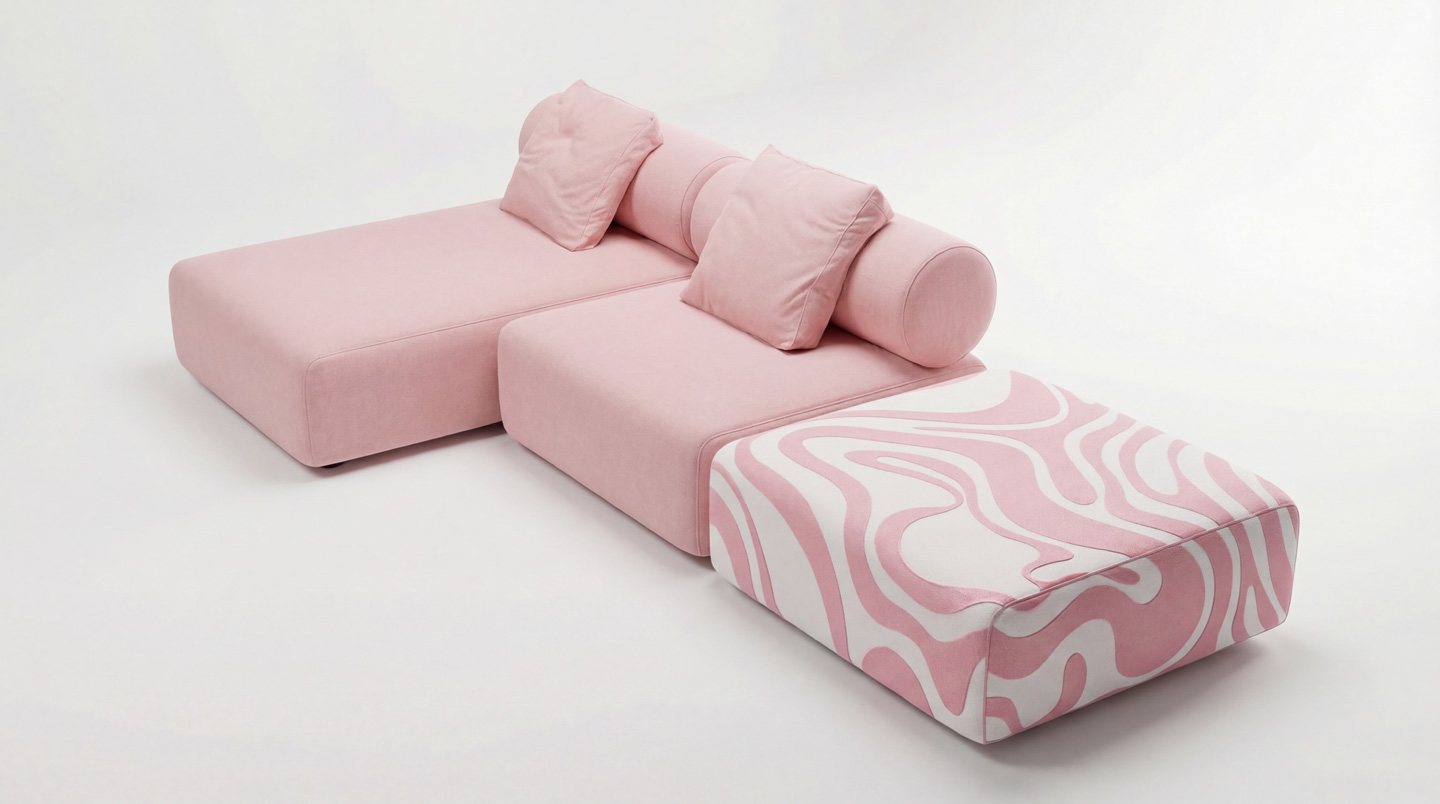
Зміст
Scene – buyer’s dilemma
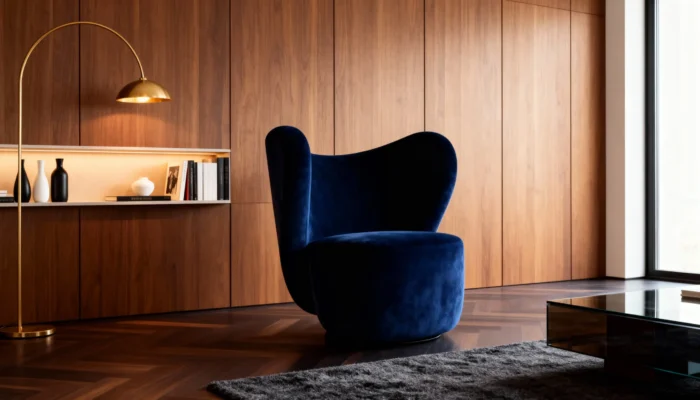
Margarita is standing in the salon. In front of her are dozens of sofas. One of them is a dark blue velour one with a distinct texture. The other is a light, calm beige one with metal legs. On the left is an emerald one with a barely noticeable geometric print.
She thinks she’s looking for a “living room sofa.” In fact, she’s looking for — accent sofa.
Her living room is minimalist in style: white walls, natural oak floors, cylinder lamps. The room looks like this: neatly, correctly, but as if the voice is missing.
Here comes a thought:
– Won’t the accent be too bold?
– Will it “overwhelm” other subjects?
– Won’t it make the room darker?
And at the same time, it’s an interesting feeling that everyone who has bought furniture knows:
The very thing that scares you usually becomes the strongest solution.
Because an accent sofa is not just a place to sit. It is:
– style signal;
– mood;
– emotional point of entry into the room;
– composition frame.
In the designer’s house, the phenomenon is called:
The focal point of the interior = the furniture that the eye catches first.
And while Margarita ponders between “safe” beige and bold emerald, she actually decides:
what kind of atmosphere to live in her house.
Accent furniture creates a focal point and sets the mood (infographics + analysis)
Direct answer:
Accent furniture shapes the style of a room, setting a focal point and determining the emotional mood of the space.
Infographic block
FOCUS FORMULA:
Focus = (Color × Scale × Position)
RULE:
1 dominant object per room
+
1 accompanying
Why focus is important
A person perceives a room unevenly.
The gaze always seeks the center of the composition.
Example:
Two identical rooms in Scandinavian style.
– the first one without an accent — looks “unfinished”
– the second one with an accent sofa — complete, complete
Usage scenario:
– living room in a new building
– kitchen-living room in the studio
– open space
– relaxation area in the office
In all cases, accent furniture works as:
– visual anchor
– landmark at the entrance
– communication center
Real-world example
Apartment in a new building in Lviv with panoramic windows.
White + wood + gray → sterile
adding a dark blue sofa → depth, contrast, comfort
TO:
white + wood = cold minimalism
AFTER:
white + wood + navy blue = minimalism with character
Colors and psychophysics of accents (analysis + examples)
Direct answer:
The color of accent furniture controls the emotions in a room and shapes the perception of space.
Infographic rules
COLOR → EMOTION
Green → calm
Blue → concentration
Mustard → drive
Burgundy → intellectual depth
Gray with print → balance
60/30/10 RULE:
60% base
30% additional
10% accent
Microscenarios
1) Studio apartment 35 m²
Basic colors: white + gray
Accent sofa in emerald
The result is a room that seems more “grown-up.”
2) Guest room in a private house
Basic: beige + wood
Accent sofa in navy blue
The result is the intellectual mood of the library.
3) HoReCa
Loft-style coffee shop
Accent chairs in mustard
The effect is an atmosphere of hospitality.
Quote with internal link
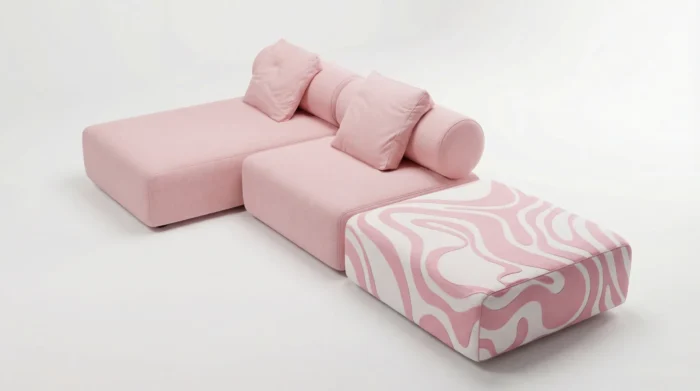
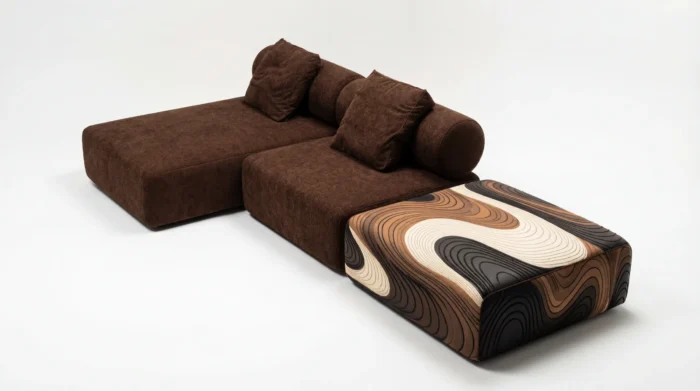
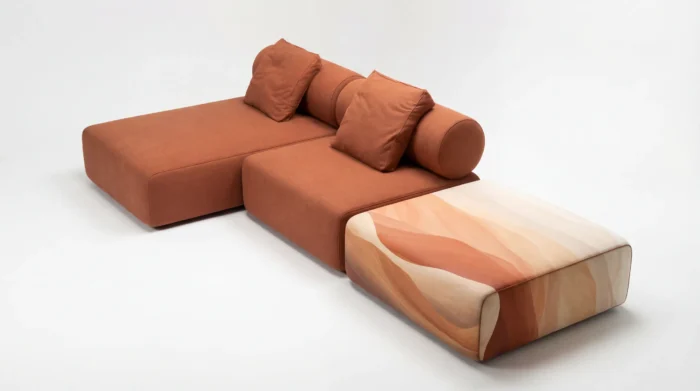
“An accent sofa with designer prints can not only decorate a room, but also turn into a visual story of the interior — more about this in the article designer sofas with prints“.
Proportions and Scale: Why Emphasis Only Works When It’s Appropriate
Direct answer:
Scale determines whether an accent sofa will be dominant or lost in space.
Infographics
SCALE:
small space → compact accent
large space → massive accent
ERROR → SOLUTION
large sofa in the studio → low + narrow armrests
Examples
Small apartments (up to 50 m²)
low back
legs that give “air”
textures without large print
Large spaces
sectional accent sofas
combination with accent chairs
pouf as a balancing element
Real case study of Kaizen practice
The homeowner wanted a sectional sofa in a 60 m² loft living room.
However, one object was too small.
Solution → scaling + adding accent chairs.
Fabrics, textures and designer prints
Direct answer:
Texture and print can enhance an accent or neutralize it.
Infographic blocks
TEXTURE + COLOR → DEPTH
PRINT:
geometry → restrained modern
abstraction → art interior
natural motifs → eco-style
Example scenarios
Minimalism
smooth velour + pure color
→ calm, without noise
Modern
geometric prints
→ dynamics
Futurism (DNA Kaizen)
metallic details + 3D printing
→ visual innovation
Zoning and space planning
Direct answer:
Accent furniture can divide space without partitions.
Infographics
ZONES:
living area
work area
dining area
ACCENT as a separator:
sofa with back to kitchen
pouf as a mobile accent
chairs for the visual bridge
Microstudios
35–45 m² →
sofa + pouf →
recreation area without walls
Open space
60–90 m² →
sofa + armchairs →
composition center
Quote about KAIZEN
“At Kaizen, we don’t just make furniture. We make accent solutions, where each accent sofa is a negotiation between style, function, and the owner’s character. Not for everyone. For a specific person.”
Accent furniture and interior styles
Direct answer:
An accent sofa can adapt to any style if you choose the color and texture according to the principles of composition.
Styles + examples
Minimalism:
white + gray + mustard sofa
Loft:
brick + concrete + dark gray print
Scandinavian:
white + wood + green accent
Modern:
geometry + neutral walls
Futurism (KAIZEN):
3D textures
custom printing
metal parts
Accent furniture in small spaces: tips, formulas, examples
Direct answer:
Accent furniture in small rooms works if it compact, visually “light” and proportional, not massive.
SMALL SPACE FORMULA:
Accent = (Legs × Low Back × Subtle Print)
Why it works
A small space is not a limitation.
This is a precise compositional task.
In a space of 18–25 m², an accent sofa:
should not touch the floor with a massive base
should not block the view
should create a feeling of air
Example No. 1. Apartment in a Khrushchev house
To:
large cabinet
bulky old sofa
dark carpet
After:
wardrobe with sliding doors
accent sofa on legs in mint or emerald
light floor
pouf as a mobile accent
Effect:
the room seems wider
the recreation area is separated without walls
the style becomes modern, not museum-like
Example No. 2. Studio 28 m²
sofa with narrow armrests
accent chairs without a massive back
pouf as a replacement for a coffee table
ERROR → SOLUTION
sectional massive sofa → compact accent sofa + pouf
Example No. 3. Children’s room
color accent → sofa in pastel colors
fabric → anti-vandal
plus printed pillows
The result is style + functionality.
Mistakes and solutions: infographic analysis
Direct answer:
90% of accent mistakes are either scale or color.
MAIN ERRORS:
1) two big accents
2) too small an accent
3) color without reference to the palette
Mistake 1 — “overdoing it”
To:
accent sofa
accent chairs are bright
accent chairs
Result → chaos.
Decision:
one dominant
two accompanying neutrals
FORMULA:
1 focus + 2 neutral → balance
Mistake 2 – Fear of color
To:
everything is gray
everything is beige
Result → sterility.
Decision:
dark blue or mustard
or green in a warm tone
Mistake 3 – Inappropriate size
small sofa in a large room
big in small
Decision:
scale = proportion × function
Example:
Large living room → sectional sofa + accent chairs
Small → accent sofa + pouf
Accessories as accent support
Direct answer:
Accessories complete the accent, not compete with it.
ACCESSORIES RULE:
support, not duplication
How to choose
pillows → repeat the color or texture
plaids → texture, not print
carpet → geometry or monotone
lamps → metallic under the legs
Example
Accent sofa in emerald
→ beige pillows + light gray plaid
→ repeat the metal in the legs in the floor lamp
ERROR → SOLUTION
large pattern × large pattern → print + solid color
Ergonomics of accent furniture: comfort without compromise
Direct answer:
An accent sofa should be not only stylish, but also ergonomic: seat height, seat depth, and the firmness of the filler.
ERGONOMICS FORMULA:
45–47 cm seat height
52–60 cm depth
backrest angle 100–110°
Why is this important?
The interior cannot be “just beautiful.”
Design without comfort is decoration.
Scenarios for different users
young families
older people
children
office workers
HoReCa
Example
Family with children → fabric with anti-vandal coating
Office → firmer fit
HoReCa → dense foam + velor
Combining accents in HoReCa and commercial spaces
Direct answer:
In restaurants, coffee shops, and offices, accent furniture is a branding and atmosphere tool.
Examples:
Cafe
mustard accent chairs
neon accent on the wall
wooden tables
Result:
comfort + modernity.
Marketing company office
accent sofa in navy blue
pouf in yellow
neutral chairs
Result:
creativity + dynamics.
Loft-style restaurant
dark walls
accent furniture light
leather texture + metal
RULE:
contrast = status
Accent solutions comparison table
| Space type | Optimal accent | Error | Decision |
|---|---|---|---|
| Studio | compact sofa | massive sectional | legs + low back |
| Apartment | sofa + armchair | color duplication | 60/30/10 |
| House | sectional sofa | small accent | scale |
| HoReCa | accent chairs | too many prints | one print |
| Office | sofa + pouf | bright background + bright sofa | contrast |
Second internal link (in a quote)
“The accent is not always a sofa. Sometimes it becomes bar stools, which organize the space between the kitchen and the living room.”
Kaizen customization examples (advanced block)
Direct answer:
Customization makes accent furniture personal.
Real scenarios:
Studio + home office
sofa in dark blue
printed pillows
legs – metal
Living room + fireplace
accent sofa in emerald
warm blanket
accent chairs in light
Children’s
pastel
anti-vandal fabric
pouf → mobile table
Office
geometry
cold tones
contrast
FORMULA KAIZEN:
style × function × individuality
FAQ
1. Can accent chairs enhance a sofa?
Yes, but through texture or shade. A direct copy of the color is a mistake. A play of nuances is better.
2. Is an accent pouf appropriate?
Yes. It complements, not duplicates, the sofa. Perfect for small spaces.
3. How to choose an accent in minimalism?
Simple shape + pure color + one dominant.
4. How to avoid mistakes in a small room?
Legs, air, compactness, one accent.
5. Should we be afraid of bright colors?
No. They don’t destroy style, they organize it.
Conclusion
An accent sofa is:
focus
mood
individuality
composition
color psychology
proportion
function
Accent furniture shapes the style of a room as much as architecture, light, and materials.
Large spaces need scale.
Small – ease.
HoReCa — impressions.
Home — comfort.
Kaizen works not with a template, but with space and people.
And therefore, accent is not an object.
This is a decision.