Зміст
To buy or do without a pouf: why is it no longer an “additional” item
When a person searches for a “puff to buy”, it is not only a desire to “put something near the couch.” Most often it is necessary:
add a comfortable place to sit;
organize compact storage of small items;
unload the sofa and armchairs;
Make a lively accent to the interior without a total replacement of furniture.
Modern ottomans in the room are already microtools for space management. In Kaizen, we look at the pouf not as a trifle, but as a module that adapts the interior to your lifestyle: today it is a footrest, tomorrow – a laptop table, the day after tomorrow – an extra place for a guest.
What are ottomans in the room: basic formats and scripts
What types of poufs are there and where are they suitable
To consciously decide which pouf to buy, it is important to understand the basic formats.
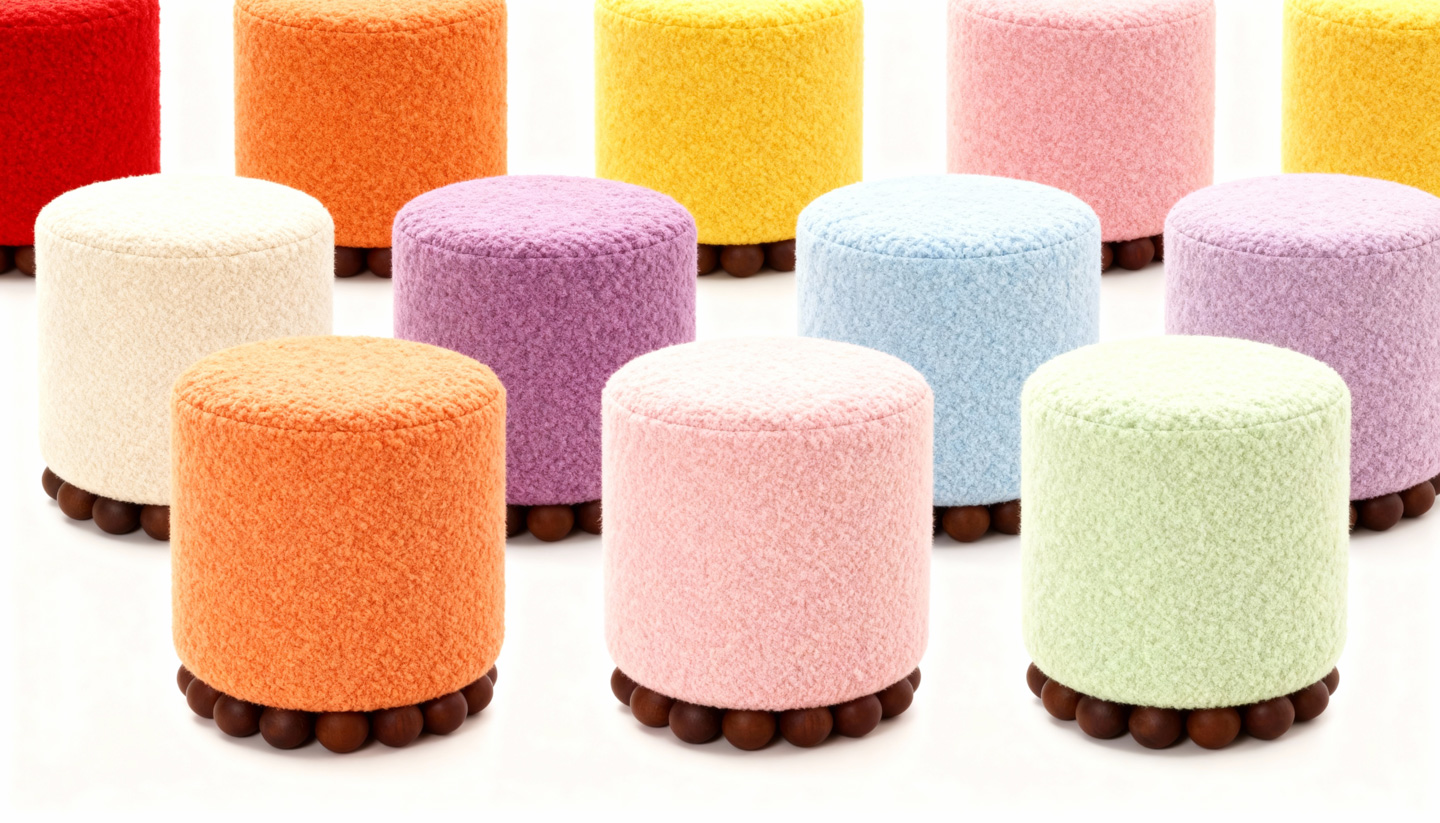
Classic soft pouf cube or cylinder
Compact, easy to move, works as an extra seat or footrest.Poof-fanquet
An elongated format for a niche by the bed, under a window or in the hallway. Sit comfortably, put on shoes, fold clothes.Pouf box (with storage space)
The ideal solution for small apartments: blankets, pillows, children’s toys, magazines are hidden inside.Poof table
Harder surface or additional overhead table top. You can put a cup of coffee, a laptop or a book.Soft frameless pouf (bag)
Forms an informal, relaxed atmosphere. Goes well into the nursery, the teenager’s room, the lounge area.
“When the interior is not just a space, but a living idea, it is important to see how the form works in real life. That’s why you should look at Futuristic poufs Kaizen “There’s design moving, transforming and inspiring for bold solutions for a modern home.”
Table: which pouf to where – a quick cheat sheet
| Type of pouf | Room / zone | The main advantages | What to look for |
|---|---|---|---|
| Classic pouf-cube | Living room, bedroom | Compactness, mobility, versatility | height relative to the sofa, fabric quality |
| Poof-fanquet | Bedroom, hallway | sit comfortably, put things, elongated shape | length, strength of legs, allowable load |
| Pouf-chest | Living room, nursery | Storage + seats in one solution | Volume, fittings, opening mechanism |
| Poof table | Living room, home office | Can replace a coffee table, saves space | Stability, surface, or overhead plate required |
| Frameless pouf | Children’s, lounge area | Maximum informality and freedom of landing | Filler, cover, cleaning possibility |
This table helps to quickly navigate which ottomans in the room will work on your scripts, and which – only “look good” in the photo.
What size pouf to choose: proportions to sofa and room
How to choose a size so that the pouf does not interfere
One of the common mistakes: “I want a big soft pouf” in a small room. As a result, it blocks the passage and creates chaos.
A few simple landmarks:
Height
It is optimal for the living room that the pouf was approximately at the level of the sofa seat or 2-3 cm lower. It is so convenient to put your feet or sit down.Width and depth
In a small room, focus on dimensions of 40-50 cm. For large spaces, you can safely take 60-80 cm or a banquette 100-140 cm.Passages
Leave at least 60 cm of free passage between the pouf and other furniture. This is the basic standard of ergonomics, which is felt by the body, not in numbers.
Example:
In the living room 18 m² with a standard 220 cm sofa, it is logical to put one middle pouf 45 × 45 cm near the corner of the sofa and another narrow pouf-table 30 × 60 cm, which can be pushed closer to the chair or TV zones.
POFs: What’s inside and out to serve for years
Filler and frame: what is important
If you plan to actively use ottomans in the room (sit, put your feet, use as a table), you should pay attention to the design:
Plywood or solid wood frame
Stability, durability, the ability to withstand the weight of an adult every day.Polyurethane foam (PPU) of different densities
Softness without “failure”, the form lasts for years.Frameless Solutions with Granular Filler
plasticity, but require periodic filling of the filler.
In Kaizen, we combine wooden or metal frames with multi-layered fillers so that the pouf is not deformed when used as a mini-table or seat. This is part of the Kaizen approach: small nuances that are invisible in the photo, but are felt every day.
Upholstery: fabric, leather, microfiber
Key options:
wear-resistant fabrics (wool, tweed, velor, boucle)
Pleasant to the touch, give a deep texture, create an atmosphere of comfort.Eco-leather / genuine leather
It is easier to wipe, looks good in minimalist and loft interiors, emphasizes the premium.Microfiber, anti-vandal fabrics
A practical choice for families with children and animals, especially for poufs in the nursery.
Design of poufs: how to make them accent furniture
What color and shape to choose for your interior
Pulfs in the room – one of the easiest ways to add color or texture without major repairs.
Monochrome interior
Choose a contrasting accent: graphite pouf to a beige sofa, saturated mustard to a gray base.Colored interior
The pouf can “tie” the palette: repeat the shade of curtains, carpets or decorative pillows.Form
The round pouf adds softness and plasticity, square – clarity and rhythm. In Kaizen’s futuristic aesthetics, we often combine rounded radii with clear lines to make the furniture look modern and technological.
“Pouf is a small volume that makes it easy to feel that the interior is “alive” and adaptive. By changing the pouf, you change the script of the space without touching the basic furniture. ”
Poof in the living room, bedroom, nursery and hallway: specific scenarios
ottomans in the living room
In the living room poufs work in several roles:
additional seats for guests;
footrests for a sofa or armchair;
Temporary coffee table.
Example:
In the evening you watch a movie – a pouf stands by the foot sofa. On weekends, friends come – easily move it closer to the table as a seat. In a small apartment, this is one item instead of three.
Poof in the bedroom
Here the pouf often lives at the dressing table, at the feet of the bed or by the window.
at the dressing table – replacement of a bulky chair;
by the bed – a banquette for a blanket, clothes;
At the window – a place to read with the view.
pouf to the nursery
In the children’s room pouf:
serves as a soft seat;
becomes an “island” for games;
Used as a safe element (without sharp corners).
Here you should choose:
round shapes;
fabrics that are easy to clean;
Stable structures without shaky legs.
Poof in the hallway
Classic script: banquette or narrow pouf for shoes. The pouf-chest in the hallway is especially useful: inside are hidden hats, gloves, shoe accessories – minus visual noise at the entrance.
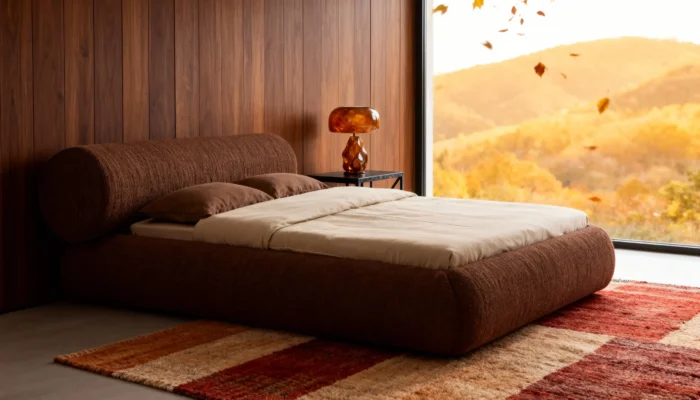
“The interior of the future is not created in statics, but in constant development. to observe how approaches, ideas and implementations change, helps Design in motion “The space where new scenarios for the use of poufs in modern housing are born.”
Kaizen: how we design poufs for the interior of the future
A futuristic approach to “small forms”
The Kaizen brand works with furniture as a system of modules. Even when it comes to small ottomans in the room, we think about:
how they interact with a sofa, armchairs, table;
can be transformed (for example, a pouf table with an additional overlay);
Is it possible to add storage without losing aesthetics.
Before manufacture we create 3D-visualization: The client sees how the pouf works in its real space – in color, shape, scale. This minimizes “misses” and saves resources.
Customization: color, fabric, prints
In Kaizen you can:
choose fabric or leather for your interior;
to coordinate the height and format for a specific sofa or niche;
Implement the author’s print on textiles (logo, pattern, graphics), if you need a unique accent.
So the pouf ceases to be just “another item” and becomes part of your personal history in the interior.
“Pouf especially reveals its potential in a pair with the right chair. If you consider Armchair as a center of composition, it becomes clear how soft shapes can work together, creating a balance of comfort, style and visual lightness. “
How to choose a pouf to buy online and make no mistake: checklist
1. Determine the use scenario
First answer yourself: What exactly? Do you need ottomans in the room?
only for beauty;
for everyday sitting;
for storage;
as a replacement for a coffee table;
for the nursery or hallway.
2. Measure the space
measure the distance from the sofa to the table / wall;
Mark the dimensions of the future pouf on the floor with masking tape – so it is easier to feel the scale.
3. Pay attention to materials and seams
the upholstery should be dense and evenly stretched;
seams – neat, without puffs;
If it is a pouf chest – check the fittings for backlash.
4. Think ahead: Do not plan to change the couch
If you plan to update the main furniture in the near future, you should choose a pouf in a more neutral range or with a cascading palette, so that it can easily fit into the future update.
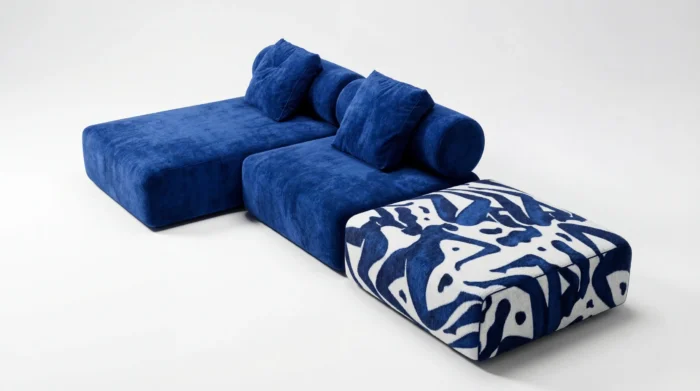
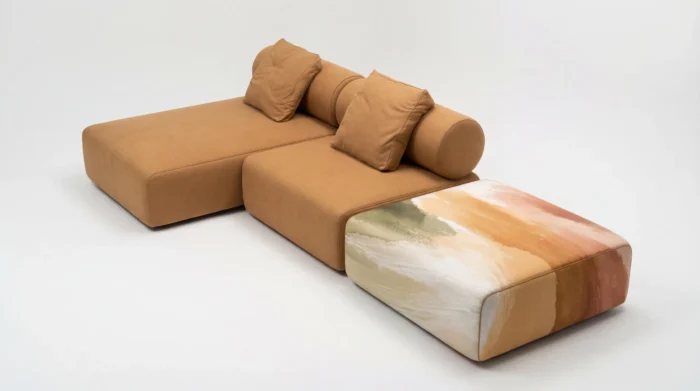
“Modern pouf is not an isolated element, but part of the system. Exactly Modular thinking in the interior Allows you to combine ottomans with corner sofas, forming a space that adapts to the rhythm of life, mood swings and the needs of the future.
FAQ: short answers to frequently asked questions about ottomans in the room
Is it possible to replace a coffee table with a pouf?
Yes, if you choose a stable pouf with a stiffer top or use an additional overhead tabletop. In Kaizen, we often put this script in the design: a pouf can be a table and a seat.
What height of the pouf is comfortable for adults to sit?
On average, 42-48 cm. You should focus on the height of the sofa or chair, which are already comfortable for you. Ideally, the knees are bent at an angle of about 90 °.
What material is better for a pouf in a nursery?
Fabrics with increased wear resistance and easy care: microfiber, anti-vandal coatings, dense velor. The possibility of local cleaning and the absence of sharp corners is important.
Should I take a pouf with storage space?
If space is limited, it is almost always a profitable solution. The main thing is not to sacrifice the comfort of the seat: the cover should be soft enough, and the opening mechanism – reliable.
How many poufs are optimal for one room?
1-2 poufs are usually enough for a standard living room. In large spaces, you can safely combine 2-3 different in shape and size, but in one style.
Conclusion: pouf as a strategic element of the interior
To buy a pouf – sounds like a simple action. But if you approach the choice consciously, it can be a small upgrade that will significantly change the scenarios of your space: it will add comfort, organize storage, relieve tension from the sofa and chairs, create a new accent.
The ottomans in the room in the Kaizen concept are part of the interior of the future: flexible, adaptive, thoughtful to detail. You get not just a soft cube or cylinder, but a tool that works with you – for your comfort, performance and the feeling of a constantly evolving home.