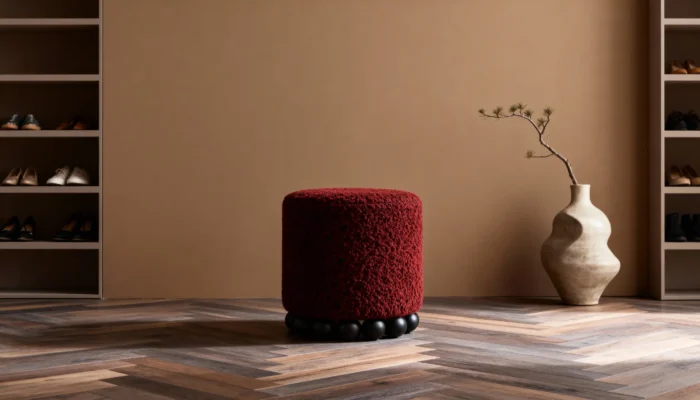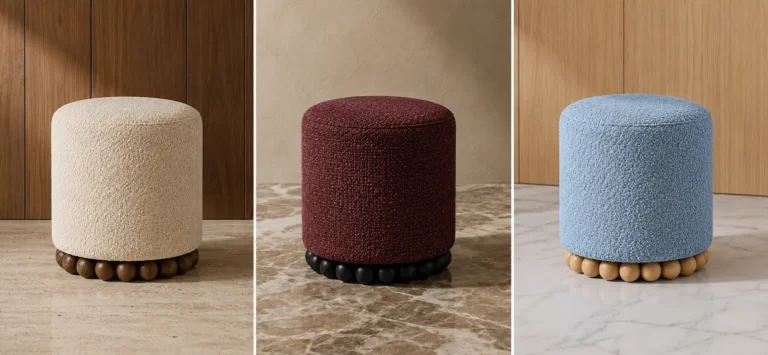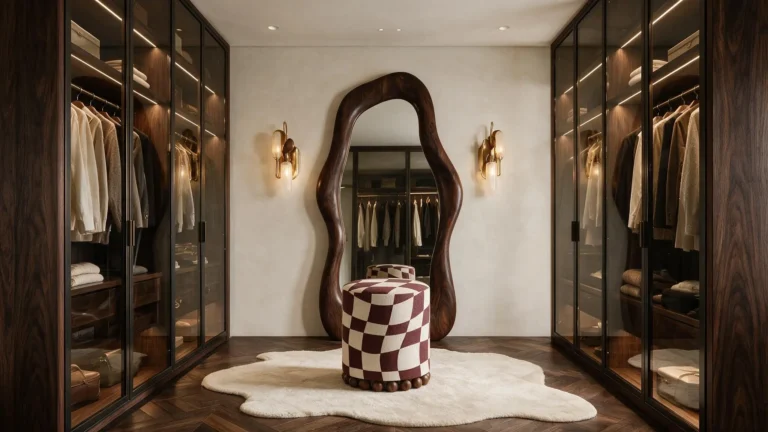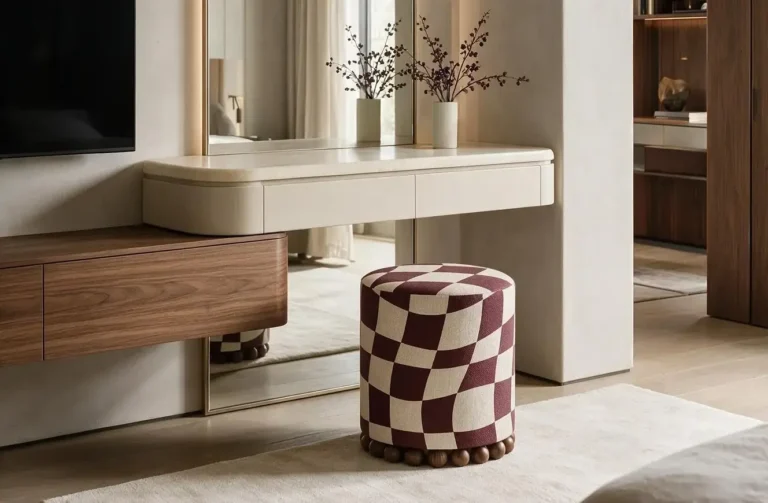
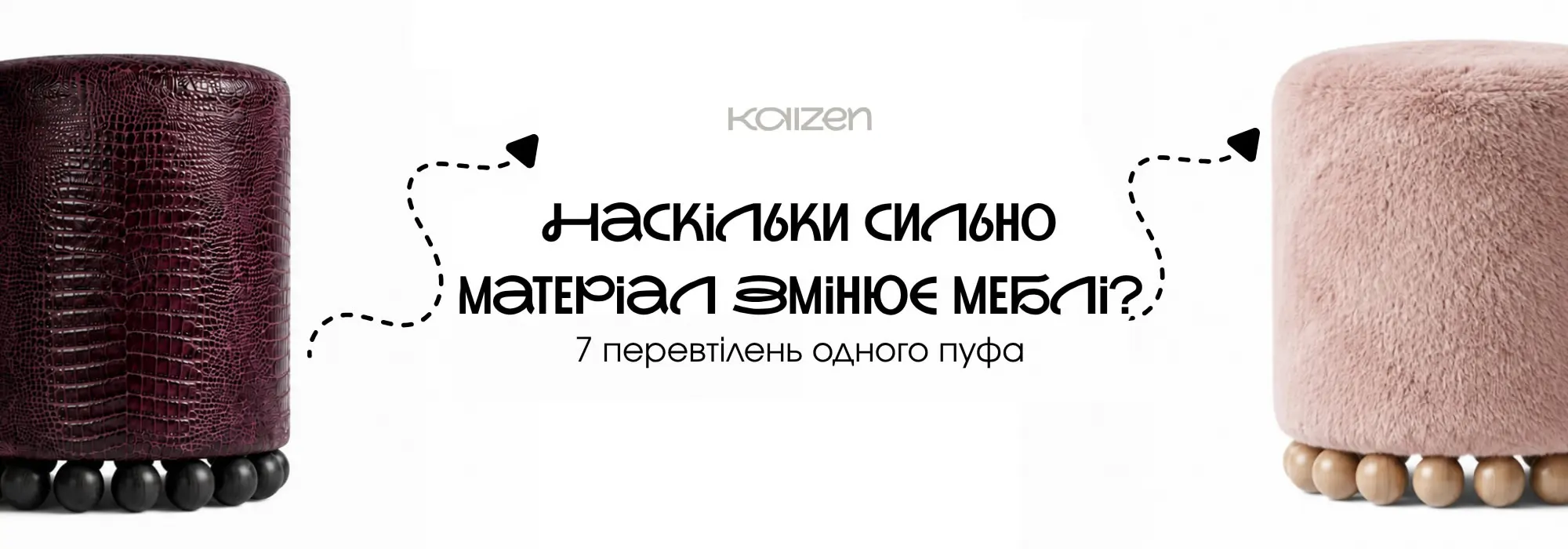
The same silhouette can behave differently. In pink faux fur, it seems gentle and a little playful. In dark textured leather, it seems bold and status-conscious. In matting, it seems restrained. In chenille, it seems warm. In velour, it seems rich. In boucle, it seems cozy. In a print, it seems almost an art object.
The shape doesn’t change. It remains the same round pouf on ball-shaped legs. But all you have to do is change the material and we have not one object, but seven different moods.
This is what the KAIZEN Instagram post is about. “How much does material change furniture?”. Most people do indeed choose furniture based on its shape. But design doesn’t end with the silhouette. The material determines the first impression of an object: whether it is soft or bold, understated or accent, warm or dramatic.
Ago making poufs in KAIZEN it is not just a production process. It is work with character. Especially when it comes to custom-made pouf, where you can choose not only the shape, but also the fabric, texture, color, art print and mood of the future item.
Why the material is as important as the form
The shape gives the pouf body. The material gives it voice.
The rounded silhouette on spherical legs already has a recognizable plasticity. It is soft, slightly sculptural, quite compact and visually light. But without the material, this form does not yet have a final character. It is the fabric or leather that decides what the first feeling will be.
The material can make a pouf:
- delicate;
- status;
- practical;
- warm;
- saturated;
- cozy;
- artistic;
- reserved;
- provocative;
- softly decorative.
Therefore, material selection is not a technical detail at the end of the order. It is one of the key stages of design.
Formula:
CHARACTER OF A POUF = SHAPE × MATERIAL × COLOR × LIGHT
The same pouf in a bright bedroom, a dark lounge, a beauty salon or an office will be perceived differently. But it is the material that sets the tone. It speaks even before a person sits down.
This is the power of KAIZEN customization: not to fit the space to the finished object, but to create the object to fit the space.
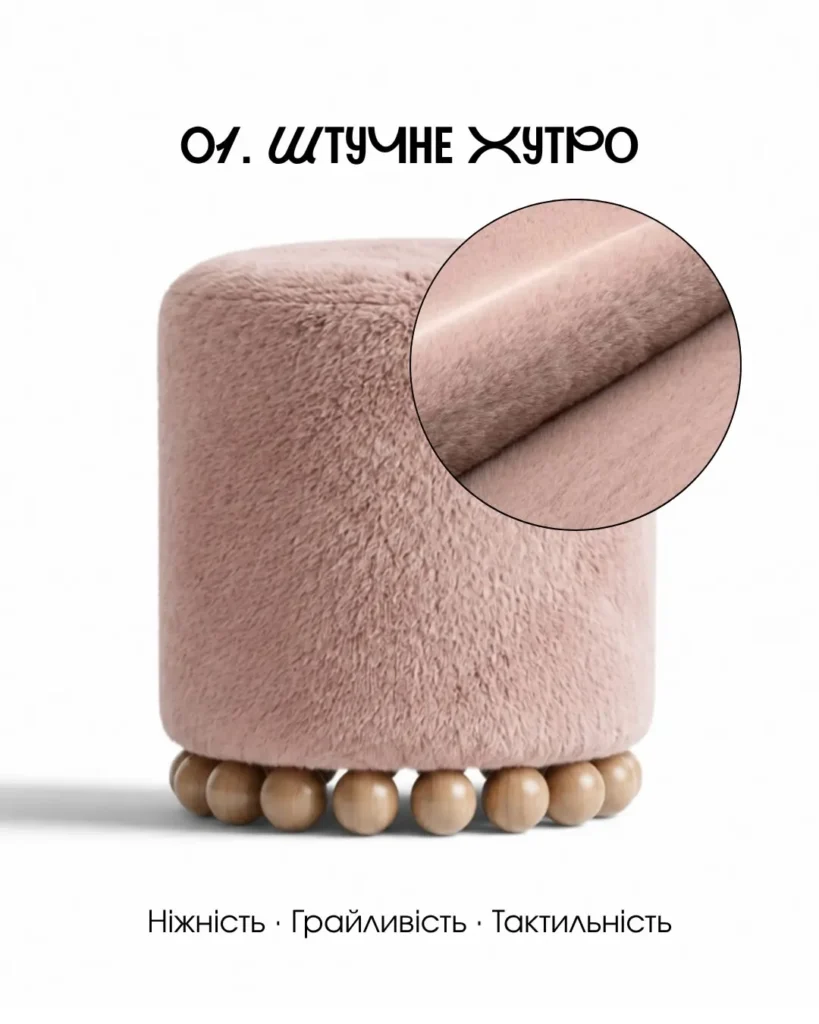
01. Faux fur: tenderness, playfulness, tactility
Faux fur immediately changes the feel of the pouf. The same round silhouette becomes softer, more gentle, almost playful. You want to touch it. It no longer just stands in the room – it invites contact.
In a pink hue, faux fur particularly enhances the three qualities noted on the slide: tenderness, playfulness, tactility. This pouf works well where emotional softness is needed: in a bedroom, dressing room, beauty area, children’s room, or in a salon where the space should be warm and photogenic.
But faux fur needs a precise context. If there are already a lot of active textures, pile, complex decor or very saturated colors around, such a pouf can look too decorative. But in a minimalist interior, it becomes a soft emotional accent.
| Material | Impression | Where it works best |
|---|---|---|
| Faux fur | tenderness, playfulness, tactility | bedroom, dressing room, beauty area, salon |
Faux fur is a choice not about severity but about touch. It adds a less formal feel to a space.
02. BOVINE LEATHER: Audacity, expressiveness, status
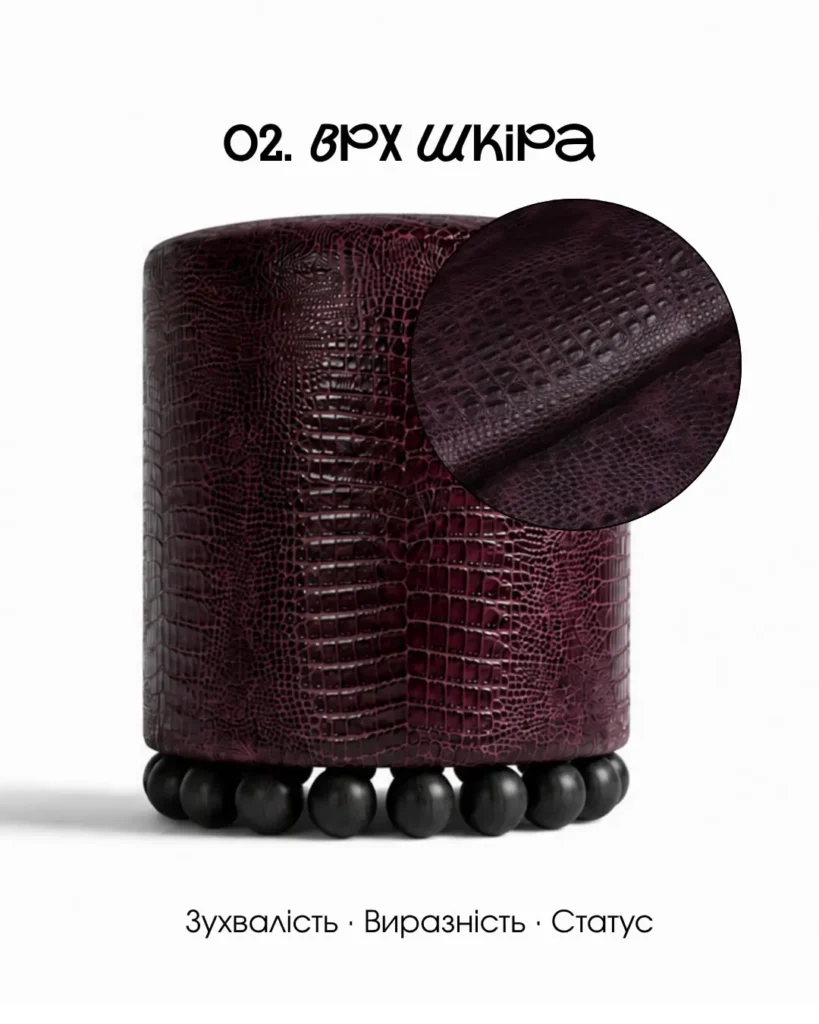
Leather works completely differently. The dark burgundy material with a distinct texture changes the pouf radically: it becomes dramatic, confident, status-conscious. The rounded shape remains soft, but the surface adds strength.
On the slide, this option is described in three words: audacity, expressiveness, status. And that’s an accurate reading. This pouf doesn’t want to be a neutral detail. It works best where the space is ready for a stronger object: in a lounge area, office, hotel lobby, salon, showroom, or living room with a deep palette.
Leather or leather texture is visually perceived as more architectural. It adds density to the object. In combination with black ball legs, the pouf looks more graphic than in light fabrics.
This is no longer just a soft pouf. It is an object with a position.
Error → solution
Error: choose leather only because of its “premium look.”
Decision: see if the space supports that drama: dark wood, metal, stone, rich walls, or expressive lighting.
03. Mat: structural, restrained, reliable
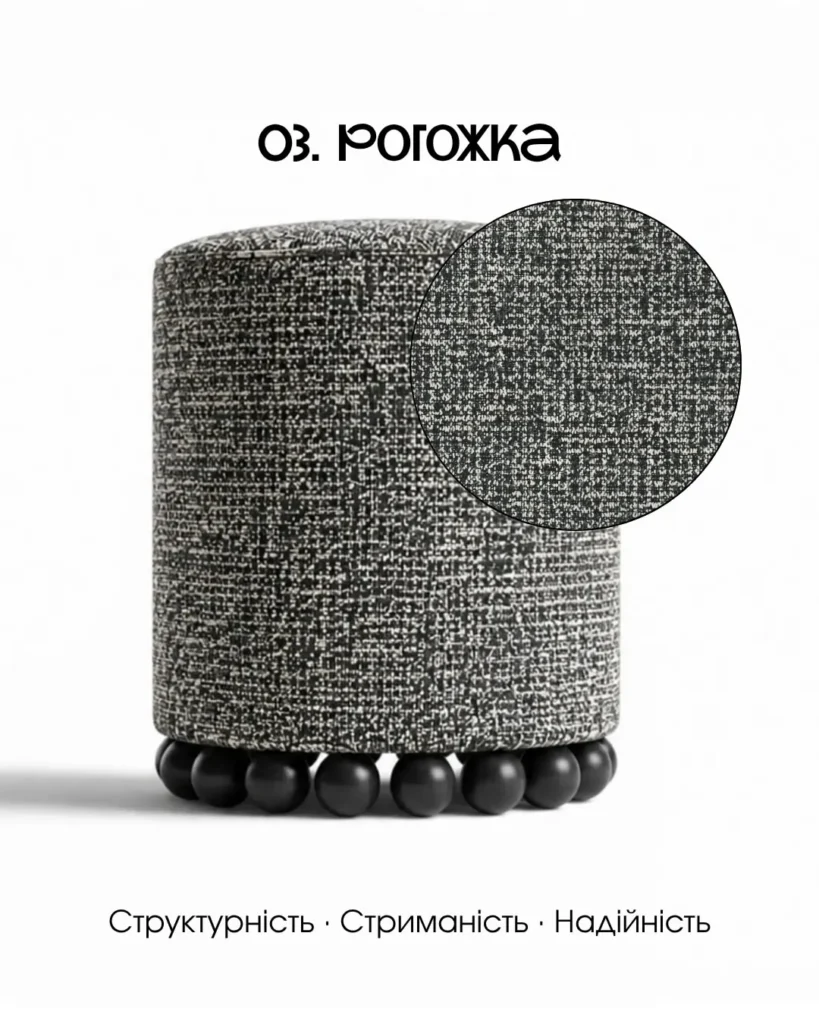
Mat is a material with a completely different logic. It doesn’t try to look soft-romantic or daring. Its strength lies in its structure.
On the slide, the mat is described as structure, restraint, reliability. This is the option that makes the pouf more calm, collected, and practical. The expressive weaving gives the surface a textile character, but does not overload the shape.
The mat works well in modern interiors where tactile honesty is important: natural wood, smooth walls, a calm palette, minimalist furniture, soft neutral rugs. In such a context, the pouf does not scream, but looks confident.
For making poufs Mats are one of the most balanced options. They are appropriate both at home and in commercial spaces. Especially where you need to combine design with everyday use.
The mat doesn’t hide the texture. It shows it. And that’s why it looks calm, but not empty.
04. Chenille: warmth, peace, nobility
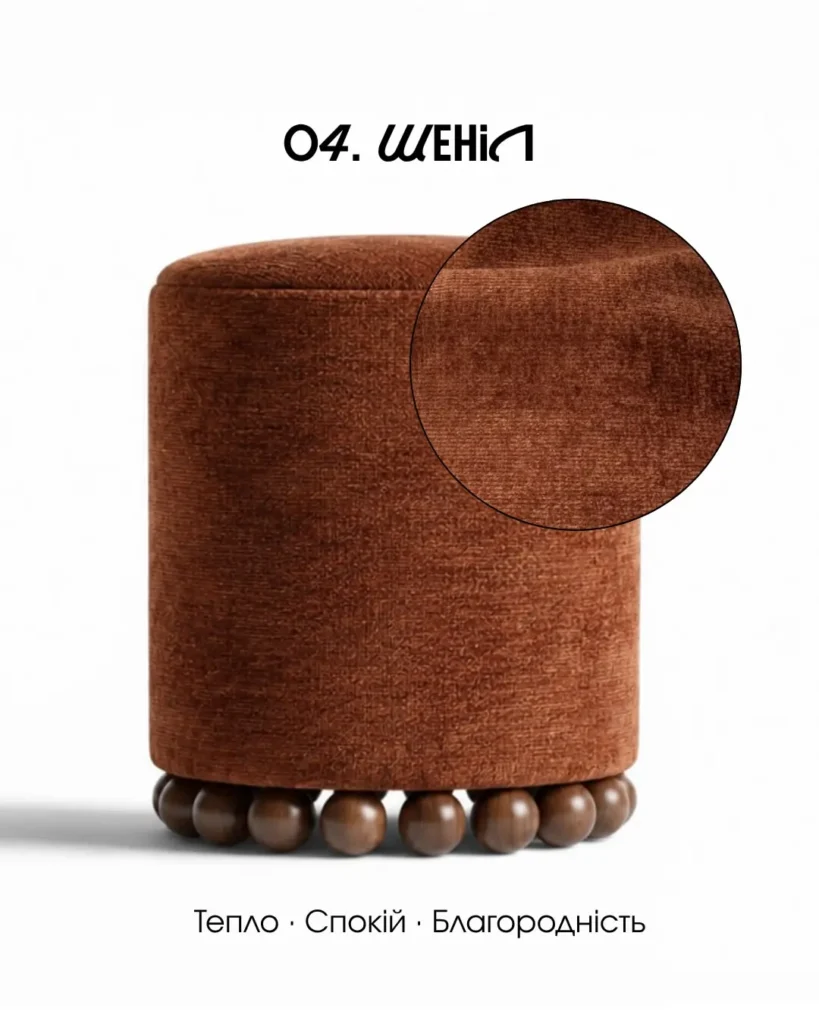
Chenille adds warmth to the pouf. In a terracotta shade, it looks soft, deep, and very interior. It’s not a cold decorativeness, but the feeling of an object that easily fits into a home space.
On the slide, chenille is described with the words: warmth, peace, nobility. And here the combination itself is important. Warmth without excessive softness. Calmness without impersonality. Nobility without ostentation.
This pouf works well in a living room, bedroom, reading area, next to a dressing table or next to a chair. It can complement warm wood tones, terracotta walls, beige textiles, bronze or brass details.
Chenille is a good choice for those who want a custom-made pouf not as a sharp accent, but as an item that adds depth and soft maturity to the interior.
Before / after
To: The room looks bright but a little cool.
After: A pouf in warm chenille adds depth, softness, and a calming accent to the space.
05. Velour: sophistication, richness, luxury
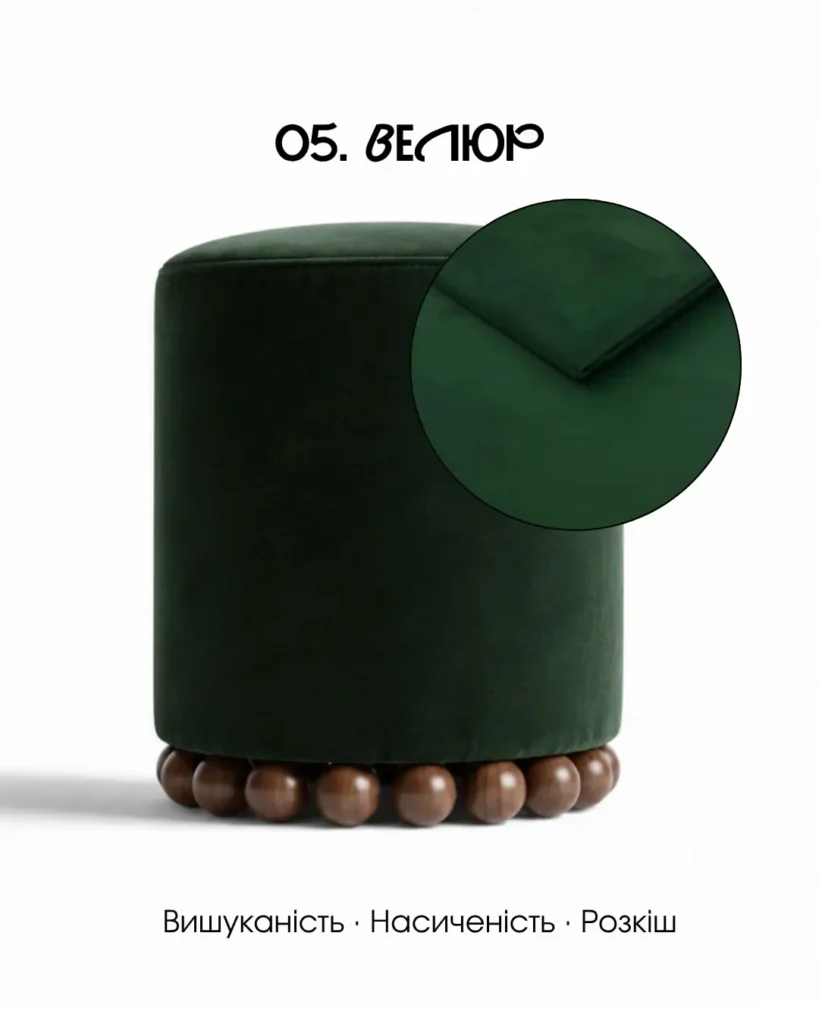
Velour works through the depth of color. It changes under the light, making the surface more alive and adding a sense of sophistication to the object. Even a simple shape in velour feels softer and richer.
On the slide, velour is described as sophistication, richness, luxury. This is especially noticeable in the green version. The color becomes deep, almost jewel-like. The pouf looks not just as an additional seat, but as an accent piece.
Velour works well in interiors that feature:
- soft evening light;
- dark wood;
- brass or bronze;
- deep colors;
- mirrors;
- textile curtains;
- lounge mood.
But velour requires careful color selection. In light shades, it can sound delicate, in dark shades – dramatic, in rich ones – almost theatrical.
If you need a pouf for your living room, den, or bedroom with a sense of depth, velour can be one of the strongest materials.
06. Boucle: coziness, texture, comfort
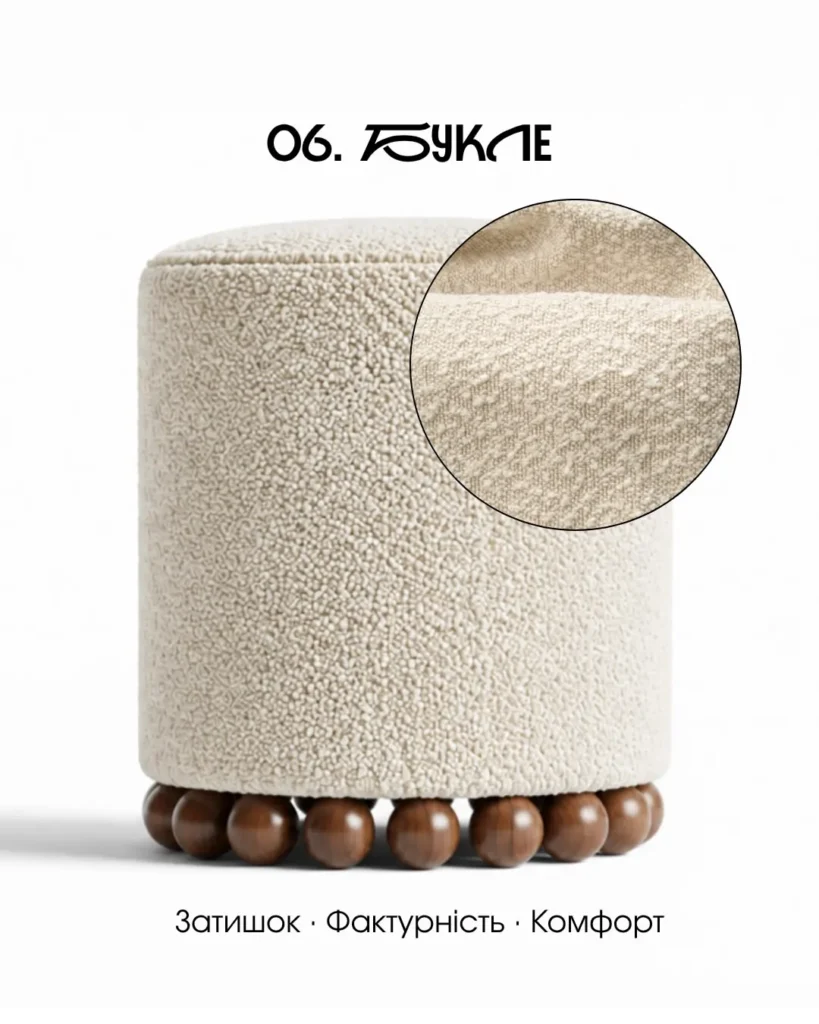
Boucle is a material that is immediately associated with coziness. Its voluminous surface softens the shape, adds texture to the pouf, and makes the object visually warmer.
On the slide, the brochure is described in three words: coziness, texture, comfort. This is a very precise formula. Boucle does not need an active color to be noticeable. Even in a light shade, it creates a distinct surface.
A light boucle pouf works well in bedrooms, lounge areas, salons, hotel rooms and living rooms where a soft, calming accent is desired. It doesn’t add a sharp contrast to the space, but makes it more tactile.
Boucle goes especially well with rounded shapes. A round pouf on ball legs in this material looks holistic: the texture, shape, and base work in the same direction – towards softness.
This is an option for those who don’t want a “spectacular wow item,” but a deeper comfort in the space.
07. Print: accent, self-expression, art
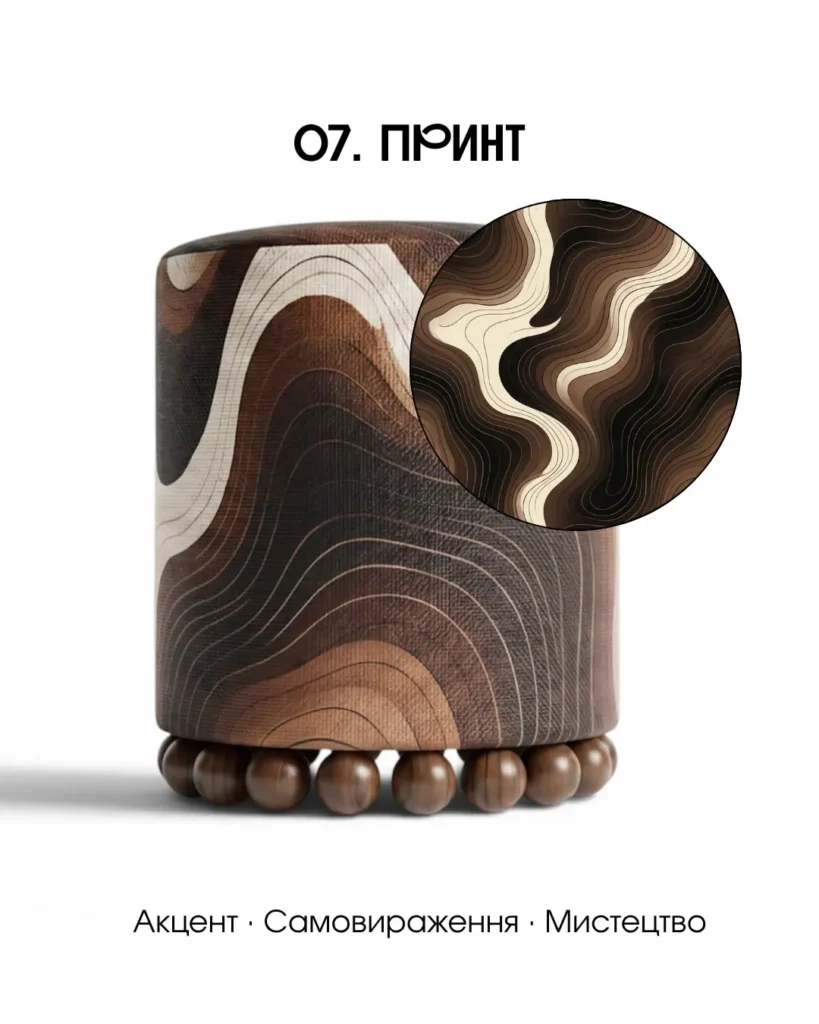
Print is the most expressive incarnation of the pouf. Here the material becomes not only a texture, but also a carrier of graphics. The pouf begins to function as an art object.
On the slide, the print is described with the words: accent, self-expression, art. And this is fully consistent with the KAIZEN philosophy. Art print allows you to make a pouf not just a part of the interior, but a personal statement.
Such an object can transform even a very neutral room. In a calm bedroom, it adds rhythm. In a living room, it adds a focal point. In a salon, it adds photogenicity. In a showroom, it adds brand character. In a lounge area, it adds emotion.
That is why the print is logically connected to the KAIZEN collection approach. In Resonance collections Art prints, rounded silhouettes and ball-shaped legs work as a single system. The pouf, ottoman and armchair can be separate accents or parts of a single visual ensemble.
A print is the boldest way to say: this item is not random.
How to choose a material for a custom-made pouf
When you choose custom-made pouf, you shouldn’t just start with the question “what material is beautiful?” It’s better to start with the role of the object in space.
1. If softness is needed
Choose faux fur, boucle, or chenille. They work best in bedrooms, dressing rooms, beauty areas, and living rooms with a warm vibe.
2. If you need status
Consider leather or suede. They add depth, expression, and a stronger first impression.
3. If practical restraint is required
A mat will be one of the most accurate options. It looks structural and does not overload the interior.
4. If you need an accent
Choose a print. Especially if the space looks aesthetically pleasing but too neutral.
5. If the pouf is needed for business
Evaluate not only the appearance, but also the scenario: salon, showroom, reception, office lounge area, waiting area. There, the material works not only for beauty, but also for the customer experience.
| Material | Nature | Best Screenplay |
|---|---|---|
| Faux fur | tenderness, playfulness | bedroom, dressing room, beauty area |
| Cattle leather | audacity, status | lounge, office, salon, showroom |
| Basket | restraint, reliability | living room, hallway, office |
| Chenille | warmth, nobility | bedroom, living room, relaxation area |
| Velour | richness, luxury | salon, lounge, accent area |
| Boucle | coziness, comfort | bedroom, hotel, lounge |
| self-expression, art | home, showroom, salon, reception |
Material in the context of space
The material does not exist on its own. It always interacts with light, the floor, the walls, other furniture, and even the movement scenario.
In a small room, an active print can be a strong accent, but it needs a calm background. In a large space, it can look more balanced. A light bouclé in a dark interior will create a soft contrast. Dark leather in a light room will add drama. A mat in a space with wood will support natural structure.
That’s why custom-made poufs shouldn’t be a mechanical choice from a set of fabrics. It’s a dialogue about space.
Selection formula:
MATERIAL = SCRIPT + TOUCH + LIGHT + CHARACTER
If the pouf will stand next to a chair in the lounge area, one material will be appropriate. If next to a dressing table, another. If in a beauty salon, a third. If in an office reception, a fourth.
By the way, in the article “Lounge chair” We’ve already discussed why upholstered furniture in break areas should work not only for seating, but also for atmosphere. For an ottoman, this logic is the same: the material forms the first contact with the object.
How KAIZEN poufs are made
The pouf seems like a small object, but precision is important when working with it. The shape must be stable. The material must be properly stretched. The seams must be neat. The legs must match the image. If there is a print, it must fit the volume correctly.
In KAIZEN, the ordering process is carried out in stages: model selection, parts approval, production launch, testing, delivery. This process is described in more detail in the article “Upholstered furniture: 6 steps to the finished product”.
For a pouf, it is especially important to agree in advance:
- form;
- size;
- material;
- color;
- print or plain fabric;
- leg color;
- usage scenario;
- practicality requirements.
If it’s a pouf for the home, the priority may be tactility. If for the salon, wear resistance and photogenicity. If for the office, restraint and ease of care. If for the showroom, character and visual recognition.
It is in this sense that a custom-made pouf is not “the same product, but in a different fabric.” It is an item that is assembled for a specific task.
Where to see KAIZEN poufs
If you want to look at ready-made options and understand which character is closer to your interior, you should start with the category KAIZEN poufs. There, the pouf can be perceived not as a small piece of furniture, but as a soft accent for the bedroom, living room, hallway, salon or lounge area.
For a broader overview of KAIZEN items, you can go to shop, where various formats of upholstered furniture are collected.
If you need an individual selection of material, it is better to write in Direct KAIZEN. It is enough to briefly describe where the pouf is needed, what mood the space should have, and what material resonated the most: faux fur, leather, matting, chenille, velor, boucle, or print.
Conclusion: one pouf — seven different moods
One shape does not mean one character. In the case of a pouf, the material changes almost everything: the first impression, the mood, the tactility, the status, the depth of color, the feeling of warmth or boldness.
Faux fur makes the pouf gentle and playful. Leather – bold and status. Mat – restrained and reliable. Chenille – warm and noble. Velour – rich and elegant. Boucle – cozy and textured. Print – accent and artistic.
That’s why making poufs KAIZEN doesn’t just start with form. It starts with the question: what should the object feel like?
If needed custom-made pouf, which will not look random, it is worth choosing the material not in isolation, but in the context of the space. Where it will stand. What light will be nearby. What mood should it support. Should it be calm, soft, bold or become an art accent.
The material is not the final detail. It is the language the pouf speaks to the interior.