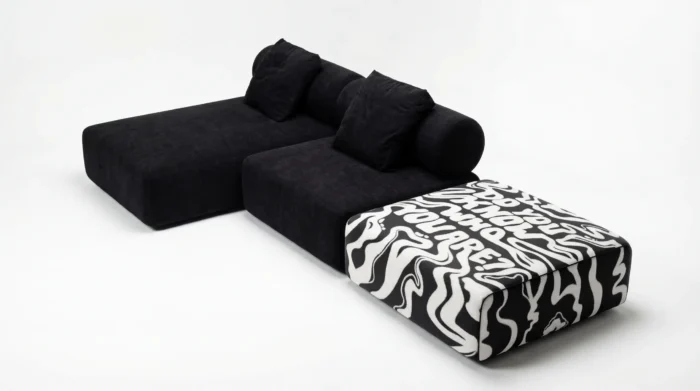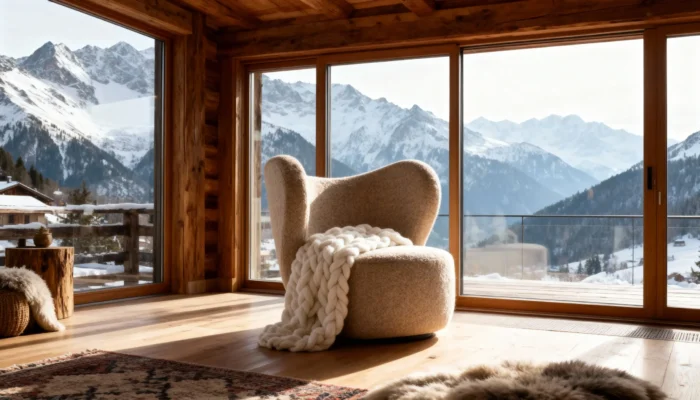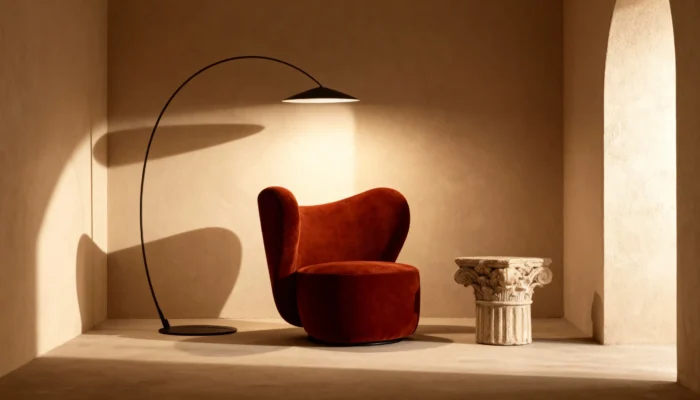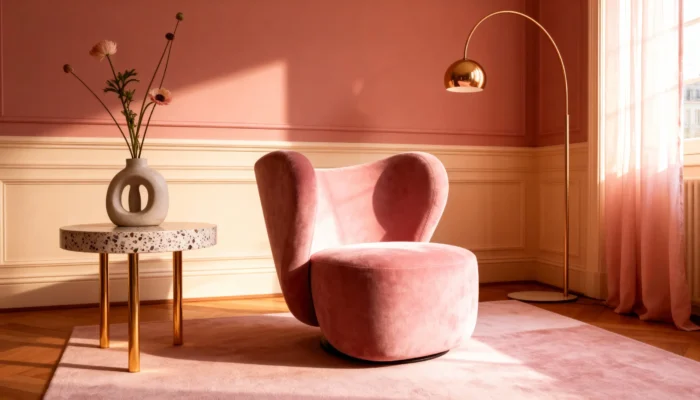
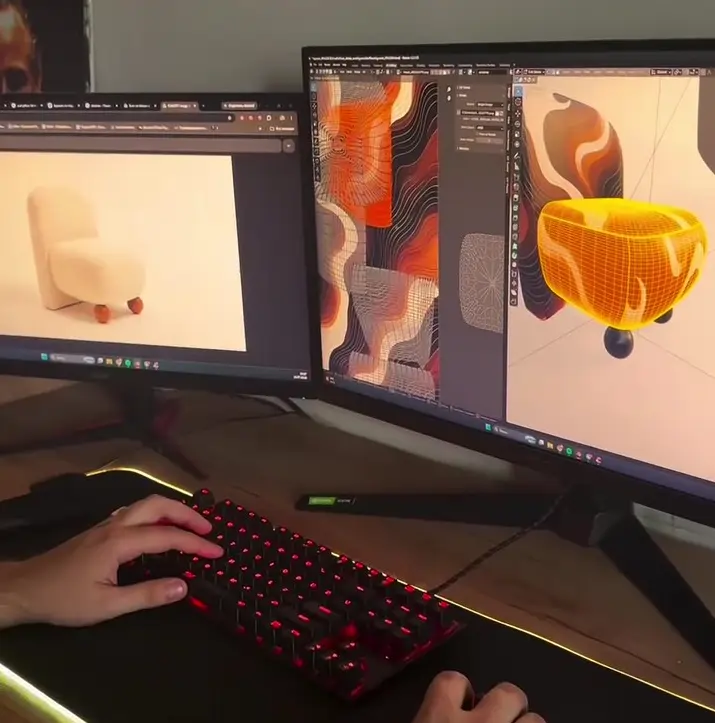
There is only a 3D model on the screen. The shape of the chair exists in a grid, the pouf glows with a yellow digital volume, fragments of future prints are open nearby. This is not yet finished furniture, not a final photo shoot, and not a beautiful picture for a catalog. This is the moment in which character is born.
When KAIZEN first started making art furniture, it seemed that the most difficult thing was to create the shape itself. To think over the silhouette. To find the right proportions. To make the object comfortable, soft, recognizable. But it quickly became clear: the shape is only half the job.
The most difficult thing was the material.
Because if furniture is to be an art object, the fabric cannot be random. It cannot be just “pretty upholstery.” It must withstand daily life, work with form, convey a print, not lose character, and not force you to choose between practicality and beauty.
Exactly so furniture factory KAIZEN came to create its own art textiles. Not because it is easier. On the contrary, it is longer, more complicated and requires more tests. But for designer furniture factories The material is not a secondary stage. It determines what the first impression of the subject will be.
Why furniture shape is just the beginning
Most people look at furniture through its silhouette. An armchair should be soft. An ottoman should be round or compact. A bench should be comfortable and proportionate. A sofa should be visually pleasing and comfortable. This makes sense: the shape is the first thing that comes to mind.
But design doesn’t end with form.
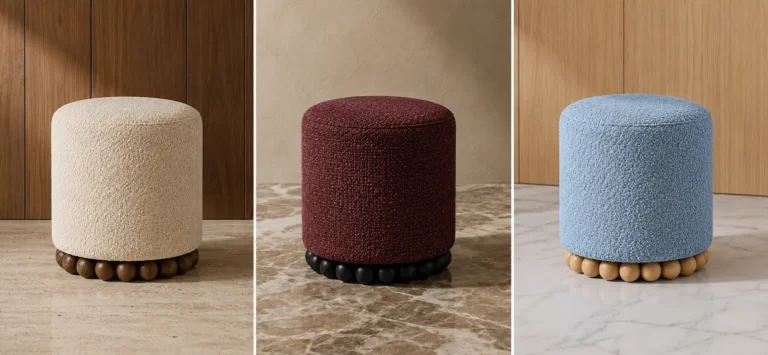
The same model can look calm, bold, premium, warm or almost gallery-like, depending on the material. This is exactly what we discussed in the article about making poufs and how material changes furniture. One pouf can have seven different characters if you just change the fabric, leather, texture or print.
For KAIZEN, this is a fundamental point. Furniture should not just be an object of the correct shape. It should resonate in the interior.
Formula:
DESIGNER FURNITURE = FORM × MATERIAL × PRINT × SCENARIO
Shape gives volume. Material gives feel. Print gives character. The scenario decides how the object will live: in the bedroom, living room, salon, showroom, office or lounge area.
That is why a designer furniture factory cannot work only with ready-made standard fabrics. For art furniture, a fabric is needed that is itself part of the idea.
The problem that KAIZEN faced at the start
The video puts it very bluntly: when KAIZEN started making art furniture, a problem immediately arose – there simply weren’t enough high-quality and stylish printed fabrics in Ukraine.
There were two types of options.
The first is something that is too monochromatic. The material may be of decent quality, but it doesn’t give the space any character. These fabrics work well for neutral furniture, but not for items that are meant to be accent pieces.
The second is beauty that “will fall apart in a month.” The print might look interesting on a sample, but it didn’t inspire confidence for the real product. And furniture is not a poster or decorative fabric for one season. They are sat on, touched, and live in the room every day.
| Material option | What didn’t suit you? | Why this is a problem for art furniture |
|---|---|---|
| Plain fabric | lacks character | the subject does not become the accent |
| Decorative print without a solid base | questionable durability | furniture loses its appearance in everyday life |
| Casual ready-made textiles | not made for the form | the print doesn’t work with the furniture silhouette |
That’s why KAIZEN decided not to wait for the perfect material to be ready. If the right fabric doesn’t exist, it has to be created.
Art textiles as part of KAIZEN DNA
Art textiles at KAIZEN start with a solid base. Not with a picture. Not with a decorative pattern. Not with the desire to simply make it “brighter.” First, you need a material that can withstand the furniture scenario.
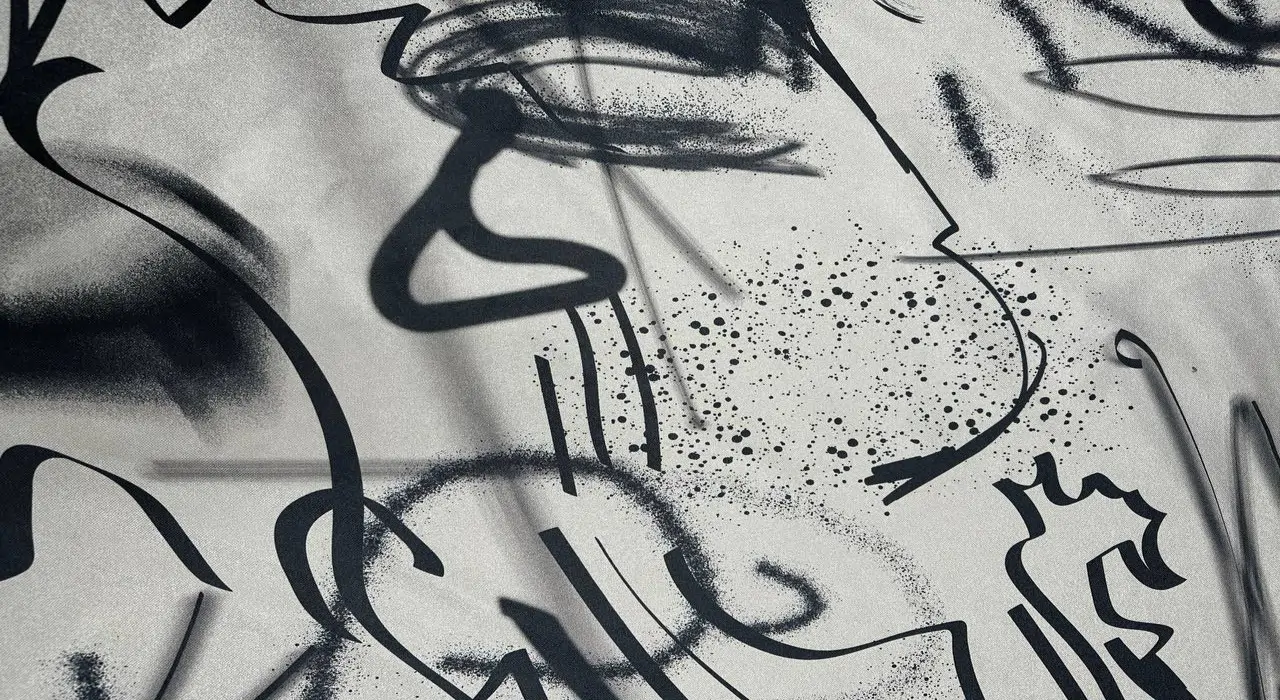
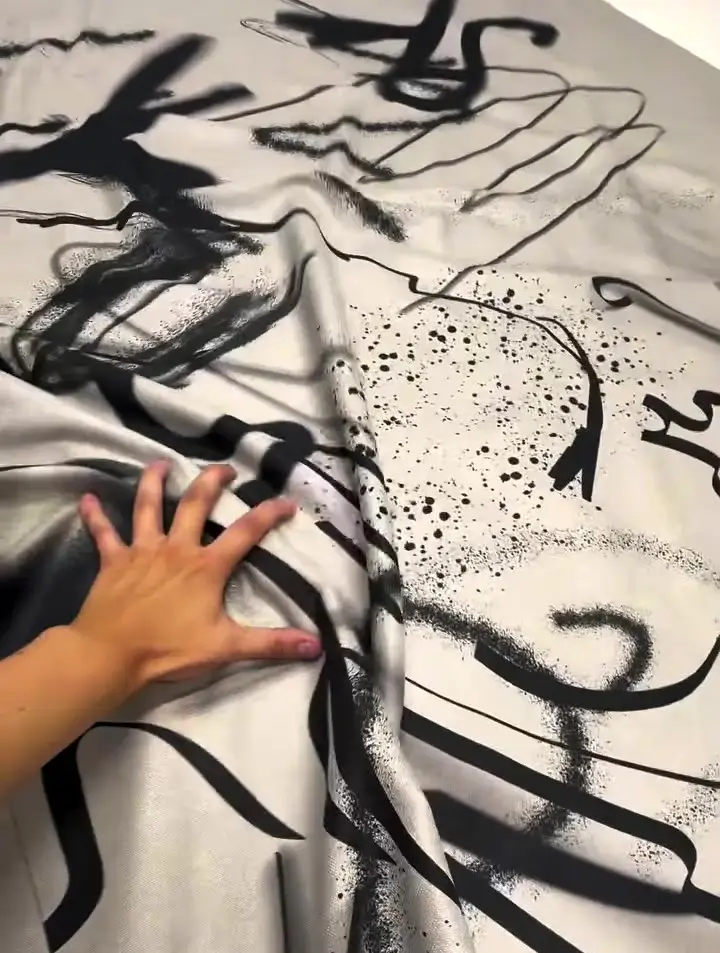
Then, the author’s drawings are applied to this base. This is how the fabric remains strong, but acquires character.
This is an important balance. Because art furniture shouldn’t be a fragile experiment. It should be functional objects: poufs, armchairs, banquettes, sofas that work in real spaces.
In KAIZEN, designer textiles are not needed for decoration on top of furniture. They are created together with the furniture. The design should take into account the shape, scale, curves, joints, proportions, and how the object will be perceived in the room.
Textile KAIZEN = solid base + author’s drawing + furniture scenario
When these three parts come together, the material ceases to be just upholstery. It becomes the language of the object.
It is this approach that underlies the article. “Buy an ottoman: a soft accent for a modern interior”. A pouf may be a small item, but through its fabric, print, and shape, it has the ability to change the feel of an entire area.
Furniture factory or design studio: why KAIZEN combines both logics
Word furniture factory often associated with mass production: one model, one fabric, one design, many identical items. But KAIZEN works differently.
KAIZEN is a furniture factory that thinks like a design studio. Here, not only the fact of production itself is important, but also the development: form, art textiles, print, material, scenario, customization.
That is why it is more accurate to say: KAIZEN is designer furniture factory, where production is not separated from the idea. An object is not simply “made.” It goes from idea to material, from digital model to fabric, from print to finished form.
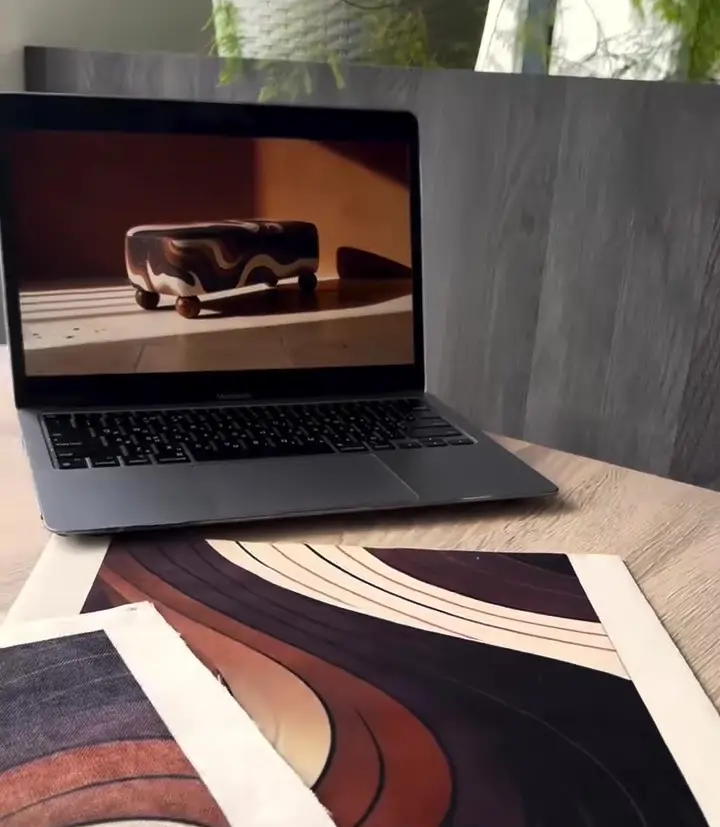
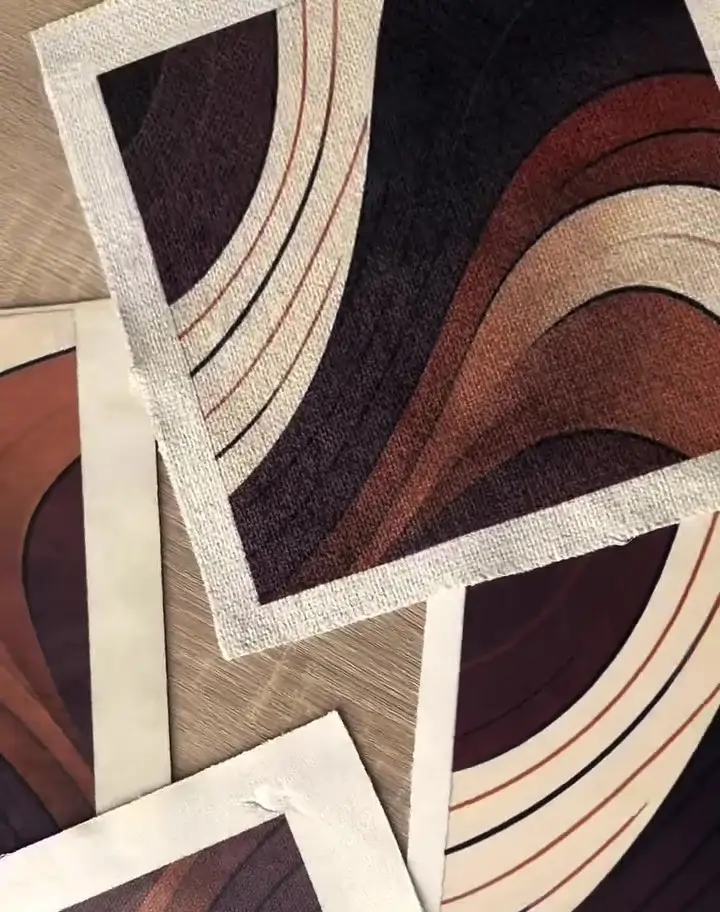
This is clearly visible in the video: first, screens with models and visualizations, then a search for textiles, then samples of the author’s print, and then fragments of the future collection. This is not a linear process of “draw – sew”. This is a gradual adjustment of all the details.
Error → solution
Error: perceive a furniture factory only as a place where something is assembled.
Decision: see production as a system: design, material, testing, textiles, form, control.
Error: to think that art furniture is just a standard model in a bright fabric.
Decision: create fabric, print and object as a single composition.
Error: to choose between beauty and practicality.
Decision: start with a solid base and add your own character on top of it.
The first collection as the result of a long journey
The KAIZEN post honestly says: the first collection takes longer to create than planned. And this is not a weakness of the process, but its essence.
Because when a brand wants to make furniture “exactly as intended,” it has to go through more stages. Don’t settle for a fabric that just “almost fits.” Don’t take a print that only looks good on screen. Don’t launch an item into a collection if the material doesn’t convey the right feeling.
The first KAIZEN collection is Resonance. It starts with the Oasis armchair, the Ritmo banquette and the Ritmo pouf. All of these pieces are united by rounded silhouettes, spherical legs, original art prints and the idea of furniture with character.
Resonance shows why KAIZEN needs its own art textiles. Without it, the collection would simply be a set of soft shapes. With it, it becomes a system of accents.
| Collection item | The role of form | The role of textiles |
|---|---|---|
| Oasis armchair | sculptural planting | creates a strong artistic accent |
| Ritmo bench | soft horizontal | reveals the print on a long plane |
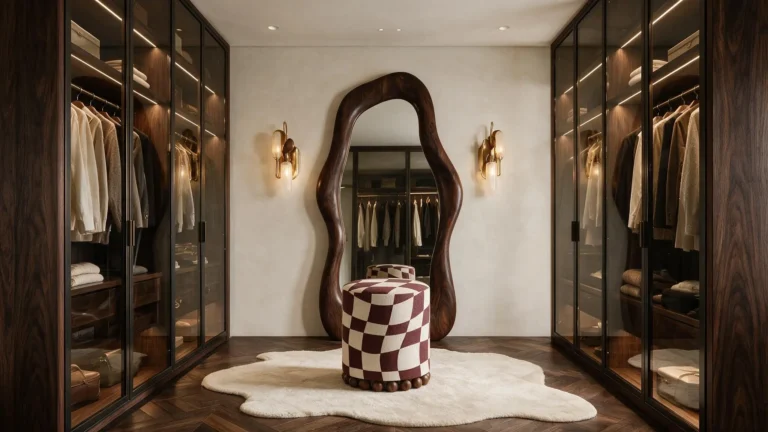
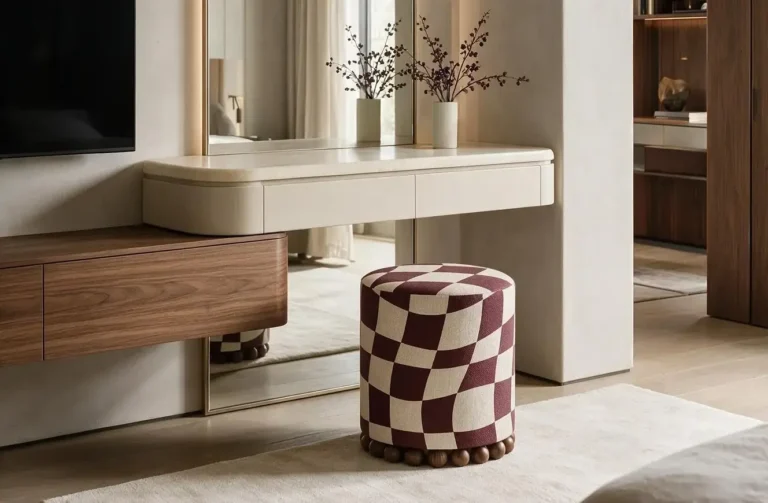
| Ritmo pouf | mobile accent | shows character in a compact form |
When the material is created around the idea of a collection, the objects don’t look random. They speak the same language.
Why art textiles should be more than just beautiful
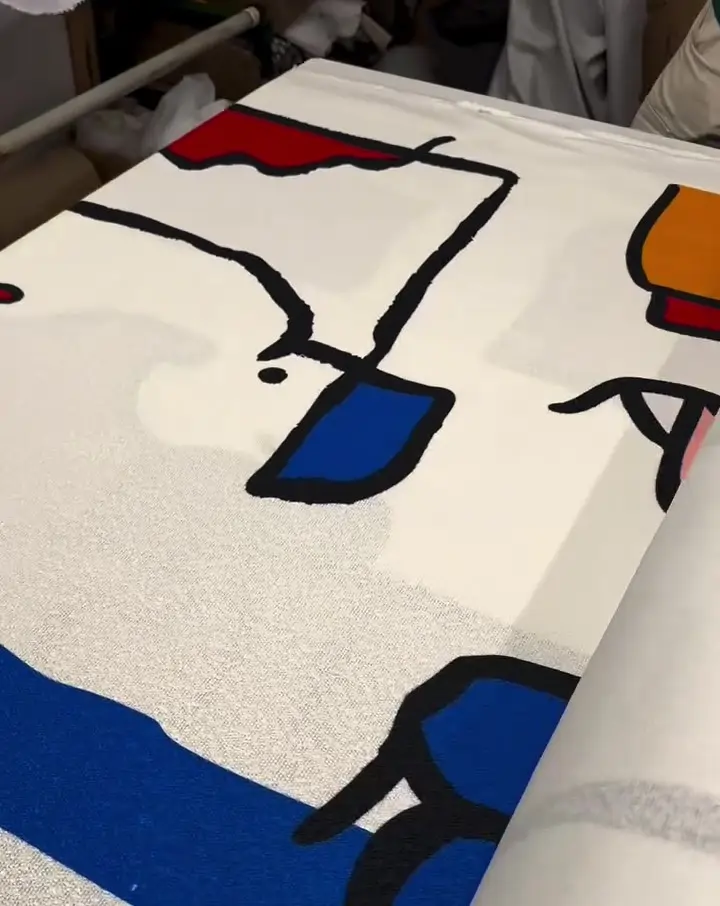
Beautiful fabric may look good in a photo. But furniture lives not only in the frame. It is used every day. It is sat on. It is moved. It is touched with hands. It stands in sunlight, in rooms with different humidity, next to wood, metal, stone, carpets, mirrors.
Therefore, fabric for designer furniture must perform several tasks at the same time.
It should be pleasant to the touch. It should hold the print. It should maintain its shape. It should have sufficient density. It should look not as a decorative compromise, but as a full-fledged part of the product.
That’s why KAIZEN wasn’t just looking for “a nice fabric with a pattern.” The challenge was different: to find or create a material that doesn’t force you to choose between practicality and aesthetics.
Formula:
QUALITY ART TEXTILE = STRENGTH + TOUCH + COLOR + PRINT + LONG LIFE IN THE INTERIOR
If you remove the strength, the fabric will become decoration. If you remove the print, the furniture will lose its character. If you remove the tactility, the object will not want to be used. If you remove the connection with the interior, even a beautiful material will look alien.
From digital model to fabric
The first frame of the video shows work with digital models. This is an important detail. Because a modern designer furniture factory doesn’t start with a random sketch on a napkin. It works with form as a system.
First you need to understand the silhouette. Where will the volume be. Where will the curve be. What part of the furniture will be the main plane for the print. How will the pattern be positioned on a chair, ottoman, or banquette? Will it be readable from a distance? Will it not get lost in the seams? Will it not become too noisy in a small form.
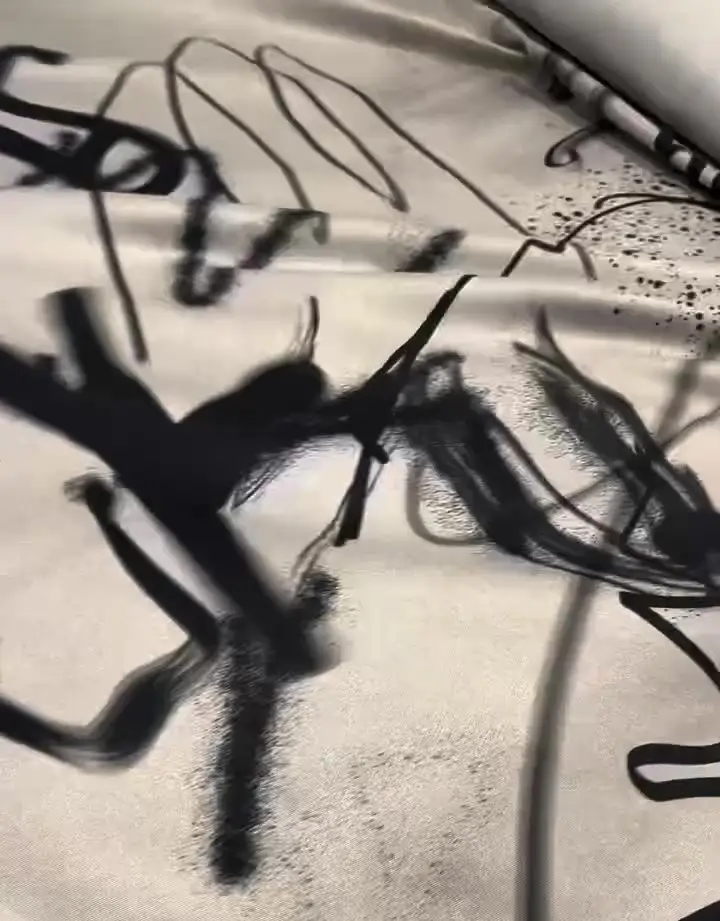
After that, textiles appear. And here another work begins: to translate the visual idea into material. Because a print on a screen and a print on fabric are not the same. Fabric has a texture, weave, density, color absorption, a different scale of perception.
That’s why in the video there are two realities side by side: a 3D model and a physical fabric sample. For KAIZEN, they must meet in one finished product.
How designer textiles change furniture
Designer textiles give furniture more than just color. They give it tone.
An ottoman can be a neutral soft object. But if it has a print, it becomes an accent. A bench can be just a comfortable detail by the bed. But with designer textiles, it begins to shape the character of a bedroom or hallway. An armchair can be a place to sit. But with the right art print, it becomes an object around which the entire lounge area gathers.
This is especially important for commercial spaces: salons, showrooms, receptions, hotels, offices. There, furniture works not only for comfort, but also for memorability. A person may not remember the color of the wall, but they will remember an armchair or an ottoman that had character.
This is no less important for private interiors. Art textiles allow a space to stop being “correct” and become personal.
That is why KAIZEN consistently develops the theme of furniture as art objects: not decorative things for effect, but functional items that can be used every day.
KAIZEN as a designer furniture factory for new interiors
Modern interiors often lack not furniture, but courage. They already have a sofa, a bed, bedside tables, wardrobes, and lighting. But there is not always an object that creates an emotional center.
The KAIZEN designer furniture factory works with this very task. It’s not just about covering the need for seating. It’s not just about making a “comfortable pouf” or a “soft chair.” It’s about creating an object that will have its own voice in the room.
For this you need:
- thoughtful shape;
- high-quality furniture base;
- designer textiles;
- correct print scale;
- customization option;
- understanding the interior scenario;
- production control.
This is not a fast path. But speed is not always the main value. There is a phrase in the KAIZEN post: “There are things that are worth doing exactly as intended.” For the first collection, this is a very accurate explanation.
Where to see KAIZEN furniture
You can see current items in KAIZEN store. It contains furniture that develops the idea of an accent piece: poufs, armchairs, banquettes, sofas and other formats of upholstered furniture.
If you’re interested in a small piece to start with, a pouf is a good place to start. It’s compact, portable, and a great way to show how material and print can change an interior without completely revamping a room. Read more about it in the article “Buy an ottoman: a soft accent for a modern interior”.
And if you want to understand the path from idea to collection, you should check out KAIZEN’s Instagram post about creating art textiles:
Conclusion: a material that doesn’t force you to choose between beauty and practicality
KAIZEN started with the desire to create art furniture. But it quickly became clear: for such furniture to be authentic, it is not enough to come up with a form. You need a material that can withstand the idea.
Not just a plain fabric. Not a random print. Not decorative beauty for a short time. But art textiles that have a solid base, an author’s drawing and the ability to live in a real interior.
That is why the KAIZEN furniture factory creates not only furniture, but also its own material language. This is the language of fabrics, prints, textures, silhouettes and details. A language in which furniture can be practical, but not faceless. Expressive, but not random. Artistic, but suitable for everyday life.
If you want to choose an art textile item for your space or get advice on materials, you can write KAIZEN to Direct. You can start with something simple: a photo of the room, a brief description of the mood, and an understanding of what kind of item you need – an ottoman, an armchair, a banquette, or part of a future collection.