Зміст
Why are the chairs in the living room no less important than the sofa?
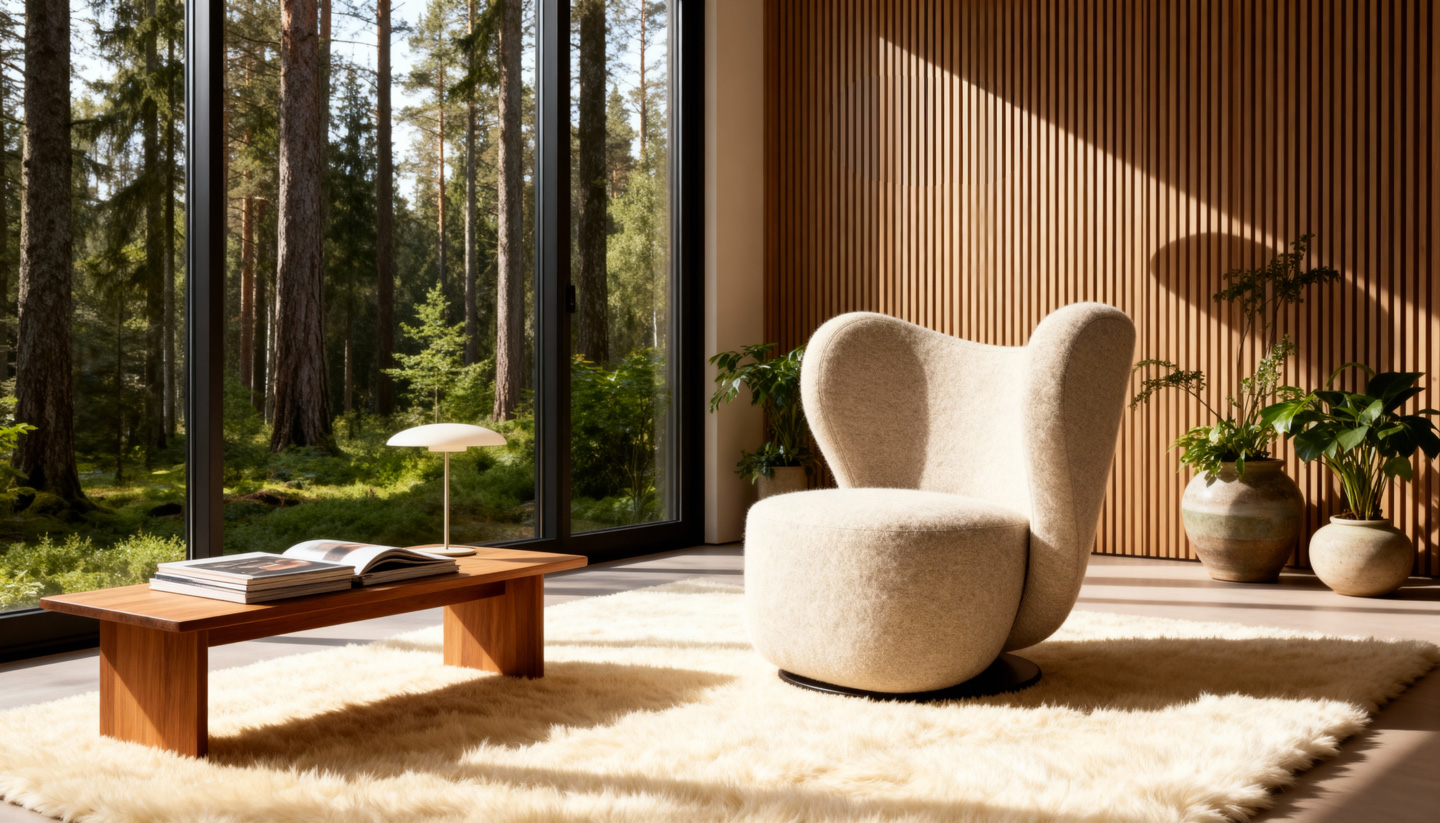
Armchairs in the living room have long ceased to be secondary. They form holiday scenarios: where you read, drink coffee, watch TV series, calm down after a busy day. Recreation chairs are a personal place that works only for you, not “everyone at once” like a sofa.
One well-thought-out chair can change the behavior in the room: you stop “living on the couch”, there is a point where you can be alone with a laptop or book, sit with a child, just reload your head.
Rest chairs are the compact architecture of your condition: the shape and ergonomics of the chairs affect how you breathe, sit, relax and concentrate every day.
For the Kaizen brand, the chair is not an addition to the sofa, but a separate tool for performance and recovery. Especially in futuristic interiors, where each element works on a life scenario.
Where to start choosing a chair for a seating room in the living room?
1. Scenarios: What exactly are you doing in the chair?
Start not with color, but with honest answers about your lifestyle. The most common scenarios are:
“Reading, watching content, listening to music”
“I work on a laptop in the living room”
“Hanging with guests, drinking coffee”
“I want a confident relaxation zoning just to” fall out “after a day”
Under each script, the chairs in the living room will be different: from compact models with a more vertical landing to deep lounge seats with a footboard.
2. Space: how much space is there really?
Before watching the collections of chairs for rest, measure:
distance from the sofa to the planned place for the chair;
depth of passages (leave at least 70-90 cm for comfortable movement);
The height of window sills, floor windows, radiators, so as not to block the light.
So you avoid a typical scenario: “The chair is beautiful on the visualization, and the room blocks the route to the kitchen.”
3. The role of the chair in the composition of the living room
Armchairs in the living room can:
support the sofa (calm form, close colors, similar materials);
work as an accent (other geometry, bolder color, non-standard support);
act as a “buffer” between the zones (for example, between the sofa and the kitchen-studio).
If you want to understand the basic logic of building a living room around the couch, you should read the Kaizen guide about choosing a sofa for the living room: “Sofa in the living room: sofas for a stylish comfortable house.”
What are the seating chairs in the living room?
Basic formats of chairs in the living room
Lounge chair/read chair
Deeper landing, soft armrests, often – headrest. The ideal option is a “chair for a book + a blanket”.armchair with footrest or pouf
When it is important to completely relax your legs. Works well in separate corners by the window or by the fireplace.Compact chair for small living rooms
Reduced seat depth, more “collected” shape, often on legs to leave visual lightness.rocking chair or swing armchair
For those who love a soothing movement. You need to pay special attention to the stability and safety of the structure.Modular chair in the sofa system
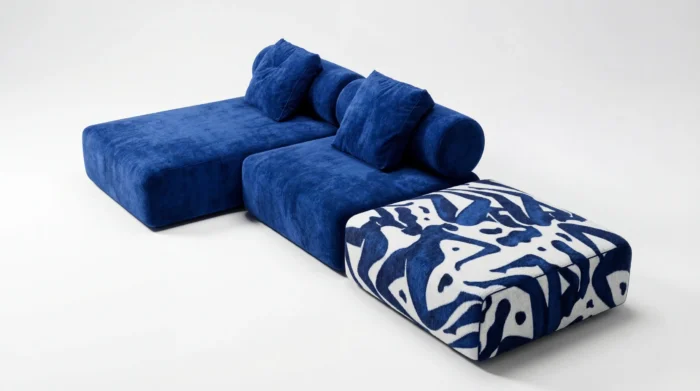
Part of a modular kit that can work as a separate relaxation chair or connect to a sofa.
Table: Which seating chair format is right for you
| Chair format | For which space | Who is most suitable for | practiced |
|---|---|---|---|
| Deep landing lounge chair | Medium and large living rooms | those who love to read, watch movies, meditate | Maximum relaxation, the feeling of “hugs” of furniture |
| Footrest/Puff chair | Window area, fireplace | those who have tired legs who sit a lot | Unloading legs, comfort for long evenings |
| Compact chair on legs | Small apartments, studios | those who are limited in area but want chairs in the living room | Visual lightness, preservation of passages |
| rocking chair / rocking chair | Family living rooms, children’s areas | to young parents, those who love “grounding” movement | Soothing effect, gentle scenarios with children |
| Sofa modular chair | Open Space, Big Rooms | those who often change the configuration of space | Flexibility, the ability to reformat the seating area |
If you understand which line of the plate your script falls into, it’s easier to focus on specific models.
Ergonomics: how to understand that a seating chair is really comfortable?
Armchairs in the living room can look impressive, but to fall in the main – comfort. What to check:
Height and depth of seating
The legs are completely on the floor, the knees are about 90 °;
between the edge of the seat and the knee there are 2-4 fingers of free space;
If you “slip” forward or can not lean your back – the chair is too deep.
Back and lumbar support
For seating chairs it is especially important:
easy natural bend in the lumbar region;
Sufficient height of the back so that you can change the poses – from “sitting straight” to “semi-delimited”.
Armrests and supports
elbows lie freely, shoulders do not rise;
In narrow living rooms thin armrests and armchairs on legs work better – so lightness remains.
In Kaizen, ergonomics are first modeled into 3D: shape, radii, backrest angle and fillers are tested in concepts before launch into production – this is a part of the “Kaizen” -philosophy of constant improvement.
Materials: Which chair in the living room will look premium and durable?
Fabric rest chairs
Fabric is the most versatile option for the living room:
Pleasant tactile, adds comfort;
Large selection of textures: from dense matte to “three-dimensional” boucle;
You can choose wear-resistant furniture fabrics with simple care.
For families with children and animals, you should look at dense tissues with increased abrasion resistance, protective impregnations and anti-mud properties.
Skin and eco-skin
Leather chairs in the living room work as a status accent:
appropriate in modern minimalist, loft and neo-modern interiors;
Combines well with metal supports and dark wood;
Require more delicate care, but age beautifully.
combinations of materials
The futuristic nature of Kaizen is often manifested in the mix:
structural wooden or metal-wooden base;
soft tactile textile with a custom print;
Details in seams, transitions, radii.
Such chairs for rest look technologically and at the same time home.
How to combine a chair, sofa and coffee table into a single seating area?
Armchairs in the living room rarely stand separately – they usually work in a trio: sofa + chair + coffee table. So that the recreation area does not turn into a “furniture warehouse”, it is important:
to keep logic on heights: seats of a sofa, armchairs and height of a table-top should be coordinated;
leave a passage 40-45 cm between upholstered furniture and a table;
Do not put a massive chair on a table that is too light – the composition “moves”.
If you are at the stage of choosing a table, you should look at the detailed guide of Kaizen about coffee tables: “Journal tables: how to choose a table and buy a model that works for your space”. There are well-designed proportions and distances, which are then easy to transfer to the “Chair + Table” connection.
How many chairs do you need in the living room?
There are several working formulas:
1 chair + sofa – enough for small rooms where one personal place is required;
2 chairs opposite the couch – classical scheme for communication;
1 Lounge chair in the corner + compact chair at the table – for multi-scenes spaces.
Rest chairs should complement the sofa, not compete with it. In a large living room you can build two centers: one around the sofa, the other – around a chair by the window or fireplace.
When should you order chairs in the living room individually?
Typical story: there is an atypical layout, a large window, a sofa already stands, and ready-made chairs either do not pass the dimensions, or visually “break” the script. In such cases, the format “to order furniture” works.
Individual ordering of seats for rest in Kaizen is appropriate if:
The living room has a complex geometry (corner windows, panoramas to the floor, columns);
Requires precise docking with a sofa, which is already made to order;
Want an author’s print on fabric: graphics, abstraction, brand symbols;
It is important to adapt to a specific anthropometry (high / low users).
In such projects, the chairs in the living room are developed together with sofas – it makes sense to look at a large overview of solutions from the manufacturer Kaizen: “Modern sofas from the producer Kaizen: comfort, design, future”.
How Kaizen Works With Chairs for Rest: From Idea to Implementation
The Kaizen approach is a consistent work with small improvements. In the case of chairs in the living room, it looks like this:
Brief and Diagnosis of Space
You describe how you live in the living room: where the sofa falls, where the light falls, whether there are children and pets, what is important for you – relaxation, work or balance.Concept and 3D visualization
The designer collects the form, radii, a configuration of chairs for rest, options of materials and prints. You see the future recreation area in three-dimensional visualization before the start of production.Fine ergonomics adjustment
Adjustable depth of seats, height of supports, rigidity of filling, height of armrests. This is not an abstract “comfortable sofa”, but a specific landing for your habits.Production with technological control
Control of geometry, joints, seams, stability of the base, tissue behavior on radii. Each new model takes into account the experience of previous projects.Installation in space
Final adjustment of distances to a sofa, a coffee table, a floor lamp. Sometimes even the position of the carpet is revised so that the living room chairs “speak” to the fullest.
Typical mistakes when choosing chairs in the living room
Buy two identical chairs “by inertia”, although the space asks for one accent and one compact model.
choose too massive armchairs for a small room – The living room turns into a warehouse.
Ignore light: Put a reading chair in a dark corner without a floor lamp.
Pick up chairs only, without understanding how you sit on them: vertically, half-lying, with a laptop or with a book.
It is easier to avoid these mistakes if you are designing a script first – and you are already selecting the shape, dimensions and materials of seats for seating.
FAQ: Questions about chairs in the living room and chairs for rest
1. How many armchairs are needed in the living room?
For most apartments, one or two seats are enough. Focus on the area: if the passages are less than 70 cm, it is better to have one chair + sofa, rather than two large ones.
2. What is the optimal height of the seat for the seat in the living room?
It is usually 40-45 cm from the floor. If you like to “fall out” in a chair, you can a little lower, but make sure that the knees do not rise much above the pelvis.
3. Is it necessary to buy chairs from the same collection as the sofa?
No. More important proportions, level of “weight” and stylistics. The scheme often works: a calm sofa + a bolder accent chair with a more plastic shape.
4. Which fabric is best for seating chairs with children and animals?
Dense furniture fabrics with wear resistance from the middle level, with a protective coating that allows local cleaning. Smooth textures collect less wool than “loopy”.
5. When to choose a rocking chair?
When a calming movement is important for you: young children, a rich stress regime, the need to gently “disconnect”. But check the quality of the base and the radius of oscillation – this is a safety issue.