Зміст
Why you should immediately think about a single children’s bed
When a child grows up and the small “baby” bed becomes cramped, the question arises: should you get another “temporary” baby bed or immediately switch to a full-fledged single bed?
Key idea:
A high-quality children’s single bed is not just a purchase for 1–2 years, but a base for 7–10 years of growth.
What this approach gives:
-
The child feels “older” and more independent.
-
There is no need to change the bed often and break up the usual space.
-
You plan the nursery as an adult, functional space that adapts to learning, hobbies, and recreation.
A baby bed here = comfort and safety “here and now”,
single bed = room for growth, functionality and perspective.
The optimal solution is single child’s bed, which combines both roles.
From what age is a single bed suitable for a child?
There is no clear “magic” number, it all depends on the child and the layout of the room. But there are practical guidelines:
-
3–4 years
Transitioning from a crib with slats. It is important here that the single crib is:-
with a side or soft headboard;
-
low enough for the child to sit and stand up on their own;
-
with a reliable mattress that supports the spine.
-
-
5–8 years
The time when the child is actively growing, a study table appears, the first hobbies. A single bed is already perceived as a “serious” place for sleep and rest. During this period, the following work well:-
bed with drawers for toys and textiles;
-
a bed with a neutral design that won’t “outgrow” in style.
-
-
9–14+ years (pre-teens and teens)
Here, a single bed for a teenager should no longer look “childish,” but adult, yet cozy.
It is wise to lay out a sufficient length and width: at least 90×200 cm, and better — more, if the area allows.
Optimal dimensions of a children’s single bed
Size is the first thing that affects comfort and durability.
Basic options
-
80×190 cm
Suitable for compact rooms and younger children. This children’s bed works well up to ~11–12 years old, but the length range is limited. -
90×200 cm
The most popular single bed size. Comfortable for both a younger child and a teenager.
If you are looking for a universal option, this is the basic standard. -
100×200 / 120×200 cm
Single bed with a “mini-sofa effect”. Suitable if the child likes to read, relax, invite friends. The greater width adds a sense of freedom and premiumness.
How to choose a size with a margin
Simple rule:
bed length = child’s height + at least 25–30 cm.
If a child is actively growing, it is better to immediately focus on the standard adult sizes of a single bed – this will save time, money, and nerves in the future.
Children’s bed design: safety, height, sides
Landing height
For a children’s room, it is important comfortable height:
the child should be able to place their feet freely on the floor in a sitting position.
Recommendations:
-
mattress height from the floor: approximately 40–55 cm;
-
a bed that is too high is undesirable for babies (risk of falling, fear of heights);
-
Low podium solutions create a sense of security, but require underfloor heating or carpet.
Sides and soft elements
For ages 3–6, it is important that a children’s single bed:
-
had a protective sidewall on at least one side;
-
does not have a soft headboard or areas upholstered with soft material where the child can hit it;
-
there were many sharp corners and protrusions.
Sides can be:
-
stationary (part of the structure);
-
removable (convenient so they “grow” with the child);
-
soft pads (for a temporary adaptation period).
Mattress ventilation
An orthopedic children’s bed should provide:
-
the distance between the slats is 4–6 cm;
-
possibility of free air circulation;
-
a rigid, stable base, without sagging.
This affects not only comfort, but also the health of the spine.
Materials for a children’s single bed: which is safer and more durable
A child’s room is a place where a child spends many hours every day. Therefore, materials are no less important than design.
Brief comparison of formats
| Bed format | Pros | Cons | Who is suitable for? |
|---|---|---|---|
| Classic single bed | Simplicity, ease, accessibility, easy to change textiles | Less storage space | Small children’s room, minimalist interior |
| Bed with storage drawers | Additional space for toys, bedding, seasonal items | Requires free space for drawer pulls, more complex mechanism | Rooms where order and space saving are important |
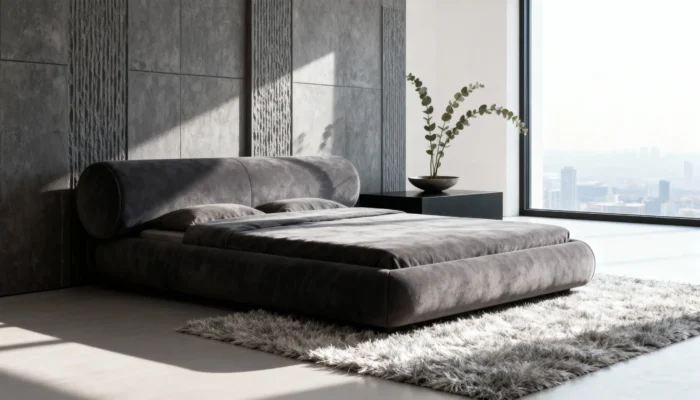
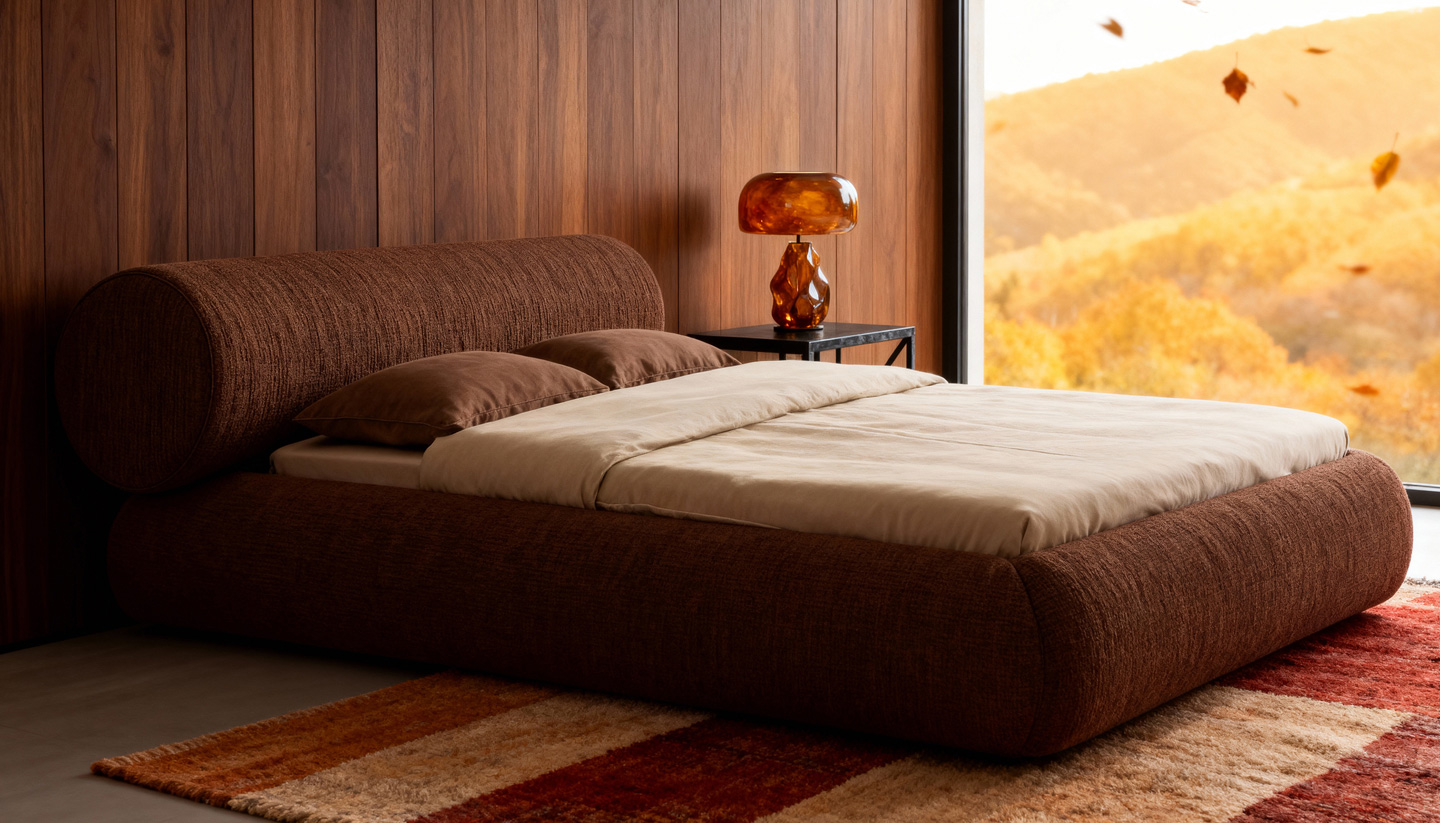
| Platform bed | Visual lightness, futuristic look, can be built-in LED, niches | Higher budget, more complicated installation | Modern interiors, “adult” children’s rooms, studio rooms |
Materials:
-
Solid wood
Natural, warm to the touch, looks good and ages well. Suitable for premium children’s beds where environmental friendliness and durability are important. -
High quality MDF
Allows you to create complex shapes, soft radii, and paint in any RAL color. Ideal for modern, futuristic children’s interiors. -
Metal in construction
As a frame or decor element. Adds rigidity and graphicity, but in a children’s interior it is important to avoid a too “cold” feeling.
The main thing is certified materials, safe paint coatings and high-quality fittings.
Functionality: drawers, podium, transformers
A children’s single bed can save a lot of space if you provide additional functions.
Bed with drawers
Suitable if:
-
there are many toys, but few cabinets;
-
you need to “hide the chaos” quickly;
-
It is important to teach your child to be systematic.
Pros:
-
additional storage space;
-
no need for separate chests of drawers for small items;
-
easier to maintain order.
Convertible bed
These can be:
-
bed with a pull-out second sleeping place (for guests or a brother/sister);
-
bed integrated into a podium with built-in wardrobes;
-
a bed combined with a work area.
Such solutions are especially relevant in small apartments, where every meter must work.
Children’s bed design: how to combine comfort and the future
A children’s room is not only “cute” and “nice”. Children grow quickly, change, and develop their tastes. Therefore, the design of a children’s single bed should be done neutral-basic, and accents are variable.
What works for years
-
neutral shades: warm grays, beige, graphite, muted colors;
-
simple, clear shapes without unnecessary decor;
-
soft corner radii for safety and visual comfort;
-
the opportunity to update the mood of the room only with textiles, posters, and decor.
Futuristic accents
To make a children’s bed look modern and “from the future”, you can add:
-
backlight (LED lighting of the podium or headboard with soft warm light);
-
geometric lines, asymmetry in the headboard;
-
graphic inserts, prints or panels with interesting textures.
So the bed becomes center of space, but it doesn’t “shout” or get annoying.
KAIZEN approach to children’s beds: interior as a development system
For the KAIZEN brand, a children’s bed is not just an object. It system element, which helps a child grow, sleep well, feel safe, and dream freely.
“We look at the nursery as a prototype of the child’s future working and living space – intelligent, adaptive, created for their life scenarios.”
What does this approach include:
-
3D visualization of the concept
Before manufacturing, you can see how a children’s single bed will look in a specific room, how it will work with lighting, cabinets, and a table. -
Customization and printing
Ability to add author’s prints (for example, the theme of space, a world map, abstraction), which can be changed when the child “outgrows” one stage. -
Kaizen approach
Constant improvement of details: smoothness of mechanisms, height ergonomics, storage scenarios, reliability of fittings, safe materials. -
Furniture as a development tool
A single bed can be part of a complex: a reading area, a place for relaxation, a place for “rituals” before bedtime, a child’s own mini-world.
How to choose a children’s single bed: a step-by-step algorithm
To dispel all doubts, it is worth acting in a structured way.
Step 1. Measure the room and draw a plan
-
record the dimensions of walls, windows, doors, batteries;
-
Determine where it is natural to place the baby’s bed: not right next to the radiator and not in the “corridor” of the flow.
Step 2. Determine the size and format of the bed
-
choose the width and length (minimum 90×200 cm is a universal option);
-
decide whether boxes/podium are needed;
-
Consider whether a convertible bed is relevant in your case.
Step 3. Choose materials
-
consider how important environmental friendliness, tactility, and texture are;
-
choose between solid wood, MDF, combined solutions;
-
clarify the type of coating (varnishes, paints, their safety).
Step 4. Think about ergonomics and safety
-
landing height;
-
bumpers and soft elements;
-
mattress ventilation;
-
absence of sharp corners and dangerous parts.
Step 5. Visualization and coordination with the interior
It’s ideal to see how a single bed “fits” into the room:
-
does it overload the space?
-
Does it leave room for play, learning, storage?
-
Does it match the child’s character?
In the KAIZEN custom furniture format, this stage takes place through 3D visualizations, where you can test several options at once.
Caring for a children’s single bed
To keep your bed safe and beautiful for many years:
-
regularly check the fastenings (especially if the child likes to jump);
-
do not overload the drawers under the bed;
-
use mattress covers to protect against spills and allergens;
-
Clean the soft parts according to the fabric recommendations (especially if they are velour, boucle or technical fabrics).
Careful care → longer service life → fewer unnecessary purchases → more conscious consumption.
FAQ: popular questions about children’s single bed
1. At what age can a child be transferred to a single bed?
Usually from the age of 3–4, when the child can already climb in and out of bed on their own. The main thing is to choose the right height and sides.
2. Are side rails required on a single cot?
For children under 6 years old, bumpers or soft restraints are highly desirable. Later, they can be removed or replaced with pillows.
3. What size single bed should I get for my height?
A universal option is 90×200 cm. This is enough for both a younger schoolchild and a teenager.
4. Which is better: a bed with drawers or without?
If the room is small and you need extra storage, a bed with drawers is the perfect solution. If there is a lot of space, you can leave the bed “light” without additional modules.
5. Does it make sense to order a children’s bed individually?
Yes, if you need non-standard sizes, a special design, integration with cabinets/tables, original prints or specific ergonomics. The format of custom-made furniture allows you to take into account the life scenarios of your child.