Зміст
Kitchen chairs: where to start choosing
The kitchen is not just about cooking. It’s where you eat breakfast, work on your laptop, and socialize with family and friends. That’s why kitchen chairs should perform just as well as appliances: they should be comfortable, durable, and complement the style of your interior.
In short, before buying chairs, you should answer three questions:
-
How exactly do you use the kitchen (quick snacks or long dinners)?
-
How much space is there really around a table or bar?
-
What interior style do you want to enhance: minimalism, loft, modern, eco?
Next, let’s take a look at the steps.
What types of kitchen chairs are there and how do they differ?
Classic dining chairs
This is the standard height for a dining table. They are suitable for family kitchens and studio kitchens, where the table is the center of the space. Important here are:
-
comfortable seating for 1–2 hours;
-
stable construction;
-
materials that are not afraid of regular cleaning.
Bar and semi-bar stools
If you have an island, peninsula, or bar counter, you should look at bar or semi-bar stools:
-
bar counters – for countertops 100–110 cm;
-
semi-bar – for countertops 85–95 cm.
This is a solution for open-plan kitchens, where the counter functions as both a work area and a place for a quick breakfast or evening cocktail.
Chairs with backs, backless chairs and stools
-
Chairs with backrest — maximum comfort and back support, especially if you often sit at a desk for long periods of time.
-
Chairs without armrests — they slide under the table more easily and save space.
-
Stools and benches — good for compact kitchens and families with children: they can be hidden under the table or placed along the wall.
Kitchen chair materials: what to choose for everyday use
The kitchen is full of moisture, temperature changes, splashes of water and grease. The material should be not only beautiful, but also practical.
Comparison table of popular materials
| Material | Appearance and style | Durability | Care | Who is it suitable for? |
|---|---|---|---|---|
| Solid wood | Warm, “homely”, premium | High | Regular wiping, occasional oil/varnish | Those who value naturalness and comfort |
| Metal + fabric/leather seat | Modern, loft, modern | Very high | Wipe with a damp cloth. | Active kitchens, studio kitchens |
| Painted MDF/plywood | Modern, minimalist | Medium–high | Gentle care, without abrasives | Who wants color and smooth shapes? |
| High-quality plastic | Visually easy, bright | Medium | Easy care | Young families, small kitchens |
| Combined materials | Designer, individual | Depends on the design | Standard care | Premium solutions, custom projects |
In KAIZEN we often combine solid wood, metal and painted MDFso that the chairs can be “read” as an element of the interior of the future: smooth radii, a clear silhouette, a stable construction.
Ergonomics: how to understand that a kitchen chair is really comfortable
The most common mistake: choosing kitchen chairs based on a picture, not your feelings. Even online, you can minimize risks if you know the key parameters.
Basic ergonomic guidelines
-
Seat height
For a standard table of 74–76 cm, a comfortable seat height is 44–47 cm. -
Seat depth
Optimally, 40–45 cm is required so that the legs do not “hang” and the back can be supported. -
Back
The lightweight, anatomically curved shape supports your lower back and allows you to sit longer without discomfort. -
Armrests (optional)
They are convenient for long gatherings, but take up more space. For small kitchens, models without massive armrests are better.
A comfortable kitchen chair is not a luxury, but a tool that saves you energy and adds to your resource every day.
At KAIZEN, we test ergonomics at the 3D modeling and prototyping stage: we change the backrest angle, seat radii, and support height until the fit becomes truly comfortable.
Design and style: which kitchen chairs will suit you
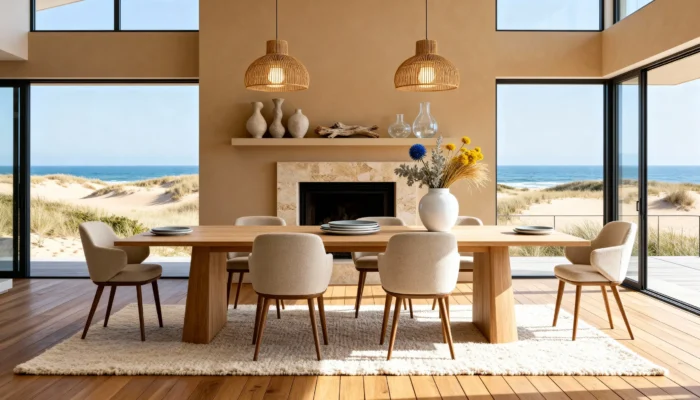
Minimalism and Scandinavian mood
-
Laconic shapes, light shades of wood, white, gray, beige.
-
Lightweight base + soft seat.
-
Suitable for small kitchens and studios – creates a feeling of visual lightness.
Modern and futuristic interiors
-
Clear lines, a combination of metal, painted MDF, and sometimes complex geometric legs.
-
Possible accent colors: deep blue, graphite, shades of terracotta.
-
They work well with stone countertops, technical lighting, and closed, handleless fronts.
Loft and industrial character
-
Metal frame, sometimes rough welding as a design element.
-
Seats made of wood or eco-leather.
-
These chairs are worth buying for kitchens with brick or concrete walls, open communications, and dark facades.
Eco-style and warm interiors
-
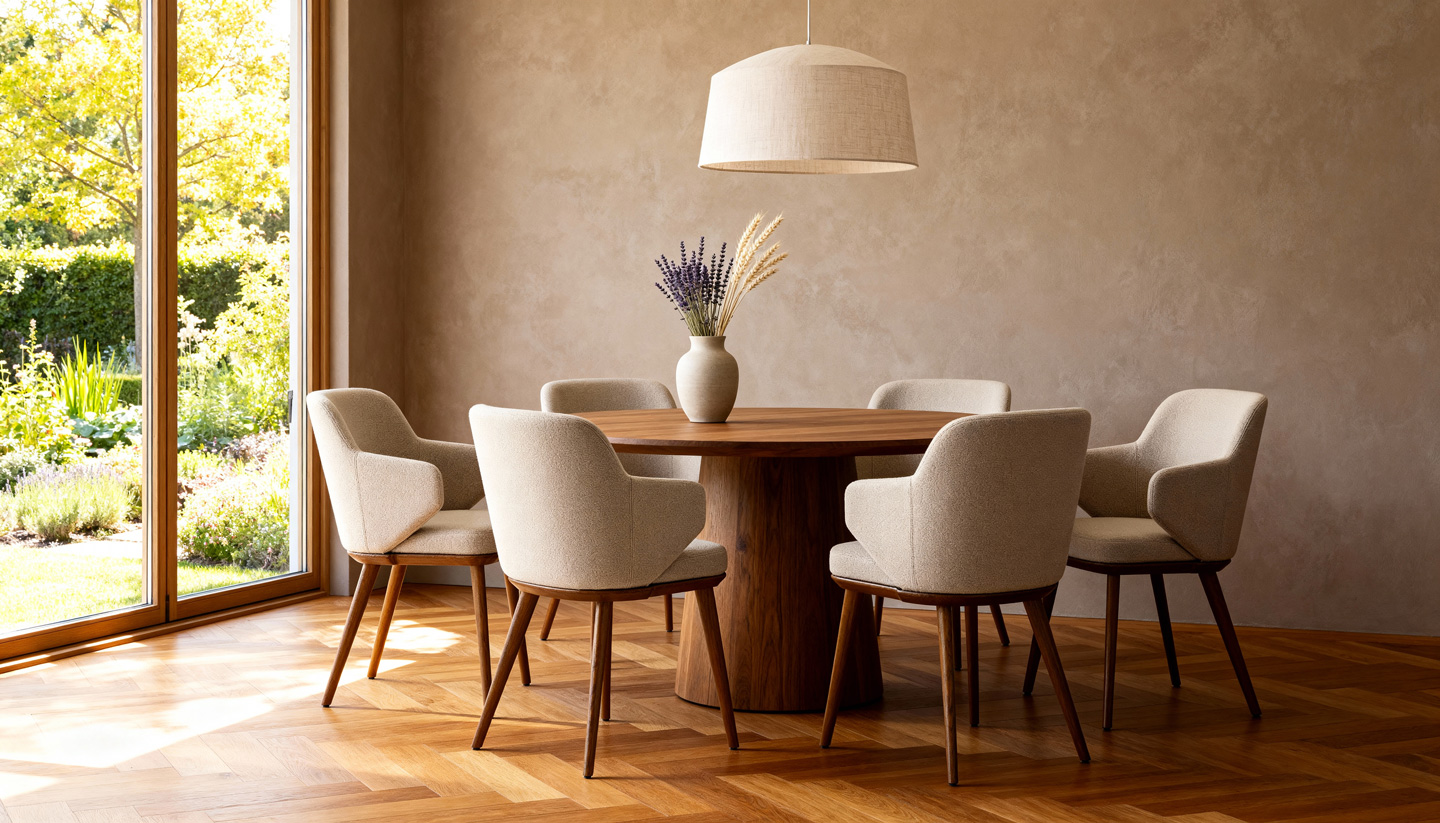
Natural wood, textiles, soft radii, warm shades.
-
You can add weaving, textured fabrics, and light wood species.
At KAIZEN we look at the chair as a accent element, which emphasizes the style of the kitchen: through the shape of the backrest, the line of the legs, colored inserts or even a designer print on the upholstery.
Color, upholstery and textures: how to make chairs an accent or a “quiet background”
When the chair is the main accent
-
Contrasting color to kitchen facades (for example, graphite chairs against a white kitchen background).
-
Bright or deep shade of fabric: burgundy, emerald, deep blue.
-
Unusual shape of the back or legs.
When chairs should be “invisible”
-
A shade of wood close to the floor.
-
Gray, beige, sand fabrics.
-
A simple silhouette without too many decorative elements.
At KAIZEN we offer upholstery customization:
-
choice of fabric or eco-leather by density and texture;
-
printing an author’s print if you want to turn a chair into a personal art object;
-
RAL color selection to match the shade of kitchen facades or countertops.
Kitchen chairs from KAIZEN: when you need solutions that are “for growth”
The KAIZEN philosophy is about continuous improvement in detail. In furniture, this means that we think not only about today, but also about how the chair will behave in 5–10 years.
What it gives you:
-
3D visualization before manufacturing
You can see how the chairs fit into your kitchen: from proportions to colors. This minimizes the risk of making the wrong choice. -
Flexible design
The well-thought-out frame allows you to change the upholstery or repaint the elements without replacing the entire chair. -
Kaizen approach to ergonomics
We test different scenarios: a quick snack, a long dinner, a work session at a laptop. We change the angles, radii, and height to find the optimal balance. -
Possibility of non-standard solutions
Height for a specific table, non-standard width, special materials for families with children or pets – we can take all of this into account at the design stage.
How to buy chairs online profitably and safely: checklist
Before ordering kitchen chairs online, go through this list.
-
Measure the space
-
Distance from the edge of the table to the wall/other furniture: at least 80–90 cm so that a person can sit and stand up.
-
The number of chairs that can actually fit, not just “want to”.
-
-
Check the model dimensions
Pay attention to: width, depth, seat height, total backrest height. -
See real photos/visualizations
At KAIZEN, we show chairs in the interior, not just on a white background — this helps to understand scale and proportions. -
Specify materials and care
How to clean the upholstery? Can I use detergents? Is the fabric suitable for families with children/animals? -
Ask about warranty and service
Premium furniture is not only about looks, but also about support: can you move a chair, replace supports, or update the upholstery?
Caring for kitchen chairs: how to extend their lifespan
Even buying the highest quality chairs is not enough – it’s important to use them correctly.
-
Tree
Avoid prolonged contact with water, use mild products without abrasives, and periodically renew the protective coating (varnish, oil). -
Metal
Wipe with a dry or slightly damp cloth, do not use aggressive chemicals to avoid damaging the coating. -
Cloth
Choose durable upholstery that can be cleaned; some fabrics have anti-vandal properties or “anti-stain” impregnation. -
Eco-leather
It is easy to wipe clean, but does not like extreme heat and direct sunlight.
Regular gentle care + thoughtful choice of materials at the start = kitchen chairs that remain in service for decades.
Example scenarios: which chairs are right for your kitchen
-
Small kitchen in a studio apartment
-
A table against the wall, 2–3 chairs without armrests, a light silhouette, light colors.
-
Materials: metal + plywood/MDF with painting, seat made of easy clean fabric.
-
-
Family kitchen with large table
-
4–6 dining chairs with backs, some may be softer for “honorary” seats.
-
Materials: solid wood + textiles, accent chairs on both ends of the table.
-
-
Kitchen island with bar area
-
2–4 semi-bar stools for daily use.
-
Materials: metal legs, soft seat, medium-height backrest for comfortable back support.
-
FAQ: frequently asked questions about kitchen chairs
1. How many chairs can be placed behind a standard 140×80 cm dining table?
Usually 4 chairs are comfortably placed: two on each long side. For narrow models, you can add one more on the end, but it is important to maintain a free passage.
2. What is the minimum distance between chairs?
The optimal distance between seats is 10–15 cm so that people do not interfere with each other’s arms and shoulders.
3. Are soft chairs suitable for the kitchen if there are children?
Yes, if you choose modern fabrics with stain-resistant impregnation. They are easy to clean, retain their appearance, and the fit remains warm and comfortable.
4. What is better for the kitchen: wood or metal?
Wood provides comfort, metal provides durability and lightness of construction. Often the best solution is combined models: metal supports + wooden or soft seat.
5. Should I make custom chairs instead of buying ready-made ones?
Whether you have a non-standard tabletop height, a unique style, or a clear vision of colors and shapes, a custom order from KAIZEN allows you to get chairs that are perfectly tailored to your space and lifestyle.