Зміст
In a modern office, salon, coworking space or showroom, a person needs more than just a place to work or wait. They need a break. A few minutes between meetings. A soft spot by the window. A chair next to a table where you can put your coffee. A point at which the space stops being a stream of tasks and becomes a little more human.
That’s what it exists for. lounge chair. This is not a computer chair or a standard office chair. Its purpose is different: to create a comfortable place for waiting, a short rest, an informal conversation, reading, recovery or a quiet pause in a public or corporate space.
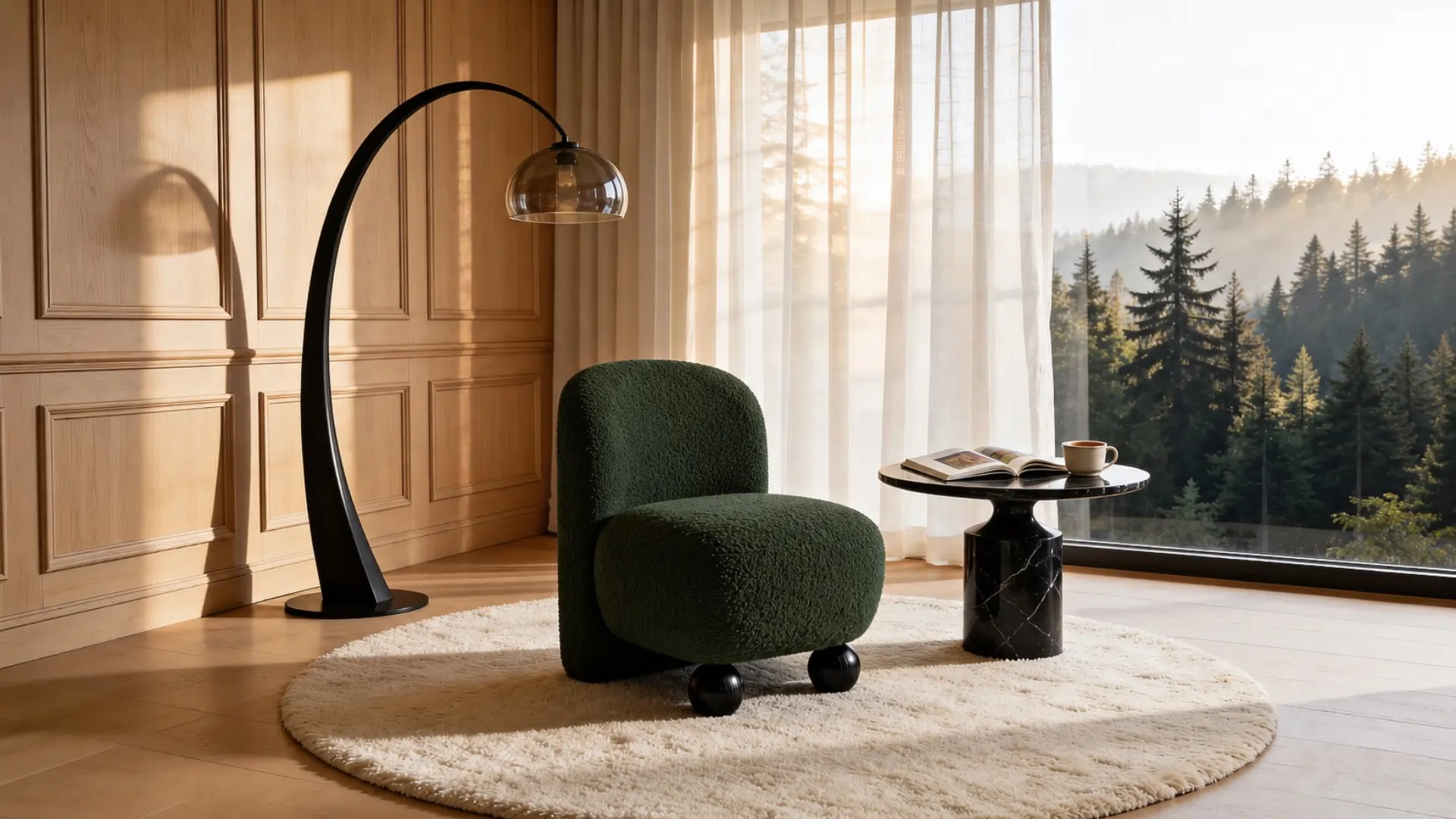
In the photo, the green KAIZEN soft chair stands in warm interiors with wood, large windows, soft light, a carpet, a floor lamp, a table and a natural view. It does not look like a random place to sit. On the contrary, it creates a scenario. You want to sit in such a chair to exhale, wait, talk, look out the window or return to yourself before the next action.
The lounge area is not about furniture, but about the human condition
Business spaces often have many functions. Reception desk, workstations, meeting rooms, aisles, closets, tables, lighting, navigation. But not every space gives a person the feeling that they have been thought of. The lounge area is precisely responsible for this feeling.
It can be small: one soft chair, a table, a floor lamp, a carpet. Or it can be a full-fledged waiting area with several chairs, a sofa, a banquette, a coffee table and decorative lighting. The main thing is not the area, but the scenario.
A person in the lounge area can:
- to wait for a meeting;
- drink coffee;
- view materials;
- to speak informally;
- rest between work blocks;
- wait for service in the salon;
- get to know the brand through space;
- to feel the atmosphere of the company even before the first conversation.
That’s why the soft chair here works not as “additional furniture”, but as a service tool. It shows that the space is created not only for processes, but also for people.
Where is a lounge chair needed?
A lounge chair can work in a variety of B2B scenarios, but in each case it serves one main role: creating a soft place to pause.
| Space | How the chair works |
|---|---|
| Reception | Forms the first impression of the company |
| Office recovery area | Provides space for a short pause between tasks |
| Coworking | Creates an informal point for conversation or waiting |
| Beauty salon | Makes waiting more comfortable and more aesthetic |
| Showroom | Reinforces the brand’s character and acts as a photogenic object |
| Hotel or aparthotel | Adds intimacy to a lobby, room or lounge space |
| Design studio | Shows taste, attention to detail, and brand tactility |
| Medical or wellness space | Softens expectations, reduces tension, adds humanity |
In all these cases, it is important not to confuse a lounge chair with a work chair. This is not an item for sitting at a computer for many hours. This is a chair for relaxing, waiting, talking and short recovery.
Therefore, its value lies not in mechanisms, adjustments, or office ergonomics, but in something else: softness, shape, fit, fabric, color, image, atmosphere.
First impression: why reception needs a soft accent
Reception is the first place where a person comes into contact with the company. And this contact happens even before words are spoken. Before the administrator greets. Before the client sees the presentation. Before the partner enters the meeting room.
The space is already speaking.
If there are random chairs in the waiting area, the brand looks functional but dry. If there is a soft designer chair, a table, the right light, texture, color, a different message appears: they are thinking about the human experience here.
A lounge chair in the reception area can be discreet or expressive. The green chair in the photo works very well: deep natural color, soft texture, rounded shape, spherical legs. It does not scream, but it is memorable. In a space with wood and natural light, it looks calm, confident and warm.
It is such an object that can become a quiet point of trust. A person sits down and the space becomes closer.
Coworking: a soft spot between work and conversation
Coworking is not just about desks, laptops, and meeting rooms. A successful coworking space always has intermediate zones: where you can wait, get to know each other, have a short conversation, change your posture, have a coffee, take a break, and get out of concentration mode.
An upholstered chair in such a space performs several functions at the same time:
- gives a person physical rest;
- creates an informal point for dialogue;
- helps to zone open space;
- adds warmth to the interior;
- works as a visual accent;
- enhances the feeling of quality of space.
In a coworking space, it’s especially important that the furniture doesn’t look random. People spend a lot of time there, taking photos of the space, bringing clients, holding meetings. A chair can become more than just a waiting area, but part of the community atmosphere.
If a coworking brand wants to talk about flexibility, humanity, teamwork, and modernity, the lounge area should support these values. That’s why a designer chair with the right fabric and color can work harder than just another standard set of furniture.
Salon or beauty space: waiting should also be beautiful
In a beauty salon, care studio, wellness space or private clinic, the waiting area has a special meaning. A person comes not just to receive a service. He comes to a state: to relax, to switch, to feel attention, to trust the space.
The lounge chair works very delicately here. It shouldn’t look formal or cold. It should be soft, tactile, beautiful, photogenic, and comfortable enough so that the wait doesn’t feel like a pause “until” but becomes part of the experience.
In the cabin, such a chair can be:
- near the reception;
- in the waiting area;
- near the display case with products;
- in the photo zone;
- in a separate corner for consultation;
- in the client space between procedures.
Fabric and color are especially important here. Light boucle will create softness. Velour – depth. Chenille – calm tactility. Mat – restrained modernity. And a print can make the space recognizable and more branded.
You can read more about choosing fabric for such chairs in the article “Velour chair or boucle chair: how to choose fabric for an upholstered chair”.
Showroom: the chair as part of the brand’s visual language
A showroom is a space where every item has meaning. Here, furniture doesn’t just fill the space. It shows the level of the brand, its style, boldness, attention to detail, and understanding of materials.
A designer chair in a showroom can serve several roles. It can be a place for a client. It can be an accent in a composition. It can create a scene for a product presentation. It can become an object for a photo. It can support the overall brand palette or vice versa – create a striking contrast.
If a showroom works with fashion, beauty, design, architecture, decor or a premium product, standard furniture often detracts from the impression. The space needs an object that speaks the same language as the brand.
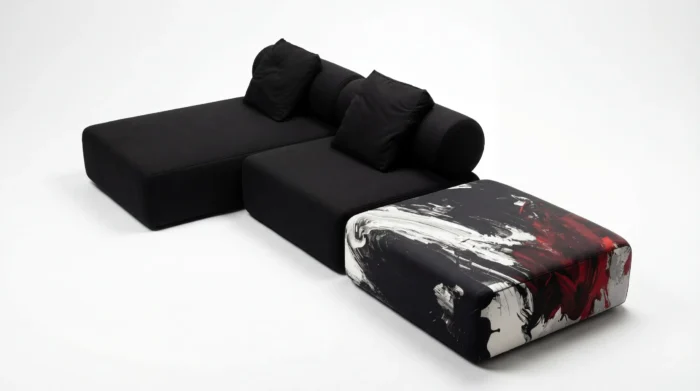
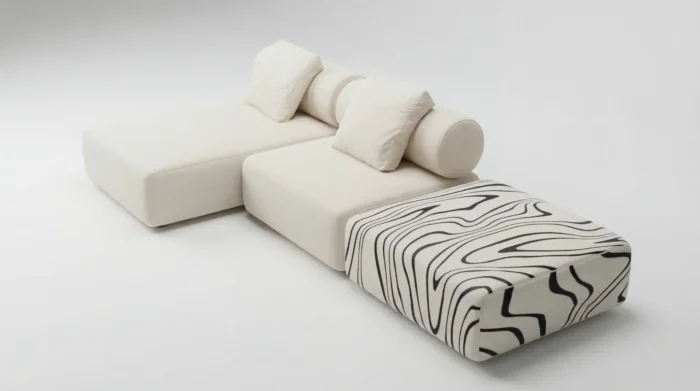
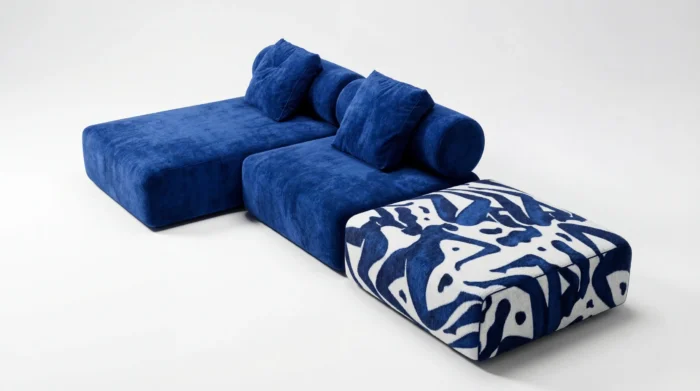
In this case, the KAIZEN chair can be customized by fabric, color, texture or print. If you need a more art object character, it is worth looking at the material about printed chair. For a corporate or commercial space, print can work as a soft identity: without a direct logo, but with a tangible brand character.
Office recovery zone: a space where you can breathe
In the modern office, it’s important to create not only spaces for productivity, but also spaces for recovery. A person can’t be in a state of tasks, meetings, messages, and deadlines all day long. They need switching points.
A lounge chair in an office can be placed in a separate break room, by a window, in a hallway niche, next to a coffee area, or in an informal space for short meetings. It does not replace a workplace. It creates a different state.
It’s important to avoid making it feel too formal. If your recovery area feels like another meeting room, it’s not working. If it has a soft chair, a rug, warm lighting, a table, a plant, or a view from the window, your body will understand more quickly that you can let go of some of your tension here.
Such spaces also have an impact on the team. They show that the company values not only speed, but also the quality of the work environment. And the quality of the environment is often directly related to the energy of the people.
Shape: why rounded chairs work better in lounge areas
A lounge area should be soft not only literally but also visually. If the space has a lot of straight lines, tables, glass partitions, appliances, corridors and functional surfaces, a rounded chair can change the balance.
The chair in the photo has a rounded back, a voluminous seat, soft radius corners, and spherical legs. This shape does not create tension. It visually stops the pace. It does not have office rigidity. That is why it is well suited for waiting and relaxation areas.
Rounded shapes work in the lounge space on several levels:
| Form element | What gives space |
| Rounded back | Feeling soft and protected |
| Spacious seat | An invitation to sit down and pause |
| Low silhouette | Less formality, more intimacy |
| Ball feet | Lightness, objectivity, recognizable character |
| Textured fabric | Tactility and visual warmth |
You can read more about why radial shapes change the feeling of space in the article “Modern upholstered chairs: why rounded shapes change the feeling of space”.
Color: Why Green Works Well in B2B Spaces
The green chair in the photo has a special power. It is not a bright decorative green, but a deeper, more natural, more calm shade. It goes well with wood, natural light, a black floor lamp, soft curtains, plants, stone and light carpets.
For the lounge area, green has several advantages:
- associated with nature;
- reduces visual stress;
- works well with wooden interiors;
- looks appropriate in the office, salon, coworking space;
- adds color without being aggressive;
- supports the theme of recovery;
- does not look random in a modern space.
In a corporate interior, green can be not only an aesthetic solution, but also part of a message: balance, stability, attentiveness, humanity, calm confidence.
If the brand needs more energy, you can work with terracotta, burgundy, blue, graphite or print. If you need light neutrality – with boucle, milky, sand, gray or warm white fabrics. This is where KAIZEN customization is important.
Fabric: practicality and feel
For B2B spaces, the fabric should not only match aesthetics, but also real-world usage. In a reception, salon, showroom, or coworking space, a chair may be used by different people throughout the day. Therefore, the material should be pleasant, visually appropriate, and practical enough for the scenario.
The textured green fabric in the photo creates a sense of tactility. It doesn’t look cold or formal. Such an upholstered chair immediately adds a more human scale to the space.
For lounge areas, you can consider:
- boucle — if you need softness, relevance, light or natural texture;
- velour — if you need depth, rich color, intimacy;
- chenille — if you need a balance of density, comfort and a discreet look;
- mat — if you need structure, practicality and calm modernity;
- printed fabric — if the space should be recognizable, branded, or an art object.
For a corporate order, it is important not to choose a fabric based solely on a photo. It is better to evaluate samples, look at the lighting, consider the frequency of use, and the overall nature of the space.
Customization: a chair for your brand, space and scenario
KAIZEN works with customization not as a decorative option, but as a precision tool. This is especially important for the lounge area, because each B2B space has its own task.
For a salon, you need softness and photogenicity. For a coworking space, you need endurance, comfort, and informal energy. For an office recovery area, you need peace. For a showroom, you need a strong visual character. For a reception, you need a first impression. For a hotel, you need an atmosphere that the guest will remember.
The chair can be adapted through:
- fabric;
- color;
- invoice;
- print;
- combination of plain fabric and art print;
- a series of armchairs for one space;
- brand mood;
- working with the designer’s concept.
For a deeper understanding of customization, it is worth going to the material “Custom-made chair: how to create a personal item for your interior”. There the topic is covered more broadly: from private interior to corporate brand.
Collaboration with designers: the chair as a composition tool
For an interior designer, a lounge chair is not just furniture from a catalog. It is a tool through which you can control people’s behavior and the mood of the space.
A designer can use a chair to:
- create a pause point;
- zone open space;
- add color;
- soften the architecture;
- support moodboard;
- make reception more human;
- create a photogenic zone;
- create an informal corner for conversations;
- emphasize the customer’s brand;
- add an art object without overloading the interior.
It works especially well when the chair is chosen not at the end of the project, but at the concept stage. Then it doesn’t just “fit in”, but becomes part of the architecture of the impression.
KAIZEN can be useful in exactly this approach: when a designer has a task, a palette, a moodboard, a brand, or a specific scenario, and the chair adapts to this system.
A pair or group of chairs: how to create a lounge composition
One chair creates a point. Two chairs create a dialogue. A group of chairs create a full-fledged lounge area.
For a reception or showroom, a pair of chairs with a table between them works well. For a coworking space, several soft spots in different areas work well. For a salon, one or two chairs that are both comfortable for waiting and look good in the frame. For an office recovery area, chairs combined with a sofa, banquette, or low table.
It is important that the composition does not look like a random set. The chair, table, rug, lighting and decor should work together.
Lounge area formula:
soft chair + table + local light + carpet + clear scenario
If there is only a chair, a person can sit down. If there is the whole system, a person wants to stay.
The OASIS chair is an example of a form that you want to feel.
The OASIS chair plays a special role in KAIZEN – a model with a soft rounded shape, a pronounced backrest and a sense of personal space. Its design works well in lounge areas, as it combines sculpturality and comfort.
This is important for B2B spaces. Furniture should look expressive enough to support the company’s image, but at the same time be comfortable for real use. OASIS does not look like a cold show object. It has a soft presence.
You can read more about the nature of this model in a separate article. “OASIS chair: a design you want to feel”.
Lounge area and private scenarios: why the home experience is important for business
Interestingly, the best lounge areas often borrow a lot from home scenarios. Coffee by the window. Reading chair. Soft light. Rug. Throw. Coffee table. A sense of calm.
These are the elements that make a business space not dry, but human. Therefore, the experience of a chair in a bedroom or living room can be useful for commercial interiors as well. If you need to understand how a chair works in a private space, you should check out the article about armchair in the bedroom. The topic of silence, morning coffee, reading, and private pauses is well explored there.
A business space shouldn’t become a home. But it can take the most important thing from a home — a sense of caring for a person.
Instagram aesthetics: why a lounge chair should be photogenic
In modern salons, showrooms, hotels, coworking spaces and studios, design often lives not only offline, but also in content. People take photos of the space. Teams shoot videos. Brands show details on social media. A chair in a lounge area can become one of the most recognizable points.
Photogenic doesn’t mean decorative excess. It means that the object has a clean silhouette, expressive fabric, the right color, and good interaction with light. The green chair in the photo works exactly like this: it is well read in the frame, has deep color, texture, a rounded shape, and a clear scene around it.
Current interior designs, new fabrics, prints and examples of spatial solutions can be viewed in Instagram KAIZEN.
How to understand that the lounge chair is chosen correctly
Before ordering, it’s worth checking not only the size and color, but the entire scenario.
Questions for the office:
- Does the chair create space for real pause?
- does it look like a workplace?
- Does it support the overall style of the company?
- Is it convenient to put coffee or a laptop nearby?
- does it interfere with the movement of people;
- Is there a light or window nearby?
Questions for the salon:
- Will the client be comfortable waiting?
- Does the fabric match the brand’s atmosphere?
- does the chair look good in the frame;
- does it easily combine with the reception and decor;
- Doesn’t the space look cold?
Questions for showroom:
- does the chair reinforce the product;
- does it compete with the main exhibits?
- does it work as part of the brand’s visual language;
- can it become a place for a conversation with a client;
- Is it memorable after the visit?
Question for the designer:
- Does the chair have a clear role in the composition?
- does it support moodboard;
- whether it works correctly with fabric, color and light;
- can it be customized for the task;
- Does it have a balance between form and comfort?
Conclusion
A lounge chair is not a secondary detail of an office, salon, coworking space or showroom. It is a soft place of pause that affects how a person feels about the space. They can wait – or feel cared for. They can just sit – or recover a little. They can walk past – or remember the brand through one precise object.
At KAIZEN, such a chair is created at the intersection of design, comfort, customization, and collaboration with designers. It can be calm or expressive, plain or with a print, green, light, deep, textured, paired or single. The main thing is that it matches the scenario of the space.
For a reception, it forms the first impression. For an office, it is a place of renewal. For a coworking space, it is an informal point of communication. For a salon, it is a comfortable waiting area. For a showroom, it is part of the brand’s visual language.
This is how an upholstered chair ceases to be just furniture. It becomes an instrument of atmosphere – quiet, tactile, precise and important for how a person experiences a space.