Зміст
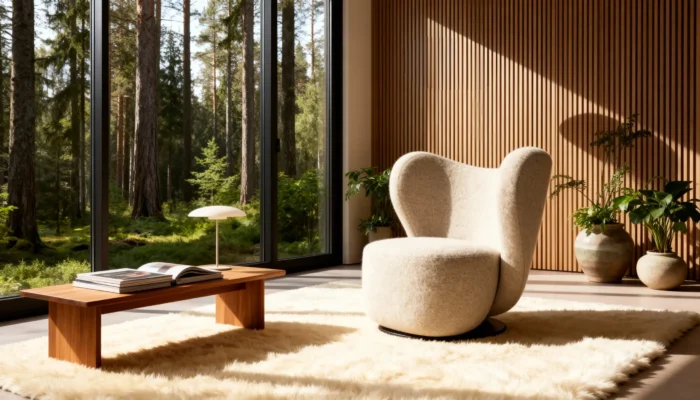
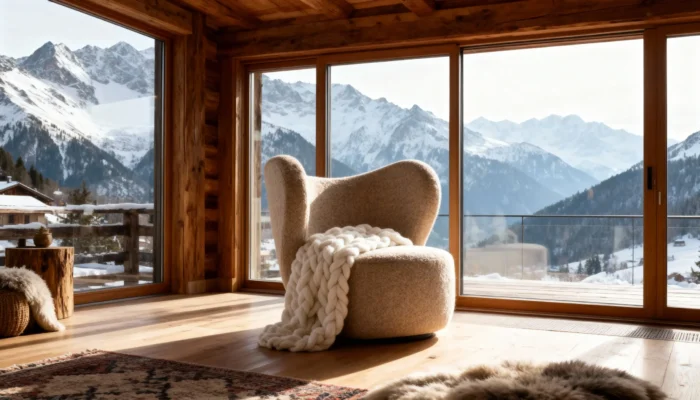
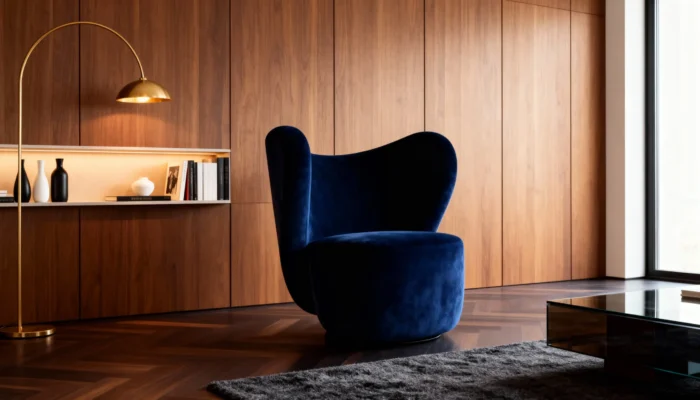
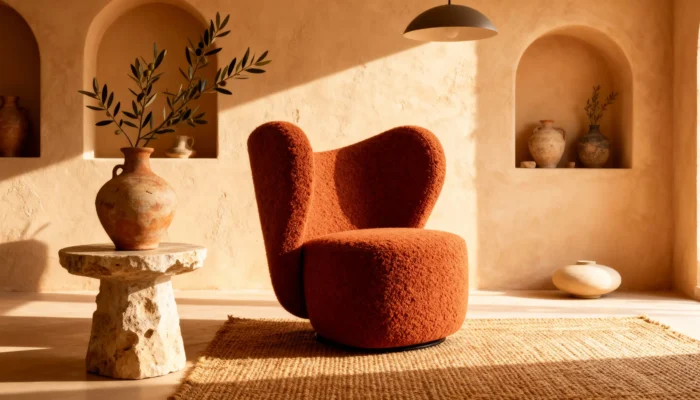
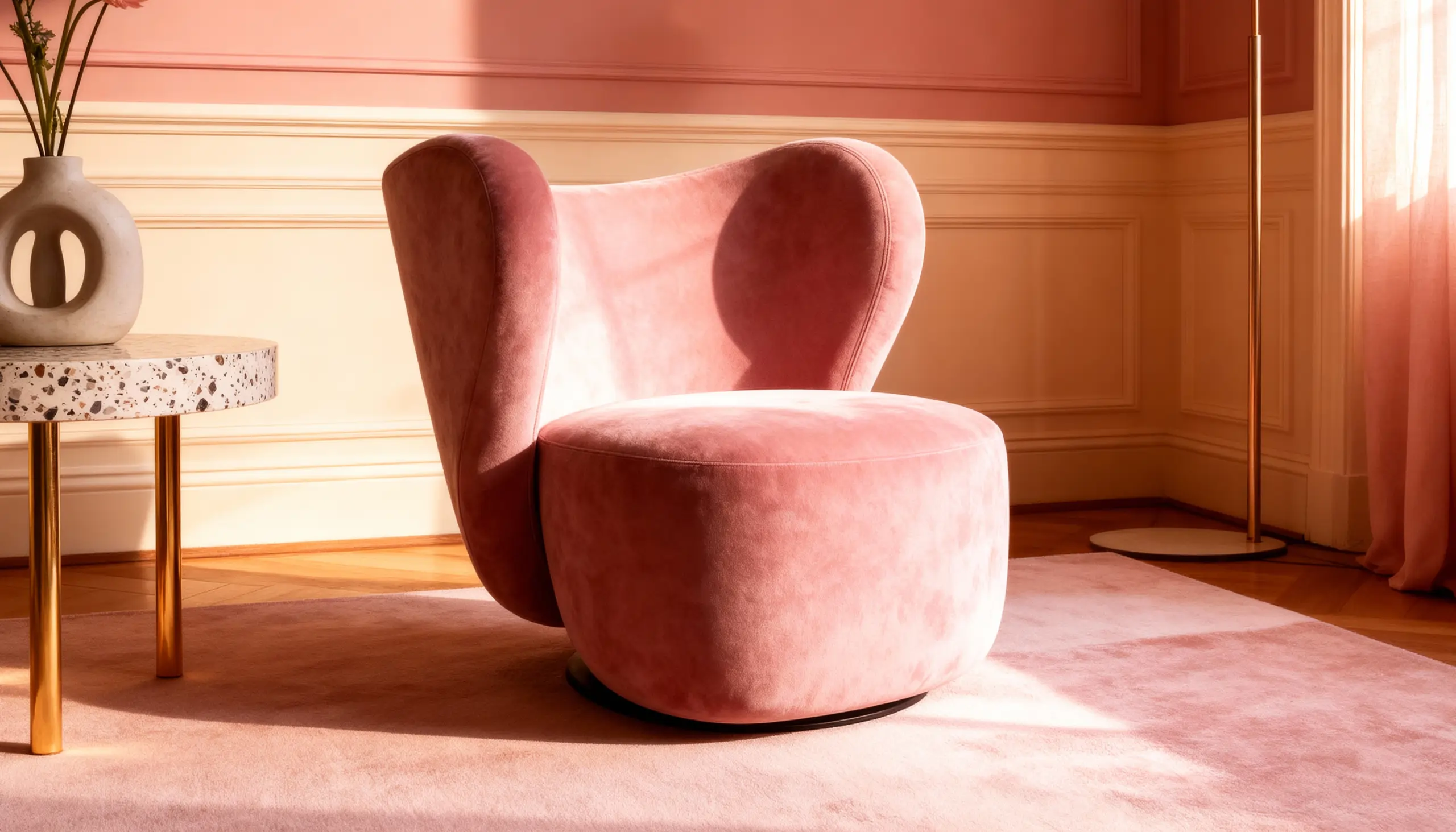
The light slowly slides down the wall, touches the brass arc of the floor lamp and stops on the velvet surface of the chair. It is not there “to sit on” – it is present. Like a pause in music, like a full stop at the end of a phrase that you don’t want to continue. It accent chair It does not appear in the interior by chance or in a hurry. It was not “bought”. It was allowed.
There is no chaos in this room. Everything is thought out: calm walls, restrained lines, soft light that does not press. But it is the chair that changes the tone of the space. It seems to invite you to sit down – not for work, not for a meeting, but for a brief moment of presence here and now. This is a place where the conversation dies down, the phone remains on the table, and the body finds its own trajectory of peace.
Designer accent chairs work not through logic, but through feeling. They do not compete with the sofa, do not duplicate the functions of chairs, and do not adapt to the general geometry of the room. On the contrary, they break predictability. The rounded shape of this chair gently contrasts with the architectural clarity of the walls, and the deep seat creates a feeling of security, almost intimacy, even in an open space.
Imagine that the interior is a calm background, and the accent chair is the moment when character appears. It does not scream with color, but speaks with material. It does not demonstrate status, but is read as a choice. It is with such things that real design begins – not with trends and catalogs, but with an internal request: “I want the space to have a mood.”
This chair could stand by the window in a city apartment, catching the morning light. Or in the corner of a living room, where the evening shadows make it almost a sculpture. In either scenario, it will not be a background. It will become a point of attraction — the very element that explains the entire space without any words.
That’s why talking about an accent chair isn’t about furniture. It’s about how one object can change the rhythm of a room, set an emotion, and transform an interior from “correct” to vibrant.
What is an accent chair and why does it work?
An accent chair is not just a place to sit, but the visual and emotional center of an area. It creates tension, balance, and direction of gaze without competing with the basic furniture.
When emphasis is more important than quantity
In a space with a neutral palette, it accent chairs take on the role of an “anchor.” They stop the gaze, structure the space, and add character without having to change everything.
The difference between “bright” and “accent”
A bright chair can scream. An accent chair speaks. It works through shape, texture, print, or contrast of proportions, not just color.
Psychology of comfort: why the hand reaches for it
An accent chair is subconsciously perceived as a personal zone. This is not a shared sofa or a formal chair – it’s a place “for yourself.”
Feeling of refuge
The rounded back, soft armrests, and tactile fabric create a sense of security. That’s why in many interiors, an accent chair becomes a favorite place to read or pause.
Contrast as a source of emotions
Against the background of restrained accent furniture A chair with a distinctive shape evokes an emotional response. Contrast is not tiring—it is invigorating.
Accent furniture as a zoning tool
An accent chair can work as an architectural element without any architecture. It does not physically block the space, but clearly sets boundaries at the level of perception. Where a chair with character appears, a separate zone arises – with its own rhythm, purpose and mood. This is how an “invisible wall” is formed: without drywall, without glass, without a sense of pressure.
Unlike massive solutions, an accent chair does not divide the space, but structures it. It allows the interior to remain open, bright and dynamic, while clearly answering the question: where is rest, where is movement, and where is concentration.
Open living room scenario: a space without borders, but with logic
In modern layouts, the kitchen, dining room, and living room often exist in one volume. Formally, it’s a single space. Functionally, it’s three different life scenarios. This is where the accent chair becomes a key navigation tool.
An armchair, turned at an angle to the sofa or partially “turned away” from the kitchen, creates an intimate relaxation area. It seems to say: here you can slow down. Without screens, without partitions, without losing air. A person intuitively reads this signal and uses the space differently — quieter, calmer, more attentive to himself.
In such a scenario, accent furniture works as directors of space: it does not prohibit movement, but offers an alternative route.
When the chair is stronger than the partition
Stationary partitions fix the scenario once and for all. An accent chair, on the contrary, keeps the space alive. Today it forms a reading area by the window, tomorrow it separates a work corner, the day after tomorrow it becomes part of a conversational composition.
This flexibility is its strength. Accent chairs allow the interior to change with the rhythm of life, without requiring renovation or complex solutions. The space does not “freeze” – it adapts.
As a result, zoning ceases to be a technical technique and becomes a tool for comfort. Not because it is so correct according to the rules of design, but because it is so convenient to live in.
Materials and fabrics: from mood to practice
The material of an accent chair determines not only the look but also the usage scenario.
Fabrics with character
-
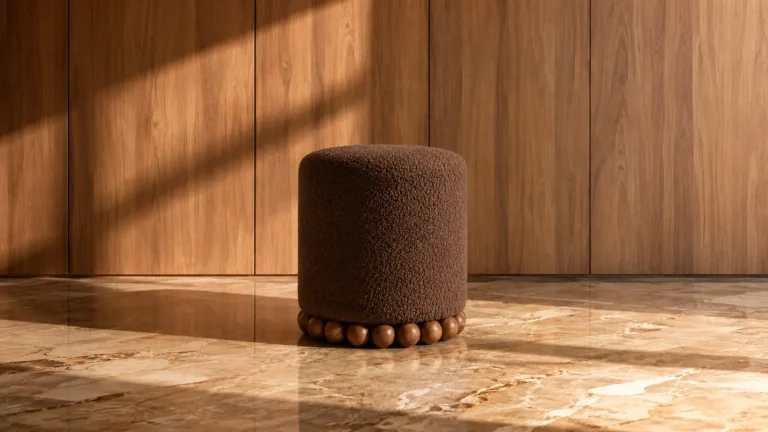
textured textiles for comfort
-
smooth surfaces for visual lightness
-
print as an artistic gesture
Practicality without compromise
Modern fabrics combine tactility and easy care. This allows the use of accent chair every day, not “for beauty.”
Accent chair vs accent sofa: what to choose
Accent sofa forms the basis of the composition, while the chair is its rhythm.
| Criterion | Accent chair | Accent sofa |
|---|---|---|
| Flexibility | Easily changes places | Stationary |
| Impact on space | Spot | Predominant |
| Risk of overload | Minimum | Higher |
| Emotional accent | Personal | Collective |
Mistakes and solutions when choosing
Mistake: “too active” chair
When shape, color, and print compete with each other, the interior loses balance.
Decision: one dominant, the other background.
Error: ignoring scale
A small chair is lost, a large one is cramped.
Decision: relationship with the sofa and the space around it.
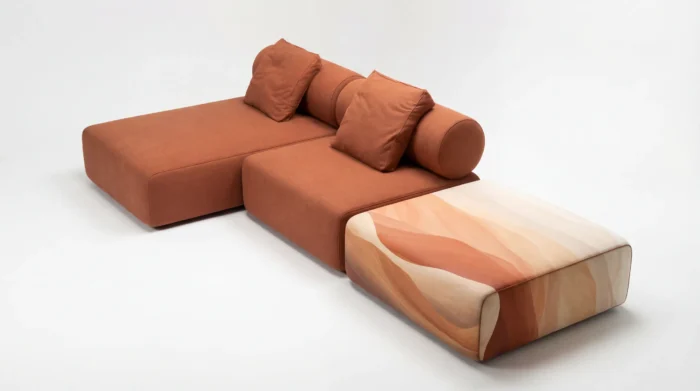
Custom printing and author’s prints
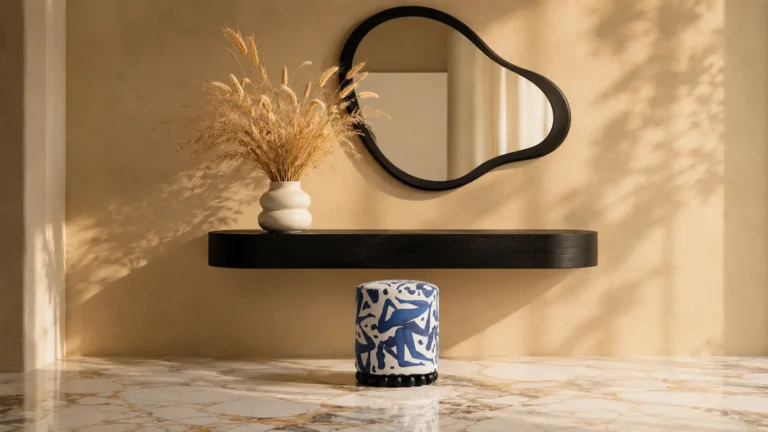
An accent chair ceases to be just a piece of furniture the moment a designer print appears on it. It moves into the category of art objects – the very things that do not explain the interior, but shape its meaning. The print changes the perception of form, adds depth and makes the chair not a background, but a statement.
In a space with neutral materials and a subdued palette, print becomes an intelligent accent. It doesn’t overwhelm the room, but rather sets a theme—sometimes subtle, sometimes bold, but always thoughtful.
Individuality without copies
Custom printing is a rejection of the idea of a limited edition. Such an accent chair is not repeated in catalogs and does not appear in random interiors. It is created for a specific space, person or idea. That is why custom printing is especially valuable for interior designers: it allows you to capture a uniqueness in the project that cannot be copied.
The print can be restrained – with a play of textures and halftones. Or it can be bold – with graphics, rhythm, contrast. In any case, it works as the author’s signature, and not as a decorative technique “for beauty.”
Dialogue with space, not isolation
A properly created print never exists by itself. It enters into a dialogue with the interior: it supports the lines on the walls, rhymes with the texture of the carpet, responds to art or architectural details. An accent chair with a print does not draw attention to itself, but gathers the space into a single composition.
This is the power of custom printing: it doesn’t add noise, it creates meaning. The chair becomes a point through which the entire interior is read – its mood, idea and character. This is how furniture begins to speak the language of design, not decor.
“Kaizen works with accents as a system, not as decor. A chair is not a decoration, but a functional element of a life scenario.”
How to choose an accent chair consciously
You should choose an accent chair not with your eyes, but with questions.
-
Where will it stand?
-
What emotion should it create?
-
Does it support other accent chairs or ottomans?
“If you are unsure where to start, it is useful to refer to the guide How to choose furniture for a modern interior “It helps to avoid common mistakes.”
Accent chair: how it works in the interior
1 item → 5 levels of influence
● Space
Forms a zone without partitions
Sets the direction of movement
Creates a point of attraction
● Emotion
Feeling of comfort
The “my place” effect
Slowing the rhythm
● Visual accent
Shape contrast
Texture or print
Working with light and shadow
● Function
Reading area
Pause point
Flexible script element
● Individuality
Custom printing
Author’s design
Non-mass solution
Accent chair vs other accents
Chair
— personal focus
— mobility
— minimal risk of overload
Accent sofa
— the dominant of space
— fixed scenario
— needs more balance
Accent pouf
— auxiliary accent
— maximum flexibility
— strengthens the composition
How to choose the right accent
Question → Solution
-
Where will it stand? → orientation and angle
-
What emotion should it create? → shape and fit
-
What makes you stand out? → material / print / volume
-
Will the space change? → mobility
-
Is uniqueness necessary? → custom printing
When an accent chair is the best solution
-
open layouts
-
minimalist interiors
-
spaces without clear zones
-
projects with an original character
-
interiors where the atmosphere is important, not the amount of furniture
Ergonomics: comfort that is invisible
A good accent chair doesn’t call attention to its comfort—it’s just comfortable.
Landing and support
The angle of the backrest, seat height, and lumbar support are key parameters that are immediately noticeable.
Softness balance
Too soft is tiring. Too hard is repulsive. Balance is a sign of thoughtful design.
Accent chairs in different styles
Minimalism
Form is more important than color. One chair, one gesture.
Modern
Smooth lines, complex volumes, tactile materials.
Futurism
Non-standard geometry and a sense of movement even when stationary.
Accent pouf as an alternative or addition
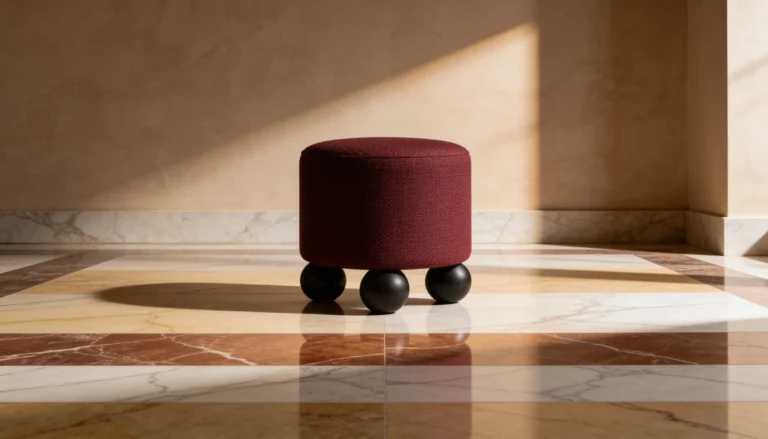
Accent pouf works where a chair would be superfluous. It supports the composition and adds flexibility.
-
mobility
-
multifunctionality
-
less visual pressure
When to choose custom-made furniture
“Individual solutions from the section Custom-made furniture “allows us to take into account space, style and scenarios, rather than adapting to ready-made frameworks.”
FAQ
Is an accent chair suitable for a small room?
Yes, provided the proportions are right and the palette is restrained. It can even visually structure the space.
Is it possible to combine several accents?
It is possible if they work as a system: armchair, accent chairs, accent ottoman.
Does the accent have to be bright?
No. Accent can be created by shape or texture.
How to care for an accent chair?
Regular cleaning and choosing durable fabrics solve most issues.
Is it worth doing custom printing?
Yes, if the interior needs a unique character, not a mass-produced solution.