Зміст
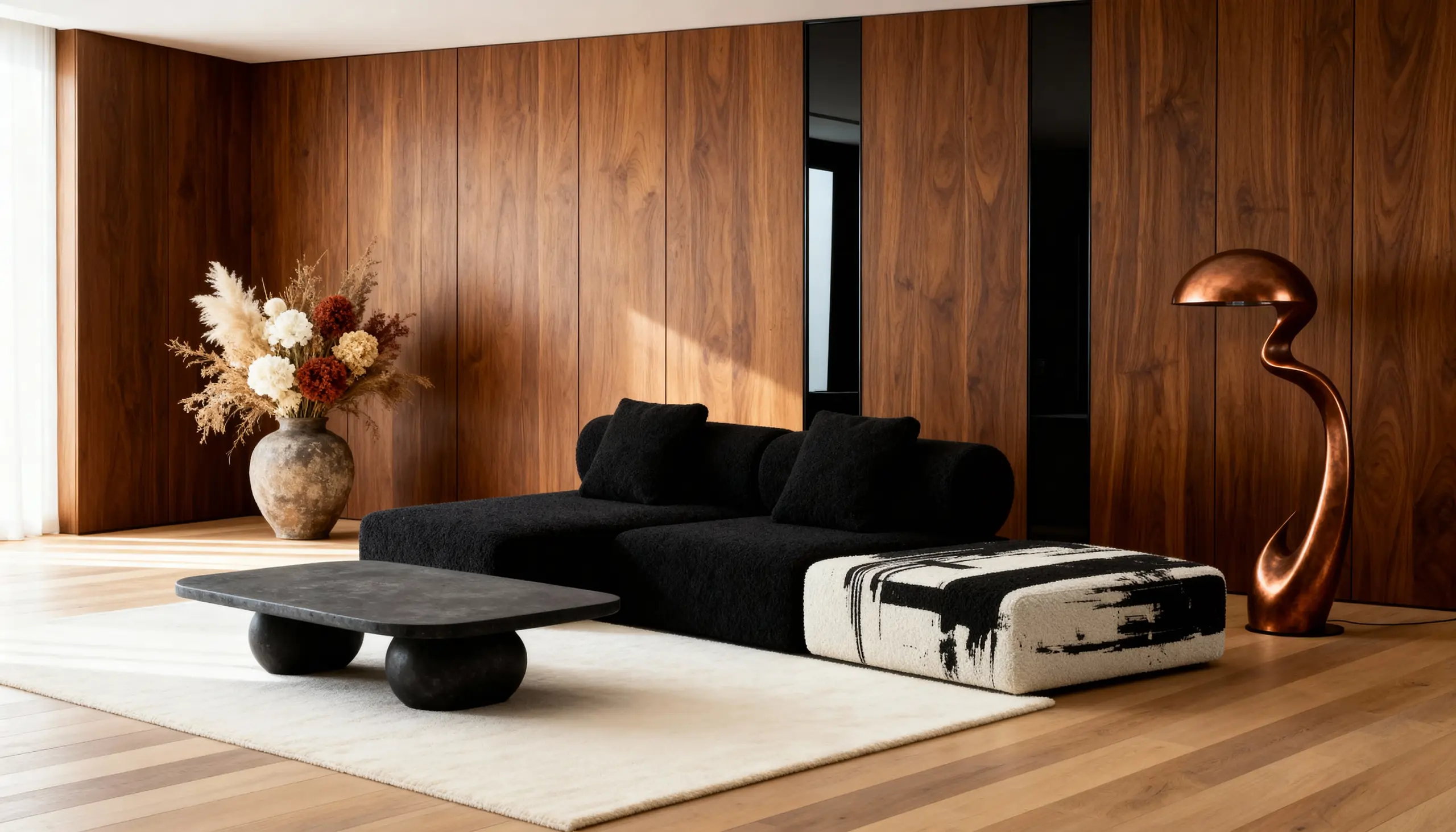
The morning light is still soft. It comes in from the side, slides along the warm wood of the wall and lingers on the dark, deep texture. The black doesn’t look heavy – it absorbs the excess. Nearby is a light carpet, like a pause between thoughts. The low round table doesn’t invite you to work, it invites you to stop. The metal of the lamp is warm, almost copper, and this detail suddenly makes the space come alive.
The sofa is not meant for “sitting.” It is meant for standing. For conversation without an agenda. For waiting that doesn’t annoy. For a pause that doesn’t need explanation.
In today’s commercial spaces, a lounge sofa rarely exists in isolation. It is part of a wider system formed by sofas with print — as a way to work with the mood, identity, and rhythm of a space without direct demonstrativeness.
Lounge is not a function, but a mode
A lounge sofa is not a type of furniture, but a different mode of space.
If the office works on concentration and the waiting area on predictability, the lounge works on relaxed presence. Here, decisions are not made instantly. Here, they are matured.
The first principle is simple:
A lounge sofa does not force you to sit “correctly.”
In this interior:
- low landing;
- the backrest is soft, without rigid geometry;
- The modules do not fix the body in one position.
This is how a sofa for a lounge area differs from classic solutions for meeting or work spaces.
Form → state → interaction
The direct answer: the shape of a sofa directly affects how people interact in a space.
Here the shape is rounded, without sharp corners. It does not dictate distance. It allows you to sit closer or move away, change your posture, lean back, be silent.
This is especially important for spaces:
- creative offices;
- showrooms;
- lounge area in HoReCa;
- zones of informal communication with customers.
That is why a sofa for a lounge area is often designed according to a different logic than, for example, sofas for HoReCa, where there are clear landing and turnaround scenarios.
Kaizen in lounge spaces
“Kaizen is daily improvement that is almost imperceptible, but changes everything.”
— Masaaki Imai
The lounge does not tolerate sudden changes. It develops gradually: through shape, through light, through small adjustments to the fit. That is why a sofa for the lounge area is an ideal carrier of the kaizen approach in the interior.
Sofa for lounge areas in modern commercial and creative spaces
In modern commercial and creative spaces, the lounge has long ceased to be an “additional zone.” It has become an indicator of the maturity of the space. It is here that one feels how the company thinks in terms of time, people, and tension. A sofa for the lounge area in such a context does not perform a utilitarian function – it forms an environment in which it is allowed not to rush, not to demonstrate status, not to keep a distance. This is the space between processes, where a feeling of comfort without obligations is born.
Creative offices, showrooms, hybrid business spaces need furniture that does not rigidly fix the scenario. Flexibility is important here: the ability to sit sideways, turn to the interlocutor, change body position without feeling “indecent”. That is why the sofa for the lounge area has a low seat, soft geometry and modular logic. It does not organize people in a row – it allows them to exist side by side.
In commercial spaces, a lounge sofa also works as a marker of brand culture. Not through a logo or a color, but through the level of calm it conveys. Can you spend a few minutes here without a purpose? Is it comfortable to be silent? Does it make you want to leave quickly? The answers to these questions are shaped not by words, but by the shape, material, and proportion of the sofa. That is why in creative and business spaces, a lounge sofa becomes a silent but very precise instrument of trust.
Error → solution: when the lounge becomes a “waiting room”
Error: put a standard office sofa in the lounge.
Decision: change not the color, but the depth and proportion.
The lounge does not tolerate verticality. High backs, formal symmetry, and stiff armrests instantly return a person to working mode.
In this space:
- the sofa almost “lies” in space;
- it is low relative to the wall line;
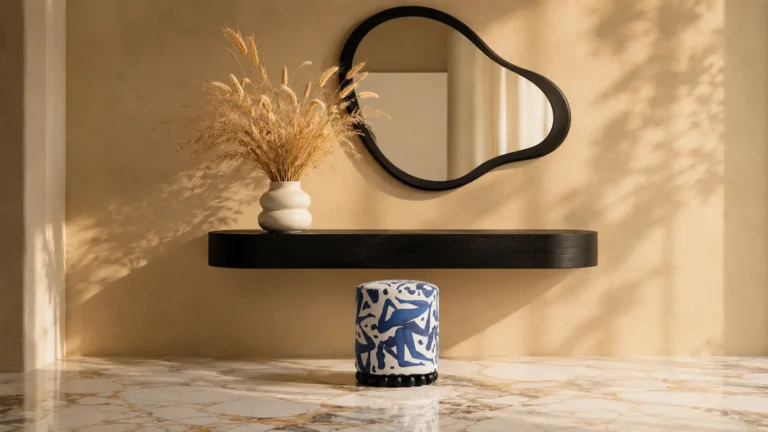
- A pouf with a contrasting print works as a visual pause.
This technique is close to logic. sofas for visitors, but with less formality and more room for freedom.
Distracting materials
The first paragraph is to the point: the material in the lounge area should be calming, not distracting.
The tactile black fabric is not accidental here. It:
- does not shine;
- does not demonstrate the texture too actively;
- works well in different lighting.
A contrasting pouf with a graphic print adds character but doesn’t take away from the focus. This is a typical technique we use in sofas with print when the emphasis is placed on the auxiliary element, not the main volume.
Lounge as part of the brand
The lounge sofa is one of the brand’s most honest tools.
Slogans don’t work here. Feelings work here:
- Do you want to stay a few more minutes?
- Is it comfortable to remain silent?
- Does it make you want to leave?
That is why companies that think strategically about space see the lounge not as an “additional area” but as an extension of the identity.
In such cases, a lounge sofa logically complements corporate style sofas, but allows more softness and freedom.
Table: lounge sofa vs office sofa
| Criterion | Sofa for the lounge area | Office sofa |
|---|---|---|
| Landing | Low, relaxed | Medium, collected |
| Form | Smooth, modular | Structural |
| Scenario | Pause, communication | Waiting, meeting |
| Material | Tactile, matte | Wear-resistant, neutral |
| Role | State formation | Functionality |
Lounge area usage scenarios
- Informal meeting without timing
- Waiting before the event
- Break between work blocks
In each of them, the sofa for the lounge area should remain a stable background, not an active object.
Sofa for the lounge area as a space for pause, comfort and informal interaction
A lounge area exists where space allows for a pause. Not a forced one, not a regulated one, not “between meetings,” but a real one—when a person can step out of their role for a moment. In this sense, a lounge sofa works as a boundary between tension and recovery. It does not call for action, does not stimulate activity, does not accelerate. Its task is to slow down the internal pace and give the body the opportunity to change state without explanation.
Comfort in the lounge is not the same as softness. It is built from the depth of the seat, the stability of the form and the absence of coercion. Here you do not need to sit “correctly”, hold your back or keep your distance. That is why a sofa for the lounge area often has a low height, smooth contours and tactile materials that do not attract attention, but on the contrary – take it away. Comfort becomes background, but tangible.
Informal interaction occurs where space does not dictate a scenario. A lounge sofa does not seat people according to status and does not build a hierarchy. It allows you to sit side by side, slightly diagonally, with pauses and silence. In such conditions, the conversation begins not with the topic, but with the intonation. That is why a lounge sofa often becomes a place where ideas appear that are not born at the negotiating table.
Final chord
The light becomes warmer, but not brighter. It does not emphasize – it soothes. The wood on the walls darkens by half a tone, revealing a texture that was not noticed during the day. The black sofa remains deep and quiet, without shine, without demonstration. It does not change with the time of day – and this is its strength. The light carpet keeps the balance, like a pause between lines, and the low table does not break the rhythm, only fixes the center of gravity of the space.
The space does not push you to action. It does not force you to sit up straight, speak louder, keep your distance. Here you can change your posture, lean back, be silent. You can be present without playing any role. This is what distinguishes a lounge from a waiting area and a workspace – there is no expectation of a result.
A lounge sofa does not create events or set scenarios. It creates conditions in which a conversation can begin on its own, a pause does not seem awkward, and time ceases to be a rigid framework. In such a space, decisions are not pressured, but mature. A person does not adapt to furniture – furniture adjusts to the person’s condition.
And if we go back to the original scene, it becomes clear: this sofa was not chosen in the moment. Its logic appeared back when the need for a space without tension arose. Not for work and not for waiting. But for presence – calm, collected, real.