Зміст
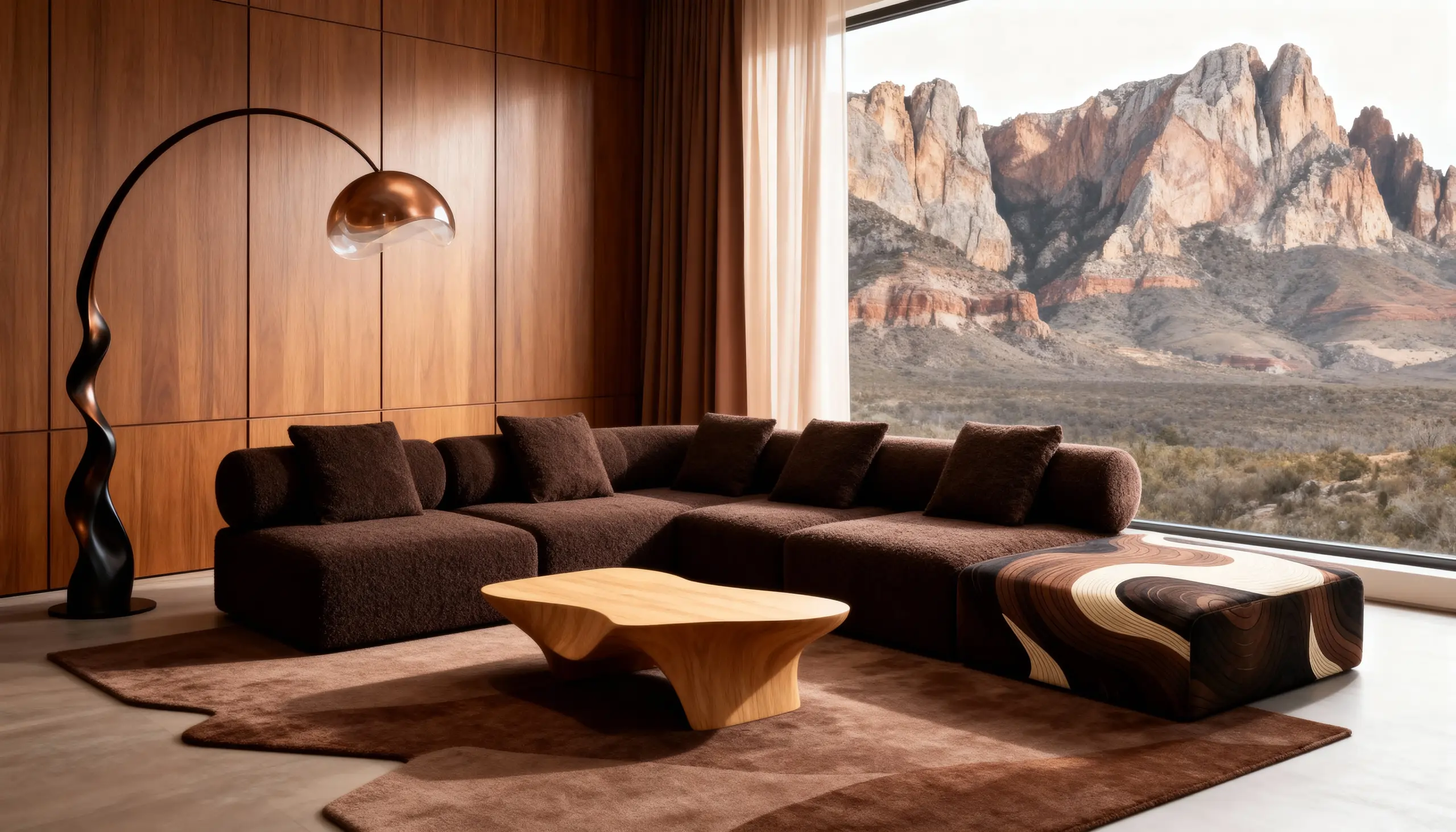
The light comes in low, almost horizontally. It passes through a large window and rests against the mountains – massive, calm, unchanging. The stone behind the glass keeps the silence, and this silence enters inside along with the light. The wooden wall panels are warmed by the sun, the texture is read slowly. The dark modules of the sofa stand straight, without tension, as if repeating the horizon line. Here you don’t want to rush. Here you want to sit down and just be.
This is how visitor sofas work, when they are embedded in a space as an experience, not as furniture. They become part of the first impression, but do not shout about themselves. In today’s business spaces, such sofas rarely exist in isolation – they are part of a wider system that is shaped by sofas with print as a tool of identity, mood and interaction with people through space.
Stress-free waiting area
Visitor sofas are created for the moment in between.
Between the entrance and the meeting.
Between waiting and talking.
Between the outside world and the internal rhythm of the company.
In this space, it is important not to relax a person excessively, but also not to leave them in tension. That is why the fit here is collected, but soft. The depth is enough to change the pose, but not to “fall”. The form is restrained, without aggressive accents. Like the mountains outside the window – they are present, but not pressing.
This approach is close to logic. waiting sofas, but with a greater focus on emotional state, not just function.
“True quality is what is felt without explanation.”
— Masaaki Imai
The visitor space is ideal for a kaizen approach. There is no need for drastic changes. Constant attention to the little things: lighting, material, fit is enough. Visitor sofas should age beautifully – with the space, not against it.
Stabilizing form
The first paragraph is essentially: the shape of the visitor sofa should stabilize.
In the space with the photo, this is immediately readable:
horizontal composition;
modules that do not conflict with each other;
lack of vertical pressure.
The line of the sofa seems to echo the line of the mountains outside the window. It is calm, long, confident. This form does not provoke fuss. It allows a person to slow down before the conversation even begins.
That’s why visitor sofas often share DNA with sofas for offices, but with a softer intonation.
Error → solution: when a visitor feels superfluous
Error: make the visitor area formal and cold.
Decision: create a space of acceptance, not control.
Too hard sofas, cold materials, random light – all this increases anxiety. A person starts looking at the clock, looking for a way out, and tensing up.
The right sofas for visitors:
do not force you to sit straight;
do not provoke unnecessary movements;
maintain peace.
This principle resonates with the approach sofas in corporate style, where feeling is key, not demonstration.
Materials as an extension of the landscape
Here, the materials work together with the view outside the window. The warm shades of the fabric echo the rocky slopes of the mountains. The texture is soft but dense—it doesn’t look fragile. The wooden table in the center seems to repeat the natural shape of the stone, and the printed accent element adds rhythm without breaking the integrity.
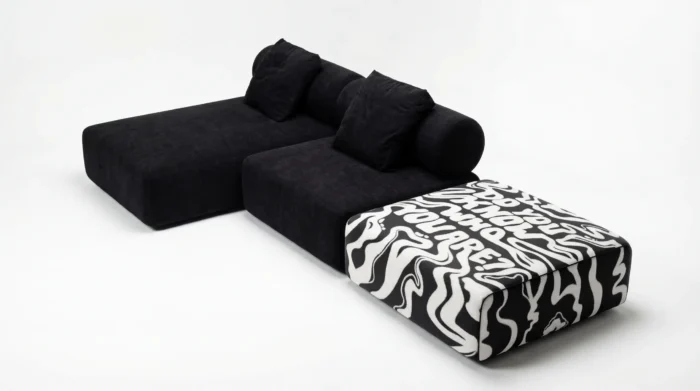
This is a typical method for sofas with print, when graphics do not compete with space, but complement it. The pattern here is not a decor, but a pause between large planes.
Sofas for visitors as part of the brand experience
The visitor doesn’t know anything about the company yet, but he already feels everything.
Through:
silence;
light;
materials;
landing.
In this sense, visitor sofas are a silent brand tool. They don’t explain values, but they allow them to be lived. That’s why systems-thinking companies design these sofas with the space, not “after.”
This approach logically continues the idea corporate style sofas, where furniture becomes part of the culture, not a set of objects.
Sofas for visitors work with the brand at the most subtle level – to words, to service, to interaction with staff. A person does not yet know how letters are answered here, how negotiations are conducted or promises are kept, but they already feel how they are treated. Through the seating – whether they allow you to relax without losing your dignity. Through the material – whether it is warm, stable, predictable. Through the space around – whether there is respect for pause, silence, and waiting. It is at this moment that the sofa ceases to be an object and becomes part of the brand experience: not as an image, but as a state. If the company is confident in itself, the sofa will not be tense. If the brand is stable, the seating will not be random. If the culture is mature, the furniture will not try to impress. Sofas for visitors in such a space do not convince – they confirm. And this confirmation is read intuitively, without analysis, but remains for a long time, forming basic trust even before the conversation begins.
Table: visitor sofas vs waiting sofas
| Criterion | Sofas for visitors | Waiting sofas |
|---|---|---|
| Focus | Emotional state | Function |
| Landing | Balanced | Restrained |
| Atmosphere | Adoption | Neutrality |
| Influence | Builds trust | Provides process |
| Role | Part of the brand | Part of logistics |
Usage scenarios
Waiting before the meeting
Pause after login
A brief introduction to space
In each of them, the sofas for visitors should remain the backdrop that holds the state.
Final chord
The sun slowly sinks behind the mountains. The shadows grow longer, but the space doesn’t darken—it calms down. The sofa remains in place, like the horizon line. Stable, clear, quiet.
Visitor sofas don’t create an impression instantly. They allow it to take shape. And if we go back to the original scene, it becomes clear: this is not just a place to wait. This is a place where trust begins.