Зміст
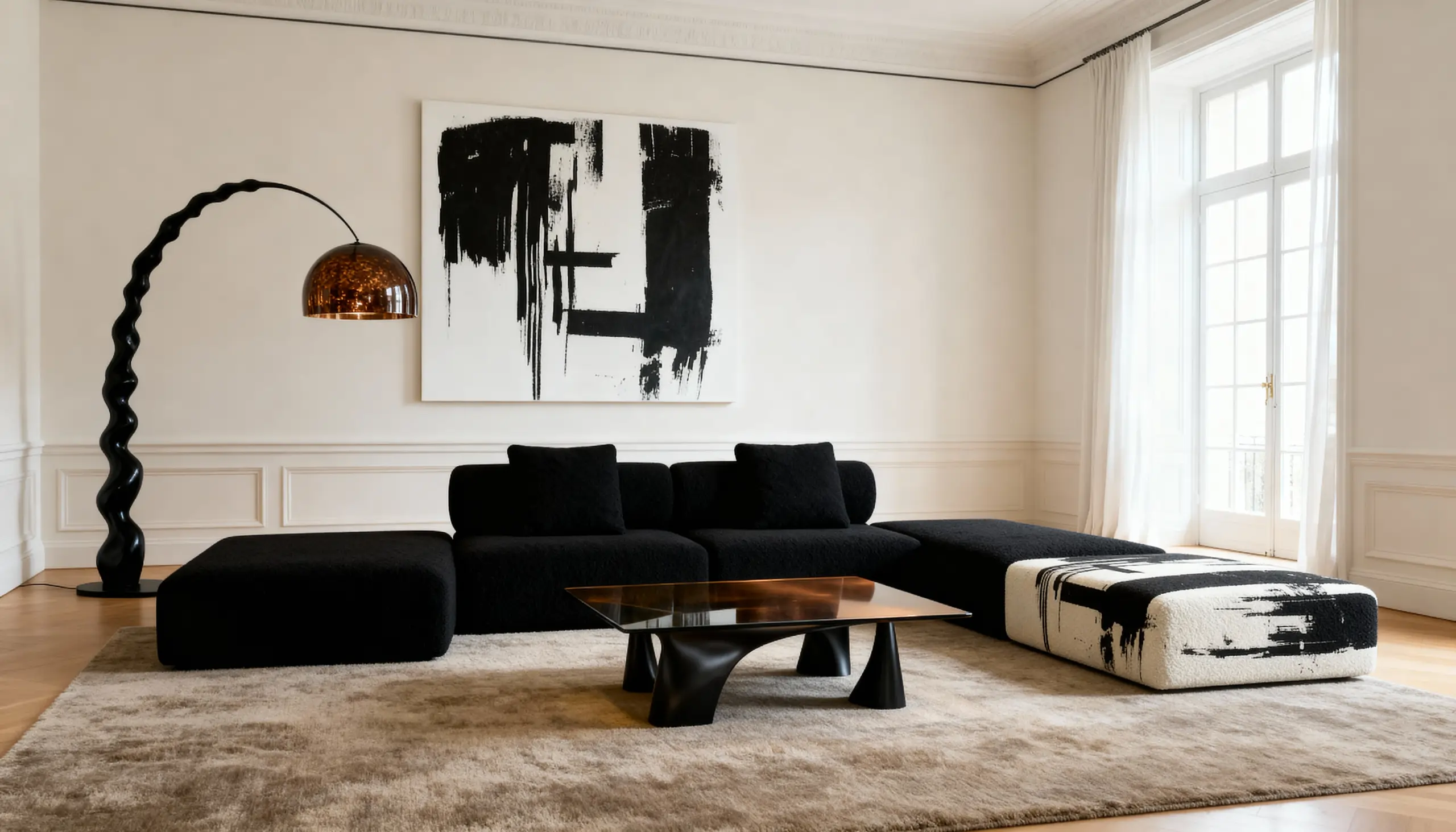
The light comes in from the side and slowly fills the room. It passes through the thin fabric of the curtains, does not blind, does not emphasize sharply. The walls are light, almost neutral, but not cold. The black modules stand low, confident, as if they have been here for a long time. They do not form a “waiting zone” – they form a pause. In front of them is a table with complex geometry, next to it is a soft carpet that muffles the sound of footsteps. The space is not in a hurry. It is ready to accept a person without demands.
This is how office sofas work, when they are designed not as furniture but as part of a system. In modern business spaces, a sofa is rarely an isolated object. It is part of a broader logic that is shaped by sofas with print as a tool for identity, comfort, and working with the brand’s feel in the interior. It’s not decor or background. It’s an environment.
Office sofa as an element of work balance
Sofas for offices solve a key task – they relieve tension without destroying the working state.
Unlike home solutions, an office sofa does not invite you to “relax forever.” Its comfort is controlled. The fit is soft but collected. The depth is sufficient, but not overwhelming. A person can rest without falling out of the rhythm of the day.
In the space of the photo, this is read through the proportions:
the low height of the modules does not visually oppress;
the absence of aggressive armrests preserves freedom of movement;
The composition does not fix the direction of the gaze.
This is how sofas for offices differ from solutions for the home and approach logic. corporate sofas, where the balance between function and state is important.
A form that does not distract from thoughts
“Improvement is not a sudden change, but a constant attention to detail.”
— Masaaki Imai
Office sofas are ideal for a kaizen approach. They can be improved gradually: change the modularity, adjust the fit, adapt the materials. No noise. No radical solutions.
The first answer is simple: the shape of an office sofa shouldn’t be an event.
In a business space, any object either helps you focus or hinders you. Overly active geometry, complex backrests, decorative elements — all this creates visual noise.
Here the form works differently:
horizontal instead of vertical;
the mass is distributed evenly;
The silhouette is readable at first glance.
This approach is close to solutions corporate style sofas, where the design does not demonstrate the character of the direction, but supports it.
Error → solution: a “soft” office that doesn’t work
Error: make the office as similar to a home space as possible.
Decision: create a recovery zone, not a shutdown.
Too deep sofas, fluffy pillows, and brightly textured textiles quickly ruin the working mood. A person loses concentration and feels a sense of impermanence.
The right sofas for offices:
keep their shape even with prolonged use;
they do not “embrace”, but support;
work as a stable foundation.
That is why in office projects we often combine basic sofas with accent elements, as is done in sofas with print, where graphics appear pointwise and do not overload the space.
Sofas for offices in modern business and corporate spaces
In modern business and corporate spaces, the office sofa ceases to be an auxiliary element of the interior. It becomes part of the working ecosystem, where not only the function is important, but also the state in which the person is. Such spaces are not rigidly divided into “work” and “rest” – transitional zones appear between them, allowing you to change the pace without losing your composure. This is where office sofas play a key role, maintaining a balance between concentration and recovery.
Corporate interiors are increasingly designed as environments for interaction, not just task performance. The office sofa in this context works as a point of informal contact: a short conversation, a pause between meetings, a tension-free waiting. Its shape and fit should not “knock” a person out of working mode, but also should not create a feeling of rigid control. This is a delicate balance, achieved through proportions, materials and restrained geometry.
In business spaces where the office is part of the brand, office sofas become silent carriers of corporate culture. They convey stability, confidence and attention to detail without direct visual statements. That is why in such interiors the sofa does not attract attention, but without it the space loses its integrity. It works as a foundation on which the daily rhythm of the company is based.
Materials that withstand the rhythm of the office
Material is one of the key criteria for office sofas.
In this space, black fabric looks calm and deep. It:
does not shine in daylight;
does not lose its appearance under artificial lighting;
goes well with neutral architecture.
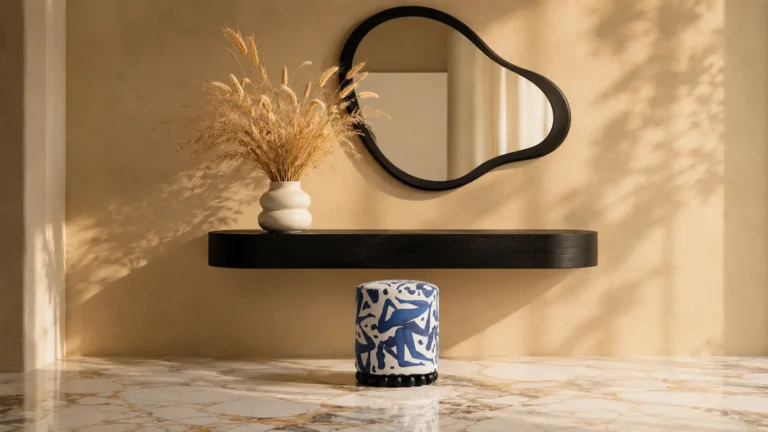
A contrasting printed pouf acts as a visual anchor without drawing attention away. This technique is often used in sofas for the lounge area, where a balance between calm and character is important.
Office as a brand space
A modern office is about communication. And office sofas play no less a role in this communication than meeting rooms.
Through them it is read:
attitude towards employees;
culture of communication;
level of attention to detail.
Companies that think about space systematically do not separate office sofas from identity. They integrate them into the overall language of the space – just as is done in solutions sofas in corporate style, where furniture becomes a carrier of character without direct advertising.
An office as a brand space does not work on declarations, but on experience. The way a person sits down, waits, pauses between conversations, forms an impression no worse than the visual media of the brand. In this sense, office sofas become part of unfixed communication: they do not impose an image, but set the tone. Restraint of form speaks of confidence, a collected fit – about respect for time, tactile materials – about attention to the person. It is from such details that a holistic sense of the brand is formed, which cannot be faked with graphics or slogans, but is easily destroyed by random furniture solutions.
Table: sofas for offices vs sofas for home
| Criterion | Sofas for offices | Home sofas |
|---|---|---|
| Landing | Moderate, collected | Deep, relaxed |
| Form | Restrained | Emotional |
| Material | Wear-resistant, matte | Tactile, decorative |
| Role | Pause in work | Rest |
| Visual noise | Minimum | Allowable |
Usage scenarios
A short conversation between meetings
Waiting for a client or partner
Break without exiting the working state
In all these scenarios, office sofas should remain the background, not the protagonist. That is why they often logically overlap with waiting sofas, but with a greater emphasis on comfort for the team.
Final chord
The light slowly changes direction. The shadows become softer. The black modules remain in place – confident, stable, quiet. The space is not tiring or distracting. It holds.
Office sofas don’t create an image. They maintain it every day. And if we go back to the original scene, it becomes clear: the right office sofa is not about furniture. It’s about a state in which work becomes calm and collected.
A space with such sofas does not need constant explanations and updates. It does not become morally obsolete, because it is not tied to fashion or the mood of the moment. The daily presence of people gradually “tests” it for honesty: is it comfortable to sit for a few minutes, does not cause tension in the body, does not make you want to change places almost immediately. It is in this daily test that office sofas show their true value. They withstand repetition, do not lose their character and do not demand attention to themselves. In such a space, it is easier to stay focused, it is easier to switch between tasks, it is calmer to meet people. The office ceases to be a decoration for work and becomes an environment that works together with the team – quietly, stably, without unnecessary gestures.